


To buy high-quality silk fabric and distinguish natural silk from synthetic fibers, it is necessary to know the structural features of this fabric. Pure silk has a prismatic and multi-colored luster, which is structurally different from the uniform and unpleasant luster of plastic silks. Professional buyers to measure quality, in addition to checking warp and weft density and fabric weight (measured in wax units), use tricks such as the "ring test" to check softness and the "rub test" to hear the special sound of silk. Finally, the most reliable method of diagnosis is the "flame test"; Because natural silk produces a smell similar to burnt hair and turns into powdery ash when it burns, while synthetic fibers melt and smell like plastic. These key points guarantee a safe and high-quality purchase.
Quick summary / Checklist for buying silk fabric
For a quick overview, remember these 5 vital factors when shopping for silk fabric:
- Density and weight: Check the appropriate thickness and avoid buying fabrics that are too thin and prone to thread pulling.
- Shine type: Pearly and multidimensional light reflection (in natural silk) against white and flat shine (in artificial silk). Above.
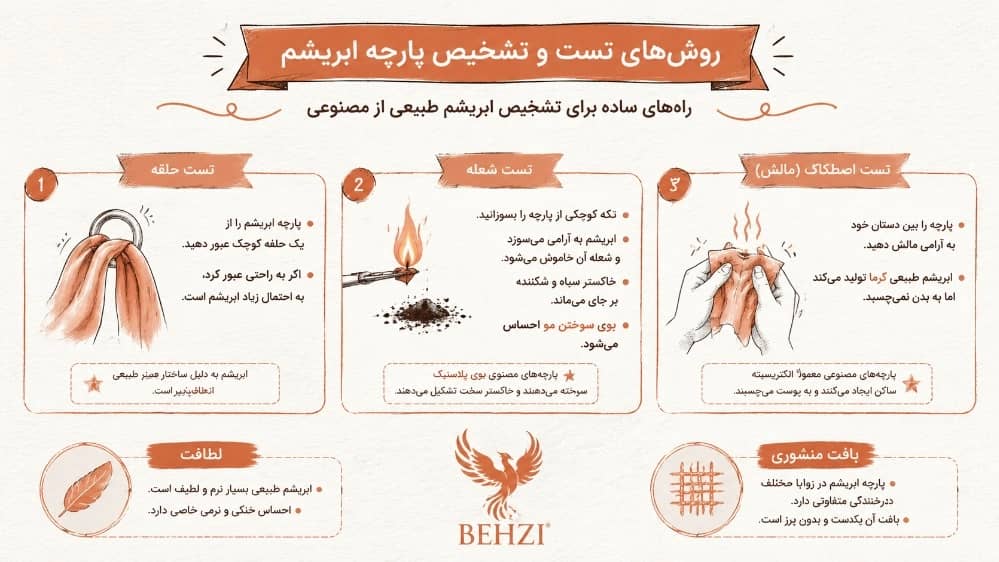
- Rubbing and heat test: Generate heat by rubbing the cloth against the skin and produce a subtle hissing sound (Scroop).
- Burn Test: Slow burning with the smell of keratin (burnt hair) and producing brittle black ash.
Comprehensive guide: important points when buying silk fabric
Silk fabric is an irreplaceable symbol of luxury, softness and elegance in the world of fashion. However, due to the high price of this fabric, the market is full of fake and polyester samples that are sold as silk. In order to make the right investment in buying this valuable fabric, you need to check it out like an expert. In the following, we have scrutinized the most important factors of buying silk:
Density, texture and thickness index
A quality silk, even in its softest state, should not have a fragile and overly thin structure. The high density of threads and wefts in silk not only prevents the fabric from fast threading in contact with ornaments, but also increases its durability against washing. At the professional level, the weight and density of silk is measured with a unit called "Momme"; For example, silk with a weight of 19 to 22 wax is considered an ideal quality for sewing night dresses and bedspreads.
prismatic shine; The difference between luxury and plasticity
The way light reflects in natural silk is one of its most amazing features. Silk threads have a structure similar to triangular prisms; For this reason, a quality silk fabric will refract the light and create a soft, pearly glow with halos of different colors. In contrast, synthetic silks (polyester) have a dull, flat, uniform sheen (usually with a white sheen) that looks very dazzling and artificial in direct light.
Drape and real wrinkling test
The way silk drapes on the body is bare, perfect and very smooth. To test, crumple a corner of the fabric in your fist and squeeze. Due to the elasticity of animal fibers, natural silk returns to its original state after being released, and unlike cotton or viscose fabrics, it does not get dry and deep wrinkles. (Of course, note that silk is not completely anti-wrinkle, but its wrinkles are soft and have sagging).
Ring test and sense of touch
One of the old and very useful tricks to detect pure silk is the ring test. Natural silk is so soft and flexible that you can easily pass a meter of this fabric through a ring without getting stuck (this test applies to silks of standard thickness). Also, if you rub two layers of natural silk together, in addition to creating a noticeable warmth, you will hear a subtle sound similar to walking on fresh snow (aka Scroop).
Burn test for fabric roots
If you still doubt the authenticity of the fabric, ask the seller to burn a few threads from the root of the fabric for you. Since silk is made of natural protein, it exhibits the following properties when burned:
- Flame and smell: It burns slowly and stops burning when moving away from the flame. It smells exactly like burning human hair or feathers.
- Ash: After burning, it leaves a dark gray powder that crumbles completely with a fingertip.
- While melted synthetic silks produce a plastic or chemical smell and leave behind a hard, plastic ball.
conclusion
Buying silk fabric is an investment in beauty and quality. By considering details such as the difference between prismatic shine and plastic gloss, checking the texture density, touching the heat of the fabric, and finally performing the flame test, you can be sure that the purchased silk is completely authentic and will bring you a dress with exceptional shedding and high durability.
