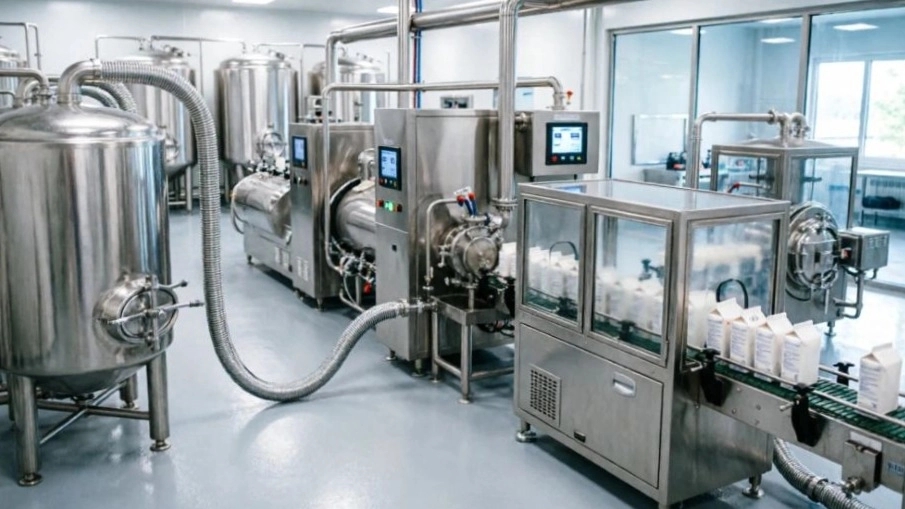

Advantages of using whole milk production line
- Increasing the quality of produced milk
- Reducing microbial contamination
- Increasing the shelf life of the product
- Reducing energy consumption
- Reducing manpower costs
- Full automation of the production process
- Increasing production capacity
- Possibility of producing various dairy products
- Complying with international standards
- Preparing the product for the domestic market and Export
The main components of the whole milk production line
Raw milk receiving tank
Filtration system
Separator
Homogenizer
Pasteurizer
storage tank
Packaging machine
Processing steps in whole milk production line
- Raw milk reception
- Sampling and quality testing
- Filtration
- Fat standardization
- Homogenization
- Pasteurization
- Cooling
- Storage in steel tanks
- Automatic packaging
- Insertion of production and expiration date
- Transfer to cold storage
Features of a standard whole milk production line
- Using stainless steel 304 or 316
- Hygienic design
- Automatic washing CIP system
- Low energy consumption
- PLC automation
- Touch screen
- Precise temperature control
- Ability to increase capacity
- After sales service
- Supply of spare parts
Different capacities of whole milk production line
- 500 liters per hour
- 1000 liters per hour
- 2000 liters per hour
- 3000 liters per hour
- 5000 liters per hour
- 10000 liters per hour
- custom capacities
Applications of whole milk production line
- Pasteurized milk
- Low-fat milk
- Full-fat milk
- Flavored milk
- Enriched milk
- Lactose-free milk
- Special school milk
- Export milk
The importance of automation in whole milk production line
Important points when buying whole milk production line
- Required factory capacity
- Equipment installation space
- Device manufacturing quality
- Equipment brand
- Electricity and water consumption
- Upgradability
- Valid warranty
- Operator training
- Installation and commissioning services
- Technical support