
تماس فوری
Industrial rod element; A complete guide to choosing, making and buying a rod heating element
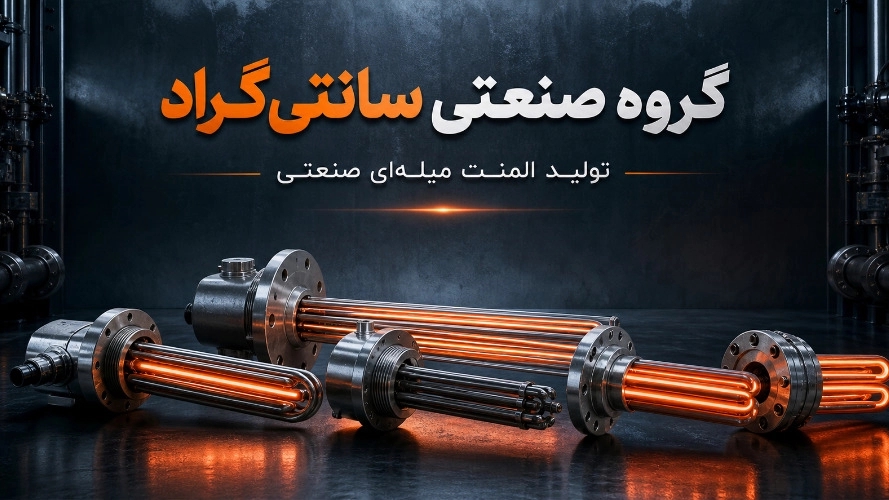
Industrial rod element is one of the most widely used heating equipment in machinery and production lines. This type of element is used in various industries such as plastic, packaging, food, wood, paint, oil and gas, petrochemical, production of metal parts, industrial dryers, water and oil tanks and factory heating systems due to its ability to be manufactured in various dimensions, power, voltage and forms.
In many industrial processes, temperature control has a direct role in the quality of the final product. If the heating is not uniform or the element with disproportionate power is selected, the raw materials may burn, the production time will increase, the power consumption will increase and even the device will fail. For this reason, the selection and construction of the standard industrial rod element should be done based on the actual working conditions, the type of environment, the required temperature and the specifications of the device.
Centigrade Industrial Group, focusing on thermal solutions, provides the possibility of consulting, designing and manufacturing all kinds of industrial rod elements according to the needs of industries.
What is an industrial rod element?
An industrial rod element, also known as a branch element, a tubular element or a Tubular Heater, is a type of electric heater that converts electrical energy into heat. The structure of this element usually consists of a resistant metal sheath inside which there is a resistance wire.
The space between the resistance wire and the metal body is filled with thermal and electrical insulating powder. In addition to preventing electrical connection, this material also improves heat transfer from the resistance wire to the element body. As a result, after connecting the electricity, the body of the element is heated and transfers the necessary heat to the air, liquid, oil, mold, metal surface or any desired environment.
The apparent simplicity of this product should not make us consider it a simple piece. The quality of the resistance wire, the type of sheath, the density of insulating materials, the sealing method, the power design and the quality of the connections are all effective in the efficiency and lifespan of the industrial rod element.
The main components of the industrial rod element
A high-quality rod element consists of several main parts, each of which has an important function in the operation of the device.
resistance wire
The resistance wire is the heat producing part of the element. This wire is heated by the passage of electric current and transfers the generated heat to the metal sheath. Heat and oxidation resistant alloys are usually used in industrial element manufacturing. The choice of wire material and diameter should be compatible with the power, voltage and working temperature of the element.
If the resistance wire is not selected correctly, the element may burn out sooner than expected, may not produce uniform heat or may put more pressure on the electrical system.
Sheath or metal cover
The metal casing is the outer tube of the element that is in direct contact with the working environment. The material of this sheath should be selected based on the conditions of use. For example, humid, corrosive, acidic, oily or high-temperature environments require sheaths with appropriate resistance.
Industrial steels, heat resistant steels, special alloys and in some applications copper can be used to make sheaths. Incorrect selection of the sheath may cause corrosion, perforation of the body or rapid reduction of the life of the element.
Thermal and electrical insulation powder
Insulating powder is placed between the resistance wire and the metal body. This section should be both good electrical insulation and provide good heat transfer. Improper density of this powder can cause hot spots, reduce insulation and premature failure of the element.
Electrical terminals and connections
Electrical connections must be compatible with current consumption, ambient temperature and installation space. In some industrial applications, the existence of humidity, dust, vibration or high temperature can affect the performance of the terminals. Therefore, choosing the appropriate type of connection and protection is part of the basic design of the industrial rod element.
Sealing section
In models that work in contact with water, oil, steam or wet environments, sealing is very important. The penetration of moisture into the element can reduce the insulation resistance and increase the possibility of connecting the body, current leakage or burning of the element.
How does the industrial rod element work?
The basis of the operation of the industrial rod element is the conversion of electrical energy into heat. When the electric current passes through the resistance wire, due to the electrical resistance of the wire, the energy is converted into heat. Then the heat will be transferred from the wire to the insulating powder and from it to the metal sheath.
In the next step, the heated sheath transfers the heat to the surrounding environment. The type of heat transfer can be different:
- Heat transfer to air in furnace, dryer or channel heaters
- Heat transfer to water in tanks and industrial water heaters
- Heat transfer to oil in thermal oil tanks or lubrication systems
- Heat transfer to metal surface in heating plates, molds and packaging equipment
- Heat transfer to raw materials in production and process devices
Optimum performance occurs when the power of the element, the installation location, the contact surface and the temperature control system are in harmony with each other.
Applications of industrial rod element in different industries
One of the reasons for the popularity of the rod element is its wide variety of applications. These elements can be produced in flat, curved, U-shaped, W-shaped, ring or customized forms. This formability has made it possible to use them in various equipment.
Use in plastic and polymer industries
In the plastic industry, accurate temperature control is very important for melting, shaping and processing polymer materials. The industrial rod element is used in sectors such as plastic injection machines, extruders, thermal molds, vacuum forming machines and plastic container production equipment.
In this industry, the wrong choice of element power can cause material burning, product color change, waste increase or production quality instability.
Application in packaging industries
Many packaging machines require elements for sewing, shearing, mold heating, thermal stabilization or preparation of packaging films. The industrial rod element can be used in sharing pack machines, food packaging, plastic sewing, printing machines and related equipment.
Use in water and liquid tanks
Heating water, oil, semi-liquid materials and some industrial solutions is one of the important applications of the rod element. In this case, the type of sheath and power density are particularly important; Because the direct contact of the element with the liquid creates different conditions than heating the air.
For example, an element designed for water is not necessarily suitable for oil or fluids containing chemicals. Correct choice of body material and thermal power can prevent corrosion, sedimentation and premature failure.
Application in industrial dryers
In industrial dryers, greenhouses, thermal tunnels, paint dryers, wood dryers and hot air circulation systems, the rod element plays an important role in providing heat. In these applications, the location of the element, the air flow, the number of branches and the overall power of the system must be properly designed so that the heat is distributed uniformly in the environment.
Food industry and industrial kitchen equipment
Some food processing machinery, heating equipment, cooking devices and industrial kitchen equipment need a heating system. In these cases, it is very important to comply with health conditions, choose the right material and control the temperature carefully.
Wood, MDF and paint industry
In wood and MDF industries, rod element can be used in dryers, paint booths, press equipment and hot air systems. These environments usually have dust; Therefore, the design of the installation site, proper ventilation and safety control of the heating system are very important.
Types of industrial rod elements based on appearance
The industrial rod element can be produced in different forms according to the installation space and type of application. Choosing the right form increases the level of heat transfer and makes it easier to install the device.
Flat rod element
This model is used for linear spaces, small tanks, simple equipment and devices that can be installed directly. Flat elements can be produced in different lengths, diameters and capacities.
U-shaped rod element
U form is one of the most common models. This design allows a longer length of the element to be placed in a limited space. The U-shaped element is widely used in air heaters, dryers, tanks and industrial heating systems.
W-shaped rod element
When there is a need for more thermal surface in a limited space, W form can be a good choice. This model is used in larger industrial equipment or systems that require more thermal power.
A bent or shaped rod element
Some machines have a special installation space, and ready market elements do not fit with them. In this situation, making a shaped rod element based on the plan, sample or exact dimensions of the device is a suitable solution.
Centigrad Industrial Group can suggest the appropriate element form for industrial projects by examining the installation and application conditions.
The difference between air, water and oil rod element
One of the common mistakes when buying an industrial element is choosing one model for all environments. While the element designed to heat the air may not be suitable for being placed in oil or water.
The special air element should usually have a larger surface area for heat transfer, because air is a poorer heat transfer agent than water and oil. If too much power is concentrated in a limited area, the temperature of the element's body will rise and the possibility of its burning will increase.
The special water element must be resistant to humidity, sediment and continuous working conditions. It is also very important to use temperature control and prevent the element from running dry.
The special oil element should also be designed according to the type of oil, working temperature, viscosity and tank volume. The power density in this application should be selected in such a way as to prevent the oil from overheating and destroying its properties.
The most important factors in choosing an industrial rod element
To order or buy an industrial rod element, knowing the length and diameter is not enough. A professional choice requires consideration of several important factors.
element power
Element power is usually specified in watts or kilowatts. The required power must be calculated based on the volume of the environment or liquid, initial temperature, target temperature, heating duration, heat loss and operating conditions.
Choosing less power than needed slows down the process. On the other hand, choosing too much power can increase energy consumption, damage materials, and reduce the life of the element.
Power voltage
Elements can be designed for different voltages. Before ordering, it should be determined whether the electricity at the installation site is single-phase or three-phase and how the control system works. Failure to match the voltage with the element's specifications is one of the important reasons for failure or improper performance.
working temperature
The required temperature of the process has a direct effect on the selection of the type of wire, sheath and manufacturing method. The higher the working temperature, the need to use more resistant material and more precise design.
work environment
Does the element work in air or liquid? Does the environment contain steam, moisture, corrosive substances, oil, dust or vibration? The answers to these questions play a role in choosing the body material, terminal type, protection level and sealing model.
Element dimensions and form
The length, diameter, distance between the legs, connection point, thread type, bend shape and installation space must be compatible with the device. In special projects, it is better to order the construction based on the old sample or technical drawing.
Temperature control system
To achieve stable performance, the element must be connected to a suitable control system such as a thermostat, thermocouple, temperature controller, SSR or proportional contactor. Improper control can cause the element to work continuously and without interruption, increase the temperature and burn it prematurely.
Why does the industrial rod element burn?
The burning of an industrial rod element does not always mean its poor quality. In many cases, the main cause of failure is related to the conditions of use, installation or temperature control.
One of the most important reasons is choosing the wrong power. If the element power is too high for the volume or working environment, the surface of the element will overheat. This issue is more sensitive especially in heating air or oil.
Dry running of the element is also one of the common causes of failure. For example, if the element that is installed to heat the water in the tank remains on without enough water, the heat produced cannot be properly transferred and the body of the element heats up quickly.
Precipitation on the surface of the element, voltage fluctuations, improper installation, not using the right controller, poor electrical connection, moisture penetration into the terminal, and incompatibility of the sheath material with the corrosive environment can also reduce the life of the element.
Important points to increase the life of industrial rod element
Observing a few simple points can increase the useful life of the industrial rod element and prevent sudden stops in the production line.
The first point is to choose the element based on the actual work conditions. Using a cheap but disproportionate model will increase repair costs and stop production in the long run.
The second point is to use a precise temperature control system. The element should not be left unattended and permanently on. The right controller helps to keep the temperature within the specified range.
The third thing is periodic checking of electrical connections and terminals. A loose connection can cause an increase in temperature at the connection point, a drop in performance and even damage to the wiring.
In liquid applications, checking the fluid level is essential. The element should not work in dry or semi-submerged conditions. Also, in water tanks, periodic descaling can improve heat transfer and reduce thermal pressure on the element.
Protected covers, control panels and connections should also be used in industrial environments with dust or corrosive vapors.
Custom manufacturing of industrial rod element
Many industries use special or imported machines whose elements are not readily available in the market. In such a situation, the custom manufacturing of the industrial rod element based on the sample, drawing or technical specifications of the device becomes very important.
In custom manufacturing, information such as power, voltage, length, diameter, element shape, base location, connection type, sheath material, working temperature and environmental conditions are checked. Then the element will be produced according to the needs of the device.
In addition to solving the part supply problem, this method can also be an opportunity to modify the previous design. For example, if the previous element is constantly damaged due to heat concentration or inappropriate material of the body, it is possible to choose a more suitable power, form or type of material in the new design.
Purchase of industrial rod element from Centigrad Industrial Group
When buying an industrial rod element, the most important thing is not to choose the product based solely on appearance or price. An industrial element must be compatible with your device in terms of power, voltage, body material, thermal conditions, type of application and installation space.
Centigrade Industrial Group provides specialized advice in the field of thermal equipment, and supports various industries in the selection and manufacturing of various types of industrial rod elements. The possibility of checking the existing sample, making a custom element, choosing the right form and providing a solution for specific industrial applications helps customers to make a more confident choice.
In order to receive a detailed technical proposal, it is better to provide the experts with information such as the image of the previous element, dimensions, power and voltage listed on the part, device type, usage environment and required temperature.
summary
Industrial rod element is one of the most important components of heating systems in factories and production machinery. The correct selection of this part can increase the quality of the heating process, control energy consumption, extend the life of the equipment, and prevent costly stops in the production line.
For basic selection, one should pay attention to such things as environment type, power, voltage, working temperature, sheath material, element form and temperature control system. In projects that require specific dimensions or design, custom manufacturing of industrial rod element will be the best solution.
Santigrad Industrial Group, focusing on the design, manufacture and supply of industrial thermal elements, is ready to provide advice and solutions tailored to the needs of production units, workshops and industrial complexes.