

What is a feature snippet?
In the world of SEO, there is a goal higher than rank one, called "position zero". If you've ever searched for a question on Google and seen the answer right at the top of the page without clicking through to any site, you've come across Feature Snippets. Featured Snippet is the most powerful tool to increase click rate and brand credibility in search engines. In this article, we are going to fully examine what the feature snippet is, how it works, and what strategies are needed to take over this golden position.
What exactly is a Featured Snippet?
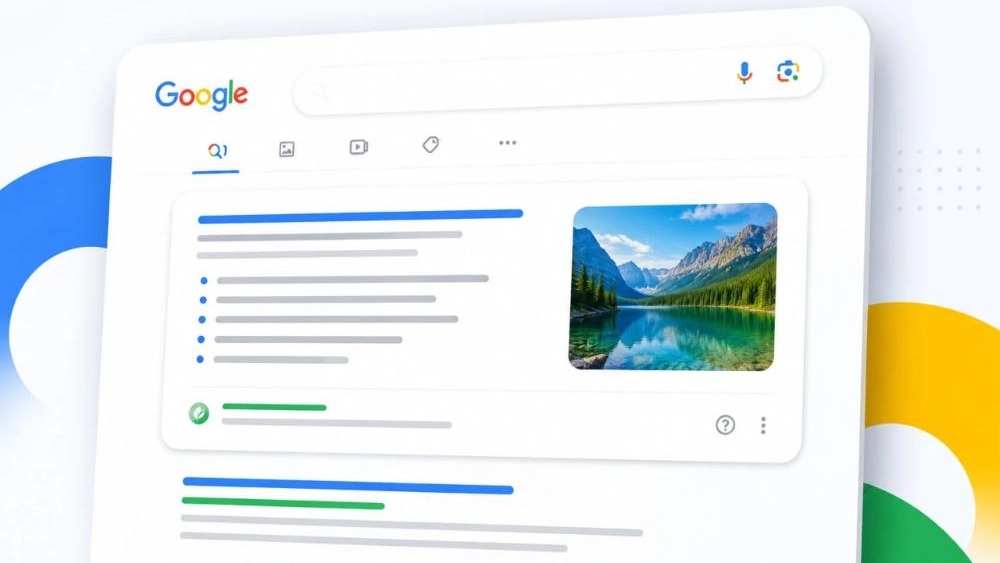
Snippet feature or "Google answer box", is a part of the search results page (SERP) that Google designed to quickly answer users' questions. Google extracts the part of a site's content that is the best and most direct answer to the user's question and displays it at the top of the organic results.
This box usually contains a short paragraph, a list (numbered or bulleted), or a table. The thing that distinguishes the feature snippet from other results is its placement; This box is placed above all the links of the sites and that is why it is called position zero.
Why feature snippets are vital for your site's SEO?
Many SEO experts worry that displaying the answer on the results page will decrease click-through rates. But the statistics say something else. Acquiring a feature snippet can turn your site into a reference.
1. Increase click through rate (CTR)
Although the answer is visible on the Google page, users looking for additional information are more likely to click on the link known as the "answer reference". Sites with featured snippets usually have a much higher click-through rate than their number one competitors.
2. Strengthen brand credibility
Being in the feature snippet box means Google's indirect confirmation of the quality of your content. Users trust the content highlighted by Google more.
3. Share in voice search (Voice Search)
With the proliferation of voice assistants such as Google Assistant, voice responses are usually extracted from the content of feature snippets. If you want to be in the future of voice search, you need to focus on feature snippets.
برای مشاهده راه های ارتباطی کلیک کنید.
Different types of feature snippets that you should know
1. Paragraph Snippets feature
2. List Snippets feature
This template is displayed for step-by-step tutorials or suggested lists. If the user's question is about "how to" or "list of the best", Google will select a list of your content.
3. Table Snippets feature
If your content contains comparative or statistical data, Google will display it in the form of a table. Tables are very valuable for feature snippets because they are very quick to understand for the user.
Practical strategies for getting feature snippets
Reaching the zero position is not a chance; Rather, it is the result of content engineering. In the following, we will examine the road map to achieve this position.
First step: Identifying the question keywords
Feature snippets love questions. Use tools like Google Keyword Planner, Ahrefs, or even the People Also Ask section of Google to find the exact questions your audience is asking. Questions starting with "how," "how," "difference," "price," and "best" are the best candidates.
Step 2: Give a direct and short answer
Google is looking for clarity. Try to write the direct answer to the question in a short paragraph (around 50 words) immediately after each heading (H2 or H3). This makes it easy for Google to choose your content as a feature snippet.
The third step: using the list and table structure
In articles where possible, use numerical lists for steps and bulleted lists for features. Also, put your data in HTML table format (not images). Search engines love text-oriented tables.
Fourth step: Technical SEO and content structure
Without good technical SEO, it is impossible to reach position zero. If your article doesn't rank well in Google (for example, it's on the second page), the chances of getting a feature snippet are very low. Focusing on site speed, user experience (Core Web Vitals) and the structure of heading tags (H1, H2, H3) is essential.
The role of structured data (Schema Markup)
Does schema have an effect on getting feature snippets? The answer is yes, but not directly. Using Schema Markup, especially in FAQPage and HowTo models, helps Google understand the structure of your content better and increases the probability of displaying your information in answer boxes. This actually makes the path to the feature snippet smoother for the Google crawler.
Common mistakes that prevent feature snippets from being captured
Sometimes you produce great content but still not rank zero. Check these errors:
- Too long answers: Google is looking for summarization. If your answer paragraph is 200 words, it is unlikely to be selected as a feature snippet.
- Using an advertising tone: The content of the feature snippet should be educational and unbiased. A direct selling tone makes Google consider your content unreliable.
- Lack of proper title tags: If you don't include the user's question in the title (H2 or H3), Google won't understand that the paragraph below is the answer to the question.
How to find out which pages have feature snippet potential?
The best way is to analyze competitors. Search your keywords in Google. If there is a feature snippet, look at the competitor's site. What is its structure? How did he answer the question? Then try to produce a better, more complete and structured answer. SEO tools like Semrush or Ahrefs will tell you which of your site's pages currently have "Feature Snippet Potential" for various keywords.
The impact of artificial intelligence and the future changes of Google
Google has moved to "AI Overview" or artificial intelligence answers. However, feature snippets still hold their place because they are authoritative sources that Google links directly from a site. The future of SEO is moving towards in-depth and response-oriented content. To stay results-driven, you need to focus on adding value. Content that is just repeating other people's content has no chance of ranking zero. Content with new data, charts and actionable tips is always a winner.
Summary: Your path to ground zero
Getting a feature snippet is a medium-term strategy that requires both technical SEO and intelligent content production. Consider the following steps as the ultimate checklist:
- Target question keywords.
- Write direct answers (Direct Answers) at the beginning of sections.
- Use lists and tables to display information.
- Give the page proper structure with heading tags (H2, H3).
- Constantly check your rank in target keywords.
By following these tips, you will not only improve your site's SEO, but in today's competitive world of Google, you will become the main source of answers to users' questions. Remember that a feature snippet is a variable target; Competitors are trying to take your place, so constantly updating the content is the key to staying in this position.