
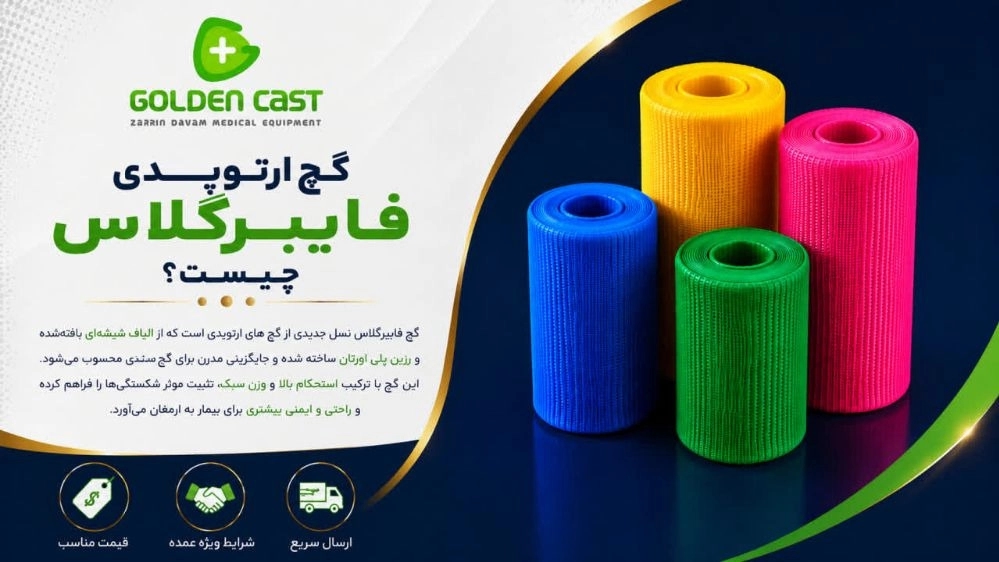


In the field of medicine, orthopedics and the treatment of skeletal-muscular injuries, the advancement of technology has brought new materials to the market. Bone fractures, joint dislocations, and tendon injuries always require accurate and effective immobilization of the injured limb. In the past, traditional gypsum plasters (plaster of Paris) were the only available option for immobilizing organs; However, nowadays fiberglass orthopedic plaster as a unique, advanced and high-quality alternative has been able to take the first place in clinics, hospitals and medical centers. Familiarity with the nature, features and structural benefits of this product will help doctors and patients to make a confident choice in the path of injury recovery. In the meantime, providing a standard and high-quality product is very important and Zarin Davam Medical Product, as a reliable authority for the supply and distribution of orthopedic consumables, provides the best options to the medical community and the public.
What is the structure and nature of fiberglass orthopedic plaster?
Fiberglass orthopedic plaster is a type of advanced orthopedic polymer tape and bandage, which is produced from woven glass fibers (Fiberglass) impregnated with water-soluble polyurethane resin. This special structure causes the bond to start chemically reacting quickly after contact with water and become completely hard and strong in a short period of time. Unlike traditional plasters, which are based on hydrated calcium sulfate, fiberglass is designed on the basis of synthetic and polymer materials to create a porous, breathable structure with light density, but at the same time with extremely high tensile and compressive strength.
The way the resin used in orthopedic fiberglass cast works is that as soon as it is immersed in water with the right temperature, the hardening reaction is activated, and the doctor or plastering expert has enough time to mold the strip around the patient's limb and adjust the right angle of the joint. The elasticity and flexibility of the woven fibers in these plasters allow all the anatomical heights of the hands, feet, wrists and other organs to be covered without annoying wrinkles.
The main differences between fiberglass plaster and traditional plaster
A detailed comparison between old gypsum plasters and modern fiberglass bandages shows why specialized treatment centers have switched to using this new material. In the following table and categories, the most important aspects of the difference between these two materials are specified:
Weight and patient comfort
One of the biggest challenges for patients during fracture recovery is the annoying heaviness of traditional casts. Fiberglass orthopedic plaster has about one-third to one-fourth the weight of traditional plaster. This light weight makes the patient feel much less pressure on the adjacent muscles and joints when moving, walking, and doing daily tasks, and prevents early muscle wasting due to the weight of the structure.
Mechanical resistance and durability against impact
Despite its extraordinary lightness, the strength and tensile strength of fiberglass is several times that of traditional plaster. Ordinary gypsum plasters crack, chip or break when they come into contact with objects or sudden blows, which require repair and re-plastering. While fiberglass, due to the entanglement of glass fibers and polyurethane resin, creates an integrated and impact-resistant structural matrix that maintains its original form throughout the treatment period.
Resistance to moisture and water
Traditional plaster softens and loosens when exposed to water and loses its hard form; So that even the patient's sweating or pouring a few drops of water can cause it to rot and smell. On the other hand, fiberglass orthopedic plaster has water-repellent properties. The nature of its fibers and resin is such that it does not change its shape in the vicinity of water. Of course, for complete bathing, special waterproof pads are usually used under the cast so that the patient's skin does not remain wet, but the fiberglass shell itself is completely resistant to water.
X-ray permeability and radiography
One of the concerns of orthopedic doctors during the treatment process is to check the degree of bone fusion. Traditional plaster is a dense and opaque material against X-rays, which reduces the clarity of radiological images, and sometimes the orthopedist has to open the plaster for a more detailed examination. On the contrary, the structure of orthopedic fiberglass plaster is radiolucent and X-rays easily pass through it. This feature allows for high-quality radiography and accurate assessment of bone callus formation without the need to open the cast.
Breathability and skin health
The porous and mesh texture of the fiberglass tape provides proper air circulation between the outside environment and the surface of the skin. This air flow significantly prevents the accumulation of moisture caused by sweating, severe itching, unpleasant odor, and the patient's infection with fungal diseases and skin dermatitis under the cast.
Steps and principles of plastering with fiberglass orthopedic plaster
The basic use of fiberglass orthopedic plaster requires compliance with technical and medical standards so that the final mold is formed without creating pressure points on the bones or blocking the patient's blood circulation. The main steps of this process are:
Various applications of fiberglass orthopedic plaster in medicine
This multipurpose medical equipment is used in various branches of treatment and with various clinical purposes:
- Immobilization of closed and open fractures: For the treatment of all types of long and short bone fractures such as radius, ulna, tibia, fibula, metatarsal and metatarsal bones.
- Stabilization after orthopedic surgeries: After surgeries such as cruciate ligament reconstruction, Achilles tendon grafting and joint corrective surgeries to prevent Movement of the operated limb.
- Treatment of sprains and severe ligament strains: Stabilization of ankle, knee and elbow joints in acute ligament injuries.
- Correction of skeletal deformities in children: Use in corrective treatment protocols such as serial clubfoot casting in infants and children.
- Construction Orthopedic prefabricated splints and splints: Use as specialized splints to reduce initial swelling before applying a full cast.
Investigating the special benefits of purchasing Zarin Davam medical products
In the field of health and orthopedics, product authenticity and fiber and resin quality play a vital role in maintaining the patient's health. The use of low-quality fiberglass bands can lead to problems such as not tightening properly, creating fragile and sharp edges, skin sensitivities and insufficient resistance. As one of the pioneers in the distribution and distribution of specialized medical and therapeutic equipment, Zarin Davam Medical Goods has provided a reliable platform for access to the highest quality fiberglass orthopedic cast samples.
The key benefits of providing essentials from Golden Durable Medical Goods include the following:
- Guarantee the authenticity and physical health of the product: All the fiberglass bandages provided by Zarin Davam Medical Products have official treatment standards, Food and Drug Organization approval and are completely vacuum and standard packaging.
- Variety in dimensions and sizes: This variety of fiberglass cast sizes includes widths of 2 inches (5 cm), 3 inches (7.5 cm), 4 inches. (10 cm) and 5 inches (12.5 cm) in different colors for the specialized use of children and adults.
- Competitive and first-hand price: Due to the direct relationship with the production sources and the elimination of unreliable intermediaries, Zarin Medical Products supplies its products with the fairest market prices in retail and wholesale to orthopedic centers, hospitals, clinics and patients.
- Fast delivery and technical support: Registered orders are packed in the shortest possible time and sent to all parts of the country so that the process of treating and equipping the centers does not experience any interruption.
Care tips for patients with fiberglass orthopedic cast
Patients whose injured limb is fixed with fiberglass orthopedic plaster can spend the entire treatment period easily and without complications by following a few simple recommendations:
- Keeping the underlayer dry: Even though the fiberglass plaster is waterproof, the cotton (vibril) layer underneath will get wet if it comes into contact with water. Therefore, when bathing, standard waterproof covers should be used to prevent the cotton under the plaster from getting wet and damaging the skin.
- Avoid inserting sharp objects: To relieve itching, a ruler, rod or sharp objects should not be guided under the plaster under any circumstances; Because this action may scar the skin and lead to bacterial infections. You can use the cool air of a hair dryer to relieve itching.
- Pay attention to the warning signs: Severe tingling, coldness or numbness of the fingers, changing the color of the skin to bruises or increasing and unusual pain indicates the tightness of the plaster or pressure on the nerves and blood vessels, and you should see a doctor immediately. has not issued the cast, one should not walk on the leg cast or move heavy loads with the hand cast.
How to open and remove a fiberglass orthopedic cast
Fiberglass plaster removal is a specialized work that must be done in an orthopedic clinic or hospital by an experienced staff. For this purpose, special orthopedic saw (Cast Saw) is used. The blade of this saw vibrates and oscillates with high frequency and does not rotate; As a result, it cuts the hard layer of fiberglass without damaging the patient's soft tissue or underlying skin. After creating two grooves on the sides, the two shells are separated using a spreader (plaster opener) and the cotton under the plaster is cut with scissors.
Frequently asked questions about fiberglass orthopedic plaster
Is fiberglass orthopedic plaster completely waterproof?
The outer layer of fiberglass is 100% water-resistant and will not be damaged by water, but in order to make the whole system waterproof, stockinette and special waterproof pads should be used under it instead of regular cotton.
How long does fiberglass plaster dry after opening the package?
After being placed in water, this product starts to harden within 3 to 5 minutes and reaches its final strength in less than half an hour to protect the organ.
Where should we go to buy high-quality and standard fiberglass orthopedic plaster?
To prepare various types of fiberglass orthopedic casts in various sizes and colors, with the assurance of brand authenticity and the most appropriate price, you can contact the experts of Zarin Davam Medical Products so that your order can be prepared and sent as quickly as possible.
Final summary
Fiberglass Orthopedic Plaster has created a new standard in the field of skeletal treatments by providing key features such as very light weight, high impact strength, X-ray permeability and optimal ventilation. This product not only makes the treatment process more accurate and optimal for orthopedic doctors, but also brings comfort and comfort to patients during the recovery period. By choosing and buying these medical supplies from reputable and well-known centers such as Zarin Davam Medical Goods, you can experience the highest level of quality in the form of standard products with economical prices and fast delivery services.
