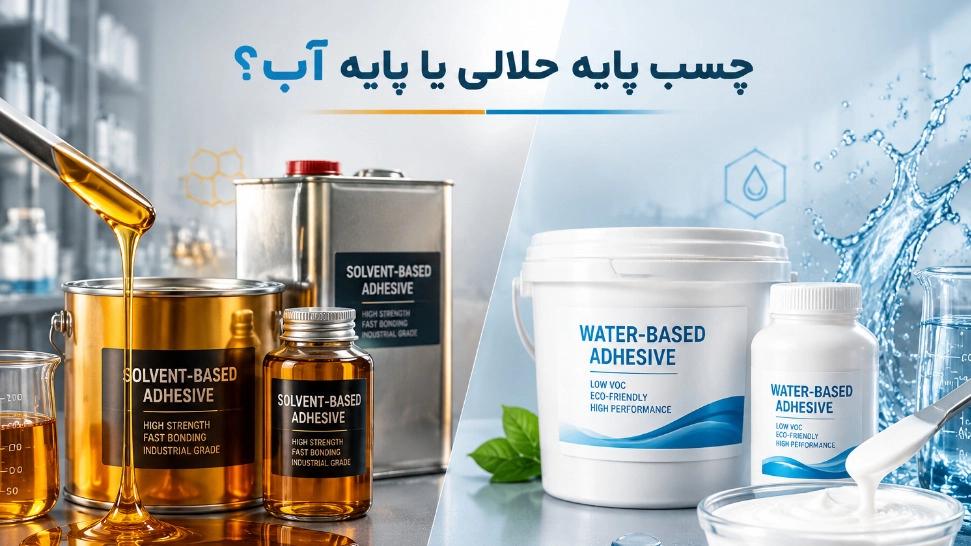


Choosing the right adhesive is one of the most important factors in the quality and durability of connections in various industries. Today, solvent-based adhesive and water-based adhesive are among the most widely used types of industrial and general adhesives, and each has its own characteristics, advantages, and limitations. But the important question is, Solvent base glue or water base; Which option is more suitable for the intended application?
The answer to this question depends on various factors such as the type of surface, environmental conditions, drying speed, expected resistance level, application method and safety requirements. For this reason, one type of glue cannot be considered suitable for all applications.
In this article, while examining the difference between solvent-based glue and water-based glue, we will learn about the uses of each and at the end, we will explain how to make a more accurate choice when buying glue.
What is solvent-based glue?
Solvent-based glue is a type of glue whose ingredients are dissolved or dispersed in an organic or chemical solvent. After use, the solvent gradually evaporates and the sticky substance remains on the surface and creates a connection.
One of the important features of solvent-based adhesives is the ability to create a suitable connection on a variety of surfaces. These adhesives are considered in some industrial applications due to their favorable resistance to moisture, heat, chemicals and environmental conditions.
Solvent based adhesive formulation can be different based on the final application. For example, the glue used in the shoe industry does not necessarily have the same properties as the glue used in packaging, laminates or industrial parts.
Therefore, when choosing a solvent-based adhesive, in addition to the product name, you should also pay attention to the technical specifications and application defined by the manufacturer.
What is water based glue?
Water-based glue is another type of glue in which water is used as the main carrier or solvent in its formulation. After the adhesive is applied to the surface, the water in the formulation evaporates or absorbs, and the remaining polymer or adhesive creates the bond.
Water-based adhesives have become popular due to their low odor in many applications, as well as their ease of use and cleaning. Of course, the performance of this type of glue depends on the type of polymer, formulation, desired surface and drying conditions.
Water-based adhesive is used in various industries such as packaging, paper and cardboard, wood industry, printing, labels and some general applications.
The important point is that "water-based" does not mean that the glue is suitable for every environment or every surface. The final strength of the glue should be checked based on the technical information of the product.
What is the difference between solvent-based and water-based glue?
To choose between solvent-based or water-based glue, it is better to compare the main features of both groups.
1. Differences in compounds and solvents
The most important difference between these two types of glue is related to the carrier medium of adhesive materials.
In the solvent-based adhesive, the adhesive compounds are in an organic solvent, while in the water-based adhesive, water plays the role of the carrier medium.
This difference in ingredients can affect the smell, drying time, storage conditions, application method and final properties of the joint.
2. Difference in drying time
Drying time is one of the important factors when choosing glue.
Some types of solvent-based glue can reach initial setting in a short period of time due to the speed of solvent evaporation and their formulation. Of course, the actual drying speed depends on factors such as temperature, humidity, thickness of the adhesive layer and environmental ventilation.
On the other hand, water-based glue requires water to leave the system to dry. Therefore, the humidity of the environment and ventilation conditions can have a significant effect on its drying time.
For this reason, if the speed of production is very important, the choice of adhesive should be based on the actual setting and drying time of the product, not just based on its solvent or water base.
3. The difference in the smell of glue
Another difference that can be felt when working with these products is the amount of smell.
In many formulations, solvent based glue has a more noticeable smell due to the presence of organic solvents. For this reason, proper ventilation of the workplace is particularly important.
Water-based adhesives usually have less odor and are a suitable option in some work environments where odor control is important.
Of course, the amount of smell depends on the exact formulation of the product, and not all glues of the same group can be considered completely similar in this respect.
What are the uses of solvent-based glue?
The application of solvent based glue is very wide and based on the type of resin and formulation, it can be used in different industries.
Shoe and leather industry
In some processes of producing shoes, bags and leather products, glue must be able to create a proper connection between materials such as leather, rubber, foam and some polymers.
In such applications, the choice of glue should be done based on the exact type of material and the conditions of use of the final product.
Furniture and decoration industries
Some types of solvent-based glue are used in the production of furniture, covering and connecting some decorative materials.
Connection resistance, execution speed and compatibility with the surface are among the factors that are important in this area.
Plastic and rubber industries
In order to bond some plastics and rubbers, the adhesive must be able to form a proper bond with the surface. In this context, some solvent-based formulations may provide appropriate performance.
However, the type of plastic or rubber is very important and the compatibility of the adhesive with the surface should be checked before use.
Industrial applications
In many industrial production lines, in addition to creating a connection, glue must also perform properly against pressure, humidity, temperature or environmental factors.
For this reason, in such cases, the choice of solvent-based glue or water-based should be made based on technical specifications and actual work conditions.
What are the uses of water-based glue?
Water based glue is also used in many industries.
Paper and cardboard industries
Connection of paper, cardboard and some cellulose products is one of the important applications of water-based adhesives. These products can be used in packaging and production of paper products.
Packaging industry
In some packaging processes, the use of water-based glue is considered a suitable option due to its performance characteristics and the possibility of using it in production lines.
The type of packaging, the material of the substrate, the speed of the production line and the storage conditions of the final product are decisive factors in the choice of glue.
Wood industry
Some water-based adhesives are used in the production of wood products and wood-related products. Here, too, the type of wood, surface absorption and environmental conditions should be considered.
Printing and labels
Some water-based adhesives are used in the printing and label production industries. Features such as initial adhesion, drying speed, and the ability to operate in industrial machinery are important in this field.
solvent-based or water-based glue; Which one should we choose?
The answer to this question depends on your application. If we want to have a simple way to choose, we need to examine some basic questions.
First: What surface is the glue supposed to be used on?
Second: Is the environment wet or dry?
Third: Is the joint exposed to heat?
Fourth: How important is the drying speed?
Fifth: Do you care about glue smell or ventilation requirements?
Sixth: Should the adhesive be resistant to chemicals, moisture or pressure?
Answering these questions will help you make a better choice between solvent-based or water-based adhesive.
Characteristics of solvent-based adhesive, water-based adhesive, organic solvent-carrying environment, water, usually more noticeable, usually less.
This table is a general comparison and the technical specifications of the desired product should be checked for the final selection.
Advantages of choosing high-quality glue
Regardless of whether you choose solvent-based glue or water-based glue, the quality of the product has a direct impact on the final result.
A suitable adhesive should be compatible with the intended surface and be able to create the expected connection in real conditions.
Using the wrong glue may cause parts to separate, increase waste, increase production time and reduce the quality of the final product.
For this reason, it is recommended to pay attention to things such as adhesion strength, drying time, viscosity, temperature resistance, moisture resistance, application method and storage conditions when buying glue.
Why is it important to choose the right glue supplier?
In purchasing industrial raw materials, the price of the product should not be the only decision criterion. The stability of quality, the possibility of continuous supply, technical advice and the compatibility of the product with the application are also very important.
Gavam Nasiri glue can help businesses choose the right product as one of the options to consider for supplying glue. When choosing a product, it is better to discuss your exact needs with sales or technical experts so that the glue suitable for the type of surface and work process can be suggested.
If you are in doubt about choosing between solvent-based or water-based adhesive, it is better to provide the supplier with information such as the type of surfaces, the method of applying the adhesive, the temperature of the environment, the speed of the production line, and the required resistance before purchasing.
This information helps the selected product to be chosen not just based on price or brand, but based on actual use.
What points should we pay attention to when buying solvent-based glue?
If your choice is solvent based glue, the following are very important:
Type of surface
Not all adhesives are suitable for all surfaces. First, it should be determined whether the glue is to be used on metal, leather, rubber, plastic, foam, wood, or another material.
time consuming
If the product is used in the production line, its speed can affect the production capacity.
Ultimate resistance
The level of connection resistance against heat, moisture, pressure and chemicals should match the actual usage conditions.
Safety conditions
Due to the presence of halal in some products, it is important to follow the manufacturer's instructions, proper ventilation and safety principles during use.
What are the important points when buying water-based glue?
In the case of water-based glue, several features should also be noted.
The most important thing is the compatibility of the glue with the surface. Drying time, initial and final adhesion, viscosity and storage conditions of the product should also be checked.
If the working environment has high humidity, the technical specifications of the product should be checked more carefully; Because environmental conditions can affect the drying process of some water-based adhesives.
Nasiri consistency glue; Choose the glue that suits your needs
For many consumers, it is difficult to choose between different types of glue without having enough technical information. For this reason, buying from a specialized collection can simplify the selection process.
Gavam Nasiri glue By offering adhesive products for various applications, it can be one of the options to be considered when preparing industrial glue.
It is suggested to specify the exact application of the product before purchase and provide the necessary information about the surface, environmental conditions and required resistance. This helps to choose an option between solvent-based or water-based glue, which is more suitable to the actual need.
summary; Solvent-based glue or water-based?
In response to the question Solvent-based or water-based adhesive? a fixed answer cannot be given for all applications. Both types of glue have different features and applications.
Solvent-based adhesive is used in many industrial applications, shoes, leather, rubber and some plastics, and depending on the formulation, it can have good resistance and speed.
On the other hand, water-based glue is widely used in industries such as paper and cardboard, packaging, wood, and some printing processes, and it creates less odor in many formulations.
Therefore, the best method for selection is to simultaneously check the type of surface, environmental conditions, production speed, the amount of adhesion required, final strength and technical specifications of the product.
If you need guidance to choose the right glue, you can discuss your application specifications with the experts of Qawam Nasiri Glue so that the product can be checked according to your needs. In addition to increasing the quality of the connection, the correct choice of glue can also help reduce waste and improve the production process.