
What is a hot oil boiler and how does it work?
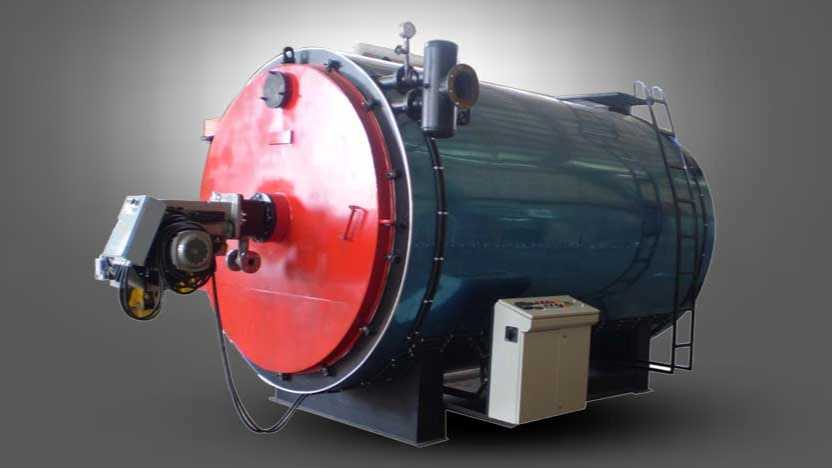
Hot oil boiler or hot oil boiler is a closed system in which a special heat transfer oil is used as the working fluid. This fluid circulates in steel coils with a precise geometric shape and is ignited by a burner. Since thermal oils have a much higher boiling point than water, the system can provide temperatures beyond 300°C without vapor formation and deposition at very low and atmospheric working pressure conditions. This unique feature has made the demand for hot oil boiler construction and commissioning cost inquiries for food and chemical industries to find an increasing trend, because both the safety of the operator is maintained and the control of thermal errors is minimized.
Engineering group "Sanet Pars Bohar" designs and implements a new generation of hot oil boilers, relying on international standards such as DIN 4754 and the national standard of Iran. In the structure of these boilers, continuous circulation of fluid is done by using anti-leak thermal circulation pumps. After receiving the heat of the flame in the combustion chamber, the hot oil is directed to the jacketed exchangers or tanks, and after giving up its heat, it returns to the heating cycle. Eliminating phenomena such as corrosion, rust, and lime deposits, which are common problems of traditional steam systems, has multiplied the efficiency of these boilers.
The importance and position of the hot oil boiler in the food industry
In food production factories, heat is considered as a vital parameter in determining the quality, color, taste and nutritional value of the final products. Any temperature fluctuation or excessive local heating can cause the raw materials to burn, the taste to become bitter, and the quality of the product to drop drastically. For this reason, production line managers tend to estimate the cost of building and operating a hot oil boiler for the food and chemical industries before any action, and ensure the supply of mild, continuous and uniform heat. These boilers play a leading role in large-scale industrial fryers, edible oil refineries, starch processing lines, canned food production, confectioneries, and chocolate manufacturing.
Maintaining the health of food texture relies on continuous temperature regulation. For example, in frying a lot of chips and snacks, the thermal shock entering the oil in the cooking tanks causes a drop in the health of the food. The heating system made by Pars Bohar industry maintains the temperature of the cooking fluid digitally and constantly by providing a continuous flow without loss of thermal oil. The absence of the risk of explosion of the steam tank also keeps the sanitary environment of the factory environment safe and provides the possibility of obtaining the highest standards of health and work safety for food units.
Key applications of hot oil boilers in chemical factories
Chemical processes have a much more sensitive and sometimes critical nature in terms of thermal stability. Resin production reactors, petrochemical distillation systems, glue production lines, paint and pharmaceutical industries require very high temperature levels that hot water or steam systems cannot satisfy under normal conditions. In such a situation, by evaluating the cost of building and operating a hot oil boiler for the food and chemical industries, investors realize that the implementation of a high-quality oil system guarantees the reliability of reactions and prevents possible explosion accidents of high-pressure boilers.
Many polymer and chemical synthesis processes require maintaining a precise temperature of 250 to 320 degrees Celsius for several hours. The hot oil boilers produced by Sanat Pars Bohar Company, with the possibility of intelligent PLC controller and automatic gradual valves, do not allow any temperature deviation to the system. In addition, in the processes of soap making, solvent recovery and melting of polymers, these thermal generators provide the uniform temperature of double-walled tanks with minimal losses and keep the efficiency of chemical reactions at the highest quality level.
Basic factors in estimating the cost of hot oil boiler construction
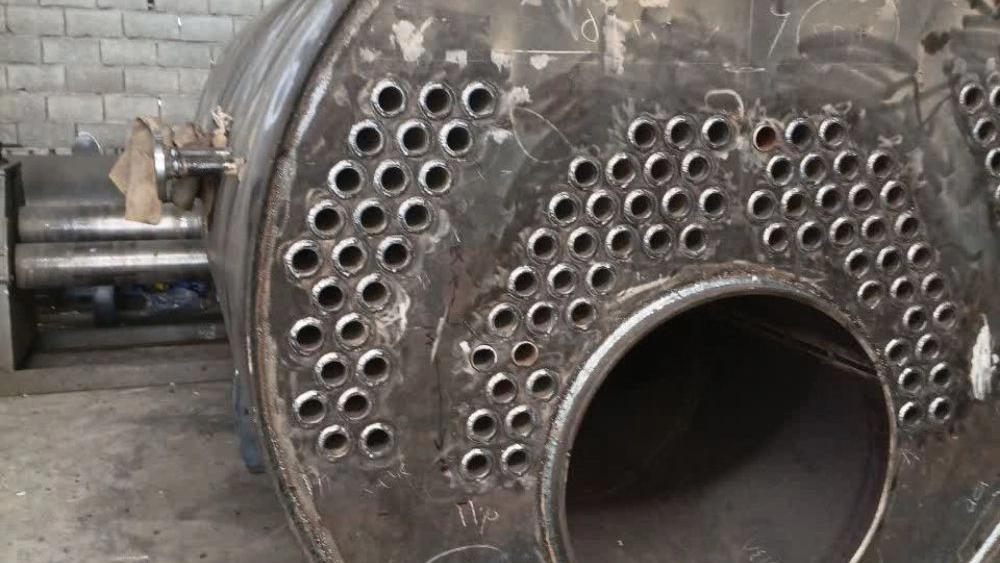
The type of material used in the coils and boiler body is another determining factor. In high-quality and standard factories, alloy seamless fire pipes with DIN 17175 standard grade such as ST35.8 are used. The thickness of the tubes, the structure of two coils or three coils to optimize the heat exchange levels and the cold rolling method of the coils create different finished costs. By purchasing high-quality material with a valid metallurgical certificate, Pars Bohar Industry ensures that the coefficient of resistance to thermal fatigue and corrosion is maintained in the long term. The quality of thermal insulation with high-quality ceramic wool with a density of 128 kg/m3 and multi-layer insulation is another factor that increases the life of the device and is reflected in the construction cost calculations.
Key components and constituent parts of hot oil boiler
The oil heat transfer system does not just consist of a cylindrical boiler, but a chain of continuous parts whose coordination makes the safety of the process possible. Knowing this equipment helps project managers to more clearly evaluate the cost of building and operating a hot oil boiler for food and chemical industries. Each component plays a fundamental role in the safety, efficiency and durability of the entire facility.
Thermal coils are the main brain of the system, the hot gases from combustion pass through them and heat the oil inside the tube. The appropriate burner, which can be gas-burning, diesel-burning or dual-burning, also determines the flame pattern and combustion efficiency. The high-pressure centrifugal circulation pump for hot oil, which is equipped with mechanical sealing or advanced sealing systems, has the task of moving fluid without leakage. Closed or open expansion source to control the change of oil volume due to heat, oil storage source, gas separation system or degasser, oil injection pump and electronic flow rate and temperature control sensors are the fundamental parts of this system, which Pars Bohar industry uses brands with European and domestic test certificates in their assembly.
Steps and requirements related to the cost of setting up a hot oil boiler
After the final stage of production and the departure of the device from the factory, the implementation and installation phase begins, which also allocates a specific budget. Implementation of Manisman grade 40 or grade 80 steel piping according to the pressure and temperature of the system, implementation of supports and thermal expansion fasteners, correct connection of return paths to consumer devices such as reactors or tanks, and complete insulation of transmission lines with thick stone wool and aluminum coating are included in this stage.
The cost of buying primary heating oil is an important part of the investment. Standard mineral or synthetic oils are selected according to the operating temperature, and their draining and refilling must be done according to strict guidelines to prevent air infiltration. The next stage is the hydrostatic test of piping and boiler with compatible liquids, followed by the gradual deaeration and dehumidification phase. If the start-up phase is performed by uninformed people, the phenomenon of cavitation in pumps and evaporation of moisture bubbles in the oil will cause a sudden drop in pressure and even the risk of system explosion. The skilled experts of Pars Bohar industry, by fully monitoring all these steps, ensure that the production line reaches trial and then permanent operation without defects and with complete safety.
Comparative examination of costs; Hot oil boiler against steam boiler
Choosing between a steam boiler and a hot oil boiler is one of the constant challenges of financial and technical project managers. To properly understand the cost of building and operating a hot oil boiler for the food and chemical industries in comparison to steam systems, one must have a multifaceted look at the initial costs and ongoing maintenance costs. Although the purchase of a hot oil boiler may require a significant initial investment due to the need to use resistant heat pumps and special piping, but this cost will soon return through the reduction of energy and water consumption.
Quality standards, safety tips and optimal lifespan of equipment
The safe operation of thermal boilers in industrial environments is tied to compliance with strict technical protocols. In the production process, the use of welding technicians certified in non-destructive radiographic and ultrasonic tests is vital. The design of multi-layer control systems including pressure switches, low flow rate switches, emergency limit thermostats and flow deviation alarms prevents the dangers of oil coking inside the coils. If the flow of oil inside the pipes slows down for any reason, the high heat of the burner will cause the oil to burn and carbon deposits on the walls of the pipes, which will cause the coil to be punctured.
Pars Bohar industry has improved the stability and lifespan of the devices to more than two decades by installing smart fluid flow monitoring systems and using anti-spark electric valves. Implementing regular condition monitoring programs by sending oil samples to the laboratory to measure viscosity and flash point, checking the mechanical health of pump seals and annual insulation reviews are effective factors that prevent the staggering costs of major repairs and guarantee uninterrupted production in chemical factories and food industries.
Investment return and sustainable economic productivity
Investment in production lines is considered a successful decision when it has a short-term return on investment and a stable profit margin. By carefully calculating the cost of building and operating a hot oil boiler for the food and chemical industries, it is revealed that due to the high thermal efficiency of 85% and the use of thermal recycling systems in the design of modern boilers, the fuel consumption of the burner is reduced by 20%. The lack of heat loss through steam flash and the reduction of production line stops for descaling doubles the profitability.
In addition to saving energy, products processed with hot oil boilers have a much lower waste rate due to not being exposed to sudden thermal shocks. In the food industry, the rate of food wastage is reduced and in the chemical industry, the purity of polymer compounds and resins increases without soot streaks caused by local heat. All these components make the budget spent for the construction and operation of these systems to be compensated in a period of less than two years through direct savings.
Why is buying a boiler from Pars Bohar industry the best choice?
Choosing a reliable manufacturer is the most decisive step in the perfect implementation of heavy facility systems. With decades of brilliant background in the design, assembly, installation and after-sales services of hot oil boilers, steam boilers and pressure tanks, "Sanat Pars Bohar" has become the most reliable partner of prominent production units in the country. The use of fully automatic coil rolling equipment, the use of the best grades of authentic European alloy steel, and the precise assembly of burners and electric pumps of the world brand are among the strengths of this industrial complex.
summary
Equipping production lines with modern thermal systems is a definite strategy for survival in the competitive market and achieving sustainable productivity. The transparent calculation of the cost of building and operating a hot oil boiler for the food and chemical industries allows factories to reach ideal temperatures without facing the risks of high hydraulic pressures and wastage of water and fuel. Relying on the experience of reputable manufacturers such as Sanat Pars Bohar makes the process of building and implementing these systems from the design stage to operation a safe, efficient and profitable experience.
