
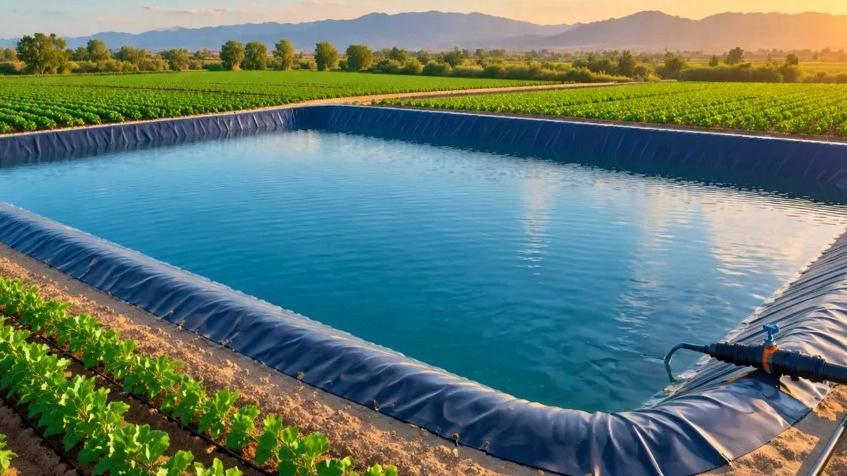

With the increasing need for water in the agricultural sector, decreasing rainfall and limited water resources, water storage has become one of the most important measures to maintain production and reduce operating costs. Many farmers and garden owners are looking for safe ways to build a water storage pool to prevent water wastage. In the meantime, building an agricultural water storage pool with geomembrane sheets is known as one of the most practical and economical pool insulation methods.
Typical earthen ponds, especially in high permeability soils, lose a significant amount of stored water through percolation into the underlying layers. Additionally, wall cracks, weed growth, slope erosion, and ongoing maintenance costs can make these types of pools difficult to operate. Using a geomembrane sheet can completely seal the inner surface of the pool and prevent water penetration.
Fidar Covering Furin Company provides services related to the design, supply of materials and implementation of agricultural water storage pool, relying on operational experience, knowledge of climatic conditions and the use of high-quality geomembrane sheets. Choosing the right sheet thickness, substrate preparation, basic welding and final control are among the most important factors that determine the final quality of the project.
What is geomembrane?
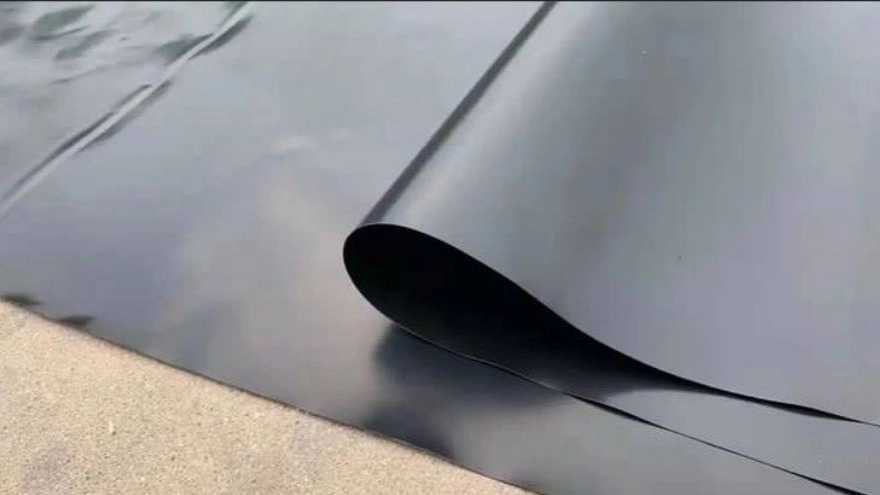
Geomembrane is a type of insulating and impermeable polymer sheet that is used to seal different surfaces. This sheet is usually produced from heavy polyethylene or HDPE and has good resistance against water penetration, humidity, chemicals, sunlight and many environmental factors. The flexibility of the geomembrane allows it to be installed on different surfaces and in large dimensions.
In agricultural projects, geomembrane sheets are used to build water storage pools, water transfer channels, runoff collection ponds, and liquid storage tanks. The most important feature of this product is creating a continuous and waterproof layer on the pool floor and walls. When the sheets are welded together with special devices, the possibility of leakage is minimized.
In the construction of an agricultural water storage pool with a geomembrane sheet, the quality of the sheet is as important as the execution method. Even the best sheet cannot perform well if it is installed on an inappropriate substrate or improper welding. For this reason, it is very important to use an experienced executive team and standard products.
Why is it important to build an agricultural water storage pool with a geomembrane sheet?
Water is the most important production factor in agriculture, and the lack of a suitable program for its storage can cause heavy damage to products. The construction of an agricultural water storage pool with a geomembrane sheet provides the possibility of storing water in rainy seasons and using it in periods of low water. This method can be used in gardens, fields, greenhouses, livestock units and small and large agricultural lands.
One of the main advantages of this type of pool is the drastic reduction of water penetration into the ground. In pools without insulation, part of the water is absorbed by the soil in a short period of time; But it acts like a geomembrane and keeps the water in the pool for a longer time. This feature has a high economic value, especially in arid and semi-arid areas.
On the other hand, the construction is stable.
On the other hand, the construction of an agricultural water storage pool does not require a lot of rain and a long implementation time. In many projects, after excavating and preparing the bed, the sheets can be installed and welded in a short period of time. The speed of the proper implementation will reduce the cost of human resources and the stoppage of agricultural activities.
Advantages of building an agricultural pool with geomembrane
Prevent water loss
The most important reason for using geomembrane is the complete sealing of the pool floor and walls. If the surface of the bed is properly prepared and the welds are performed with the right device, the amount of water leakage will be very low. This issue helps the farmer to have more water to irrigate the crops.
Reduce construction costs
Building a concrete pool or using traditional materials may require a lot of money to buy cement, rebar, formwork and executive power. In many projects, the construction of an agricultural water storage pool with a geomembrane sheet has a lower initial cost than hard and concrete methods. Of course, the final cost depends on the volume of the pool, the type of land, the thickness of the sheet and the implementation conditions.
High execution speed
Geo membrane sheets are produced in different dimensions and can be connected to each other at the project site. With proper planning, the implementation of the pool can be done in a short time. This feature is very important for farmers who urgently need a water storage tank.
Resistance to environmental factors
High-quality geomembranes have acceptable resistance to moisture, many chemicals, temperature changes, and sunlight. Using the right sheet can increase the useful life of the pool. Also, this sheet is more flexible against water pressure and minor bed movements than some hard coatings.
Ease of maintenance
In case of localized damage, it is usually possible to identify and repair the damaged part. The repair of the geomembrane sheet is done locally and in many cases there is no need to destroy the entire pool. Periodically visiting the surface of the sheet and checking the joints will help to increase the life of the pool.
Compatibility with different pool shapes
They don't have a regular geometric pool. Sometimes the land of the project is sloping or due to space limitations, the pool is designed with a special shape. The flexibility of geomembrane makes it possible to seal rectangular, trapezoidal, polygonal and irregular pools.
Construction steps of agricultural water storage pool with geomembrane sheets
Surveying the land and determining the location of the pool
In the first step, the desired land should be checked in terms of access to the water source, distance from the place of consumption, type of soil, slope, underground water level and the possibility of entering machinery. Choosing the right location has a direct impact on the cost and durability of the project. It is better to choose the location of the pool at a point where the transfer of water to agricultural lands is done with the least energy.
Fidar Ferin Covering Company can suggest a more suitable solution for choosing the location and method of swimming pool implementation by examining the project conditions. Preliminary inspection helps to prevent problems such as ground subsidence, underground water accumulation and sheet damage.
Designing the dimensions and volume of the pool
The dimensions of the pool should be determined based on the amount of water needed, the surface of the land, the amount of incoming water, the irrigation schedule and the available space. A design that is too large can increase project costs, and a small design will not meet the needs of agriculture.
At the time of design, things such as the slope of the walls, the depth of the pool, the path of water entry, the exit location, emergency overflow, access for repairs and safety around the pool should be considered. Accurate design makes soil removal and sheet installation more orderly.
Excavation and bed preparation
After the dimensions are determined, excavation is done. The floor and walls of the pool should be as smooth as possible, dense and free of sharp stones, plant roots, metal parts and debris. The presence of sharp objects under the sheet can cause holes or reduce the life of the geomembrane.
In some projects, a layer of soft sand or geotextile is used for better bed preparation. Geotextile can play a protective role and reduce the pressure caused by stones or unevenness of the bed. The selection of this layer depends on the ground conditions and the executive expert's opinion.
Choosing the right thickness of the geomembrane
Sheet thickness is one of the most important decisions in building an agricultural water storage pool with geomembrane sheets. Thinner sheets may be suitable for small, low-risk projects, but in large pools, rocky terrain, or projects where there is mechanical stress.
Choosing the thickness should be done based on the volume of the pool, soil type, water depth, installation method, weather conditions and the amount of traffic on the sheet. Using too thin a sheet to reduce the initial cost may increase repair costs in the future. Fidar Farin Covering Company can suggest the right option based on the project specifications.
Spreading and installing sheets
After being transported to the project site, the sheets should be carefully unfolded and spread on the prepared surface. At this stage, the sheet should not be stretched on the ground or exposed to sharp objects. Large folds should be controlled as much as possible to perform welding operations with good quality.
Installation of the sheet should be done in such a way that no additional pressure is created at the junction of the floor and the wall. Also, a suitable margin around the pool should be considered to restrain the sheet. Correctly restraining the sheet at the edges prevents it from moving due to wind, temperature changes or water pressure.
Geomembrane sheet welding
Welding is the most important part of geomembrane pool implementation. Sheets are usually joined together with special thermal devices. The temperature of the device, the speed of movement, the pressure of the roller and the cleanliness of the sheet surface, all have an effect on the welding quality.
Welding must be done by a skilled operator. Incomplete welding, sheet burns, contamination of the connection surface or improper adjustment of the device can cause leakage. To ensure quality, in professional projects, various tests are performed on seams to identify and correct weak points before waterproofing.
Implementation of inlet and outlet pipes
The agricultural pool should be connected to the water transmission and distribution system in principle. The place of pipe entry, exit, full drain and emergency overflow must be determined before the final installation of the sheet. Around the pipes need extra care, because improper connection can be one of the main points of leakage.
Using flange, sealing parts and proper installation method plays an important role in increasing the durability of these parts. The design of the emergency exit also prevents water from overflowing and putting too much pressure on the walls.
Final control and experimental dewatering
After finishing the installation and welding, the entire surface of the pool should be checked. Seams, corners, pipe joints and sheet anchoring points must be carefully controlled. Then the initial drainage is done in stages to evaluate the performance of the pool and the stability of the walls.
Test drainage helps to identify possible leaks and operational defects. Any problems must be resolved before full operation. Performing this step carefully will prevent additional costs when using the pool.
Factors affecting the price of geomembrane pool construction
The price of building an agricultural water storage pool with geomembrane sheet depends on various factors and it is not possible to set a fixed price for all projects. The most important influencing factors are:
- The size and dimensions of the pool
- The depth and slope of the walls
- The type of soil and the difficulty of excavation
- The thickness and type of the geomembrane sheet
- The need or not for the protective geotextile
- The number and dimensions of the inlet and outlet pipes
- The distance of the project site from the source of materials
- The amount of welding operation and implementation details
- Conditions Weather and access to the project site
- Cost of preparation, transportation, installation and final testing
For an accurate estimate, it is better to provide information about the land, the required volume and the location of the project to the executive team. Fidar Farin Covering Company can provide a more realistic estimate of materials and services after reviewing the project specifications.
Important tips to increase the life of the geomembrane pool
In order to increase the durability of the pool, stones, branches, metal tools and sharp objects must be prevented from entering the surface of the sheet. The movement of people and machines on the sheet should be limited. Also, the edges of the pool should be restrained properly so that they do not move due to wind or environmental changes.
Water quality control can also be effective in increasing the life of the sheet. Some chemicals or pollutants in high concentration may affect the coating over time. For this reason, in projects where the water has special compositions, the type of geomembrane should be selected according to the conditions.
Why choose Fidar Ferin cover company?
Choosing the right contractor to build an agricultural water storage pool with geomembrane sheet is as important as choosing the sheet itself. Fidar Ferin Covering Company, focusing on insulation services and geomembrane coverings, can accompany the client in various stages of the project, from product selection to final implementation.
Providing technical advice, checking the site conditions, choosing the right thickness, accurate execution of welds and sealing control are among the factors that increase the quality of the project. The goal of this company is to provide a solution that fits the real needs of the customer and prevent the imposition of unnecessary costs.
Fidar cover for agricultural, horticultural, greenhouse and industrial projects, it is possible to examine the needs and provide an implementation solution. Working with an expert team reduces the risk of leaks, rework and premature failure. Also, proper implementation from the beginning will control future maintenance and repair costs.
summary
The construction of an agricultural water storage pool with geomembrane sheets this year is one of the most effective solutions for water management, reducing evaporation and preventing the infiltration of valuable resources. Effect for water management, reducing evaporation and preventing the infiltration of valuable irrigation resources, the possibility of local repair, favorable resistance and controllable cost, is used in many agricultural projects.
The success of the project depends on factors such as accurate design, proper preparation of the substrate, selection of appropriate thickness, use of standard sheet, basic welding and execution of connections. Therefore, it is better to entrust the construction of the pool to an experienced group. Farin Beshur Fidar company is considered a suitable option for farmers, gardeners and owners of water storage projects by providing geo-membrane sheets and specialized executive services.
To receive advice on the construction of an agricultural water storage pool with geomembrane sheets, you can discuss the land specifications, the required volume and the location of the project with the experts of Fidar Ferin Covering Company in order to suggest the most appropriate technical and economic solution.
