
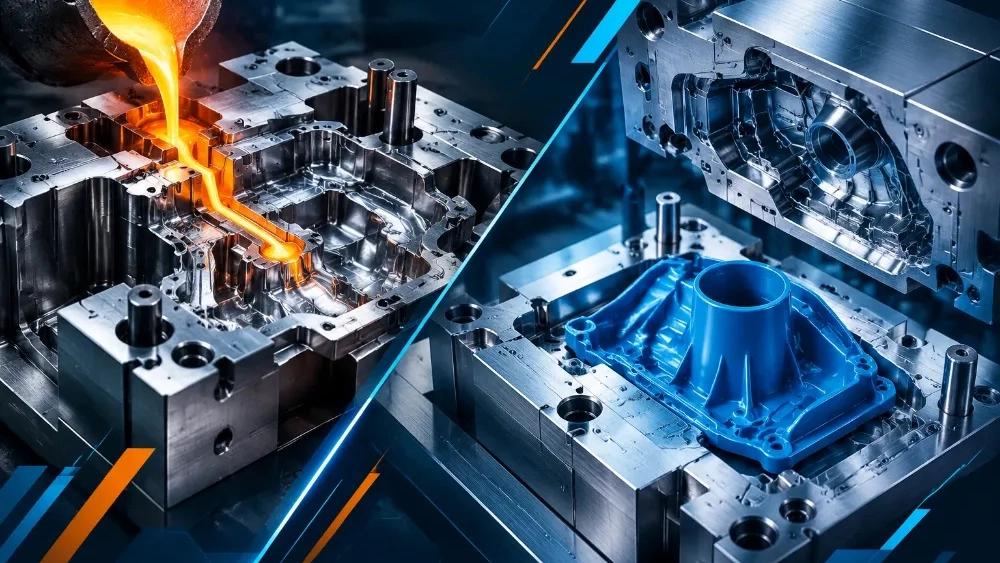
The quality of the mold is not limited to the appearance of the part that leaves the production line. A good mold should produce parts with reproducible dimensions, withstand pressure and temperature, be reasonable in maintenance, and control the cost of producing each part in the desired circulation. For this reason, getting to know quality criteria in the production of die-cast and plastic molds in Mashhad is very important for industrial parts manufacturers, car manufacturers, home appliance manufacturers and manufacturing business owners.
Choosing a template set is not just a price decision. The difference between a template that needs frequent modification after a short period of time and a template that works consistently can affect order delivery times, waste rates, and customer satisfaction. If you intend to order a die-cast mold or a plastic mold in Mashhad, it is better to know how the quality is evaluated at each stage and what questions you should ask the mold maker before comparing the offers. Tos Mould Molding can be one of the review and inquiry options for your project; The criteria of this guide will also help you evaluate its technical specifications and implementation proposal.
Why does the quality of the mold play a decisive role in the production result?
The mold is the main tool for shaping the piece; Therefore, any defect in its design or construction may be repeated in hundreds or thousands of pieces. Dimensional error, pleats, warping, hole filling or part exit difficulty are just a few examples of problems that can be related to the mold and process settings. Of course, you should not always attribute all the faults to the format; The quality of raw materials, machine conditions and production settings are also effective. A professional evaluation examines these factors together.
Attention to quality in the production of diecast and plastic molds in Mashhad is especially important for businesses that need a close supplier, the possibility of on-site coordination and support during the operation period. Geographical proximity alone does not indicate quality, but it can simplify technical visits, sample reviews, corrections, and service follow-up. The goal is for the mold maker to know the real needs of the manufacturer and clarify the mold acceptance criteria before starting construction.
The first quality criterion: accurate knowledge of the part and the production requirement
Form making doesn't start with receiving an image or physical sample; It begins with a precise definition of the problem. The mold maker must know what the part is supposed to be used for, what material it is made of, what tolerances are more important and how much the expected circulation is. For example, the mold of a plastic decorative part does not have the same requirements as the mold of a part to be assembled into a mechanical assembly.
In the initial review stage, the technical drawing, three-dimensional model, materials, sensitive assembly areas, desirable appearance surface, and the performance conditions of the part must be determined. If this information is incomplete, even the exact execution of the machining operation will not necessarily lead to a suitable mold. One of the signs of a high-quality approach in diecast and plastic molding in Mashhad is that the presenter asks about technical ambiguities and explains the limitations of the piece before announcing the final design.
Agreement on the acceptance criteria is also important from this stage. It is better for the parties to specify what dimensions will be measured, how the prototype will be checked and with what mechanism possible corrections will be made. This transparency reduces disagreements during template delivery.
mold engineering design; The basis of quality and durability
Engineering design is the most important part of preventing costly defects. In the plastic mold, the location of the separation line, exit angle, wall thickness, gate location, material flow path and the arrangement of the fan system should be selected according to the geometry of the part. The incorrect selection of any of these items can cause deformation, undesirable appearance, air entrapment or difficulty in part separation.
In the form of diecast, the design of the melt entry path, channels, overflows, air exit and cooling system is of particular importance. Die-cast parts are made in different thermal and pressure conditions than plastic injection parts; Therefore, it is not possible to use the same design version for both processes. The quality of the design is revealed when the mold, in addition to producing an acceptable part, has a stable production cycle and the possibility of proper maintenance.
Using 3D modeling and checking the possibility of making the part before machining helps to identify errors early. However, software tools alone do not guarantee results. The designer's experience in understanding the behavior of materials, production equipment and the actual conditions of the factory also plays an important role in the production of die-cast and plastic molds in Mashhad.
Selection of steel and mold materials based on application
The quality of the raw materials of the mold must be in harmony with the type of process, the expected number of parts and the working conditions. Choosing a more expensive material does not always mean a better choice; Just as choosing a cheaper material regardless of wear and temperature can increase the cost of repair or stop production. What is important is the appropriateness of the steel material and mold parts with the needs of the project.
In plastic molds, the type of polymer, the presence of fibers or abrasive additives, the quality of the expected surface and the production run affect the choice of steel. In diecast molds, resistance to thermal stress, erosion and conditions of contact with the melt is also very important. Improper or uncontrolled heat treatment may change dimensions, crack or reduce the life of sensitive mold parts.
When evaluating a manufacturer's offer, don't settle for just the general term "high quality steel". It is better to ask about the type of material of the main parts, the reason for choosing it, the method of heat treatment and the possibility of replacing consumable parts. These details will help you compare the quality of the offer with the price and expected life of the mold.
Machining accuracy and tolerance control
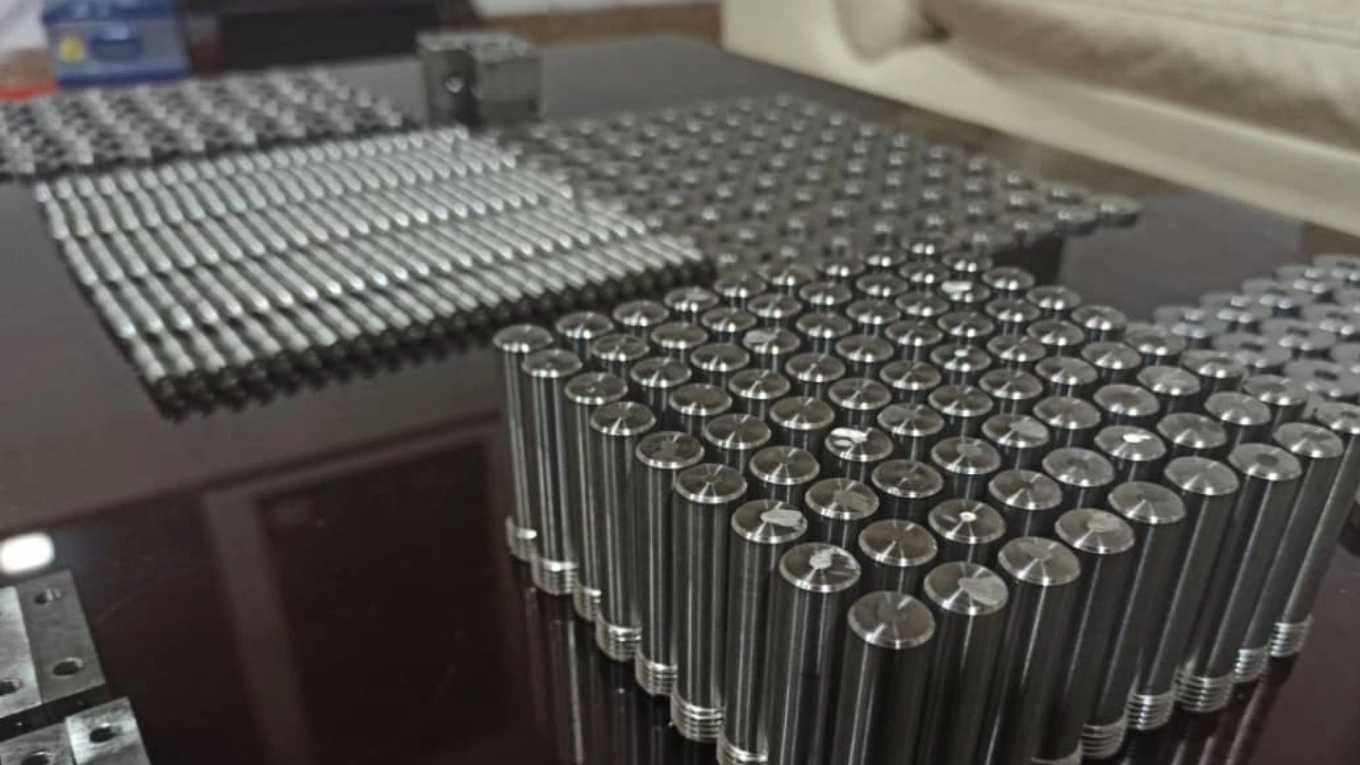
After the approval of the design, it is time to make the mold components. At this stage, the accuracy of the machining of cavities, muscles, contact surfaces and moving parts has a direct effect on the final quality. If the parts of the mold are not made and assembled with proper precision, pleats may be created, the movement of the components may be accompanied by friction, or the dimensions of the final product may change.
Manufacturing methods such as CNC milling, spark and wirecut are used depending on the geometry and details of the mold. More important than the name of the devices is the ability of the collection to choose the right method, control the dimensions and record the inspection results. Some functional dimensions should be controlled more carefully than non-sensitive surfaces. Defining these priorities in the plan and quality control plan prevents unnecessary spending.
In evaluating the quality of mold making in Mashhad, ask about the dimensional control method: are measurements made during the construction stages or only at the end of the work? Are the critical points of the part and the mold determined in advance? A clear answer to these questions will give you a more accurate picture of the manufacturing process.
Cooling and temperature control system
Proper cooling affects the cycle time, the uniformity of the dimensions and the appearance quality of the piece. If parts of the mold cool faster than other parts, the possibility of defects such as warping or dimensional changes increases. In plastic molding, this issue is especially important for parts with different thicknesses or complex geometry.
In diecast molds, temperature control is also critical in terms of process stability and mold durability. Extreme temperature changes and uneven heat distribution can lead to a decrease in the quality of the part and an increase in pressure on the mold components. The design of cooling paths should be done based on the shape of the part and manufacturing constraints, not simply by repeating a fixed pattern.
One of the practical criteria for measuring diecast and plastic mold production in Mashhad is the manufacturer's attention to the behavior of the mold in real production conditions. A mold that only looks good on the drawing, but after installation on the machine requires difficult and constant adjustments to achieve a healthy part, may create a significant hidden cost.
Air exit, channels and material entry point
In both die-casting and plastic injection processes, the movement path of the material inside the mold must be carefully designed. Improper entry of material, non-evacuation of trapped air or non-uniform distribution of current can cause surface defects, complete filling of the part or loss of its properties. Of course, the type of defect and its solution are not the same in these two processes.
In the plastic mold, the gate location should be selected by considering the shape of the part, the appearance requirements, the flow path and the way to separate the channel. In the form of die-cast, the design of channel, overflow and air outlet should be in accordance with the geometry of the part and injection conditions. Making the right decision in this part is usually the result of the cooperation of the mold designer, part maker and the operator or person in charge of the production process.
For this reason, it is better to ask the manufacturer to explain the placement logic of the material entry and exit paths when ordering the mold. Providing a comprehensible technical explanation is a good sign that the problem has been investigated; However, the final judgment should be based on the mold test and the quality of the sample parts.
Accurate assembly and smooth operation of moving parts
Even if all the individual mold parts are carefully made, improper assembly can disrupt the performance of the assembly. The alignment of the plates, the smooth movement of the sliders, the operation of the springs and the correct closing of the mold must be checked before delivery. Abnormal jamming or wear of moving parts, in addition to stopping production, increases the possibility of damage to the part or the mold itself.
Access to the parts that need periodic service is also part of the design and assembly quality. If repairing a consumable part requires difficult disassembly of multiple parts, long-term maintenance costs will increase. A repairable design is an important practical advantage, especially for high-production molds.
For manufacturers who are looking to order plastic mold and die-cast in Mashhad, checking the assembly method and the possibility of mold service can be the basis of decision making along with the initial price. A mold that has better repairability may be a more economical choice during the operation period.
Mold testing and evaluation of sample parts
Delivering the template without a practical test makes the quality assessment incomplete. In the test phase, it should be seen how the mold works in the appropriate device and with the desired materials. Does the piece come out easily? Are the critical dimensions within the agreed range? Is the quality of the surface consistent with the project's needs? Are the defects still repeated after the logical adjustment of the process?
The prototype must be checked against predetermined criteria. Some corrections are normal after the first test, especially on complex parts; It is important that the correction process is documented and targeted. Successive changes without identifying the root cause increase the time and cost of the project.
In evaluating quality criteria in the production of die-cast and plastic molds in Mashhad, ask the mold maker about the test steps, how to record defects and final approval conditions. If the part manufacturer and the mold maker agree on the sample acceptance criteria, the final decision will be clearer.
Technical documentation and after-delivery service
The quality of the template does not end on the day of delivery. Drawings, specifications of major parts, maintenance recommendations, and modification history are all valuable information in operation and subsequent repairs. Proper documentation helps the production team identify potential defects faster and face less uncertainty when ordering replacement parts.
It should also be clear what kind of support is provided in case of a problem and how the responsibility for investigating the problem is defined. Not all manufacturing problems are caused by mold; But a manufacturer that has a clear mechanism for troubleshooting and possible correction provides a more reliable cooperation. It is better to clearly agree on the terms of service before starting the project.
If you are inquiring for cooperation with Tos Mould Molding, bring up the same things in the conversation: deliverable documents, test method, modification process and support method after installing the mold. Technical and written answers make it easier for you to compare offers.
How to evaluate the price of the mold in addition to the quality?
The cheapest offer is not necessarily the least expensive choice. The price of the mold is influenced by factors such as the complexity of the part, the number of counters, steel material, standard parts, machining operations, surface finish and the amount of testing. Therefore, comparing two prices, without comparing technical specifications, may be misleading.
See the cost over the lifetime of the template to make a better decision. If a mold has a lower initial cost but causes more scrap, frequent machine downtime, or costly modifications, the actual cost of production increases. On the other hand, paying more is justified only when it is associated with the technical needs of the project and measurable benefits.
At the time of receiving the pre-invoice Diecast and plastic mold making in Mashhad, ask to specify the exact work scope: what steps does the design include? جنس اجزای اصلی چیست؟ How many tests or corrections are included in the proposal? معیار تحویل قالب کدام است؟ This information enables a fair comparison between options.
What questions should we ask to choose a mold maker in Mashhad?
The conversation with the mold maker should go beyond asking the price and delivery time. First, ask about experience related to your part type and production process. Making a plastic mold for an appearance part has different requirements than a die-cast mold for an industrial part. The relevant portfolio, if it can be presented, helps to recognize the executive ability of the collection.
Then ask about the design method, dimensional control and sample testing. You don't need to know all the specialized details in advance; A professional facilitator should be able to explain important decisions relevant to your project. Also clarify what information should be provided on your behalf and at what stage the design of the piece or template will be approved.
Finally, check the timing, scope of modifications, deliverables and post-delivery services. The right choice for moulding in Mashhad is choosing a set that can balance your technical requirements, budget and production schedule; Not just the collection that makes the most attractive promise.
Why check out Tos Mold Molding for a project inquiry?
When a mold is going to play a continuous role in your production process, clear communication with the manufacturer becomes very important. Tos Mould Molding is a name that you can consider when considering options for making diecast and plastic molds in Mashhad, to receive advice and inquiries about your project. It is suggested that you prepare information about the part, circulation, material and quality requirements to enable a more detailed technical discussion.
For the final selection, weigh the proposal of this set as well as any other option based on verifiable criteria: suitability of the design with the use of the part, material specification of the mold, quality control program, testing method and delivery conditions. This approach helps to make a more confident decision and reduces the possibility of misunderstanding about the expected result.
If you are in the design phase of the part, it can be helpful to outline the molding requirements before the design is finalized. Sometimes, correcting a geometric detail at the beginning of work makes mold making easier and part production more stable. In order to check the feasibility of the project and receive an offer according to the production needs, you can contact Tos Mould Molding and provide the technical specifications of the part.
summary
Quality criteria in the production of die-cast and plastic molds in Mashhad are a series of interconnected factors: understanding the needs of the part, engineering design, choosing the right material, manufacturing accuracy, temperature and material flow control, basic assembly, practical testing and post-delivery support. Paying attention to one of these items without checking the other parts does not give a complete picture of the quality of the template.
If you are going to order a mold, define acceptance criteria, compare technical offers along with price, and have a clear agreement on testing and possible modifications before making a decision. Tos Mold Molding can be included in your list of options for inquiry and review of diecast or plastic mold making project in Mashhad. Make the final decision based on the part specifications, technical answers and cooperation conditions so that the selected format is in harmony with your actual production needs.
