
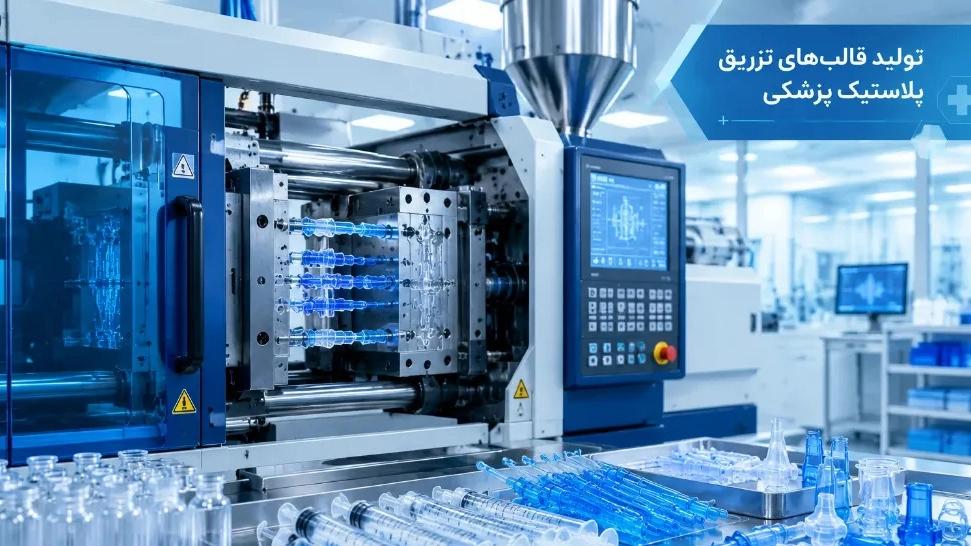
Medical equipment industry is one of the areas where manufacturing quality, dimensional accuracy, reliability and compliance with health requirements are very important. Many medical equipment and consumables are composed of polymer parts that must be manufactured with high precision, uniform quality and mass production capability. In the meantime, production of plastic injection molds for medical equipment and supplies plays an important role in developing new products and improving the production process.
Plastic injection molding allows manufacturers to produce parts with specific geometric shapes, controlled dimensions, and repeatable quality. From the housings of medical equipment and holding parts to the body of some disposable tools, many products in this industry need molds that are designed based on the product characteristics, the type of raw materials, and the production conditions.
Choosing an expert group in the field of mold design and manufacturing can affect the final quality of the part, production cost, the speed of product supply to the market and the amount of waste. Tos Mould Molding, focusing on the field of industrial molding, can be considered as one of the options considered by manufacturers for designing and making plastic injection molds. The final selection of services and the evaluation of the executive capabilities of the complex must be done based on the technical needs of the project and its real facilities.
In this article, we examine the process of making medical molds, the characteristics of a suitable mold, the stages of design and production, the criteria for choosing a mold maker and the role of mold making in the way of implementing industrial projects.
What is a medical plastic injection mold and what is its use?
A plastic injection mold is an engineered tool that directs molten polymer material into a cavity with a specific geometry to form the desired part after cooling. This process is widely used to produce repetitive parts in medium and high circulations.
In the medical industry, molds should be designed according to the application of the part, the polymer material, the required dimensional accuracy and the conditions of use of the product. In some applications, in addition to appearance quality and strength, features such as sterilization ability, chemical resistance, dimensional stability and compatibility of materials with medical contact conditions are also important.
The most important applications of molding in the medical industry
Plastic injection molds are used in the production of a wide variety of parts, including:
- Body and housing of medical equipment and devices
- Polymer parts and connectors
- Plastic parts of some syringes and injection equipment
- Laboratory equipment housings and caps
- Polymer parts used in diagnostic tools
- Parts of some laboratory kits and sampling products
- Disposable medical parts according to design requirements Product
- body and components of some medical monitoring and measuring equipment
It should be noted that all the mentioned parts are not necessarily produced with a type of mold or a polymer material. The design of the mold and the selection of materials should be done based on the exact application of the product, legal requirements and its technical specifications.
Why is it important to produce plastic injection molds for medical equipment and consumables?
The quality of the mold is one of the main factors in obtaining precise and repeatable parts. If the mold is not designed properly, the produced parts may face problems such as warping, pleating, improper shrinkage, incomplete cavity filling, or dimensional differences.
In medical products, such problems may affect the performance of the part and its usability in addition to increasing costs. For this reason, the design and manufacture of the mold must begin with a detailed examination of the product's needs.
1. Achieving proper dimensional accuracy
بسیاری از قطعات پزشکی باید با اجزای دیگر بهدرستی مونتاژ شوند. In such a situation, dimensional tolerances and surface quality are very important. Accurate design of holes, selection of suitable machining method and quality control in different stages of construction help to reduce the dimensional difference of parts.
2. Increase production uniformity
One of the advantages of basic molding is the possibility of producing a large number of parts with similar characteristics. A properly designed and adjusted mold can help reduce quality fluctuations and simplify the control of the production process.
3. Reducing waste and production costs
Improper design of material flow path, cooling system or material entry point can cause various defects. Identifying these issues before the final construction of the mold will reduce the cost of subsequent modifications and increase the productivity of the production line.
4. Help develop new products
Companies active in the medical equipment industry are always looking to improve the design of products, reduce the weight of parts and increase the efficiency of the production process. Engineering molding can provide the possibility of converting the initial plan into a reproducible and reproducible part.
Features of a suitable plastic injection mold for medical products
To choose the right mold, a set of technical and production features should be checked. Merely the low price of making the mold does not mean an economic choice; Because the quality of the mold and its maintenance cost are also important during the life of the project.
Engineering design and compliance with tolerances
In the design phase, the dimensions of the part, the thickness of the walls, the exit angles, the location of the separation lines and the way the part exits from the mold should be checked. Proper design of these parts helps to reduce appearance and dimensional defects.
In parts with fine details, sensitive joints, or functional surfaces, careful consideration of tolerances is essential. The use of engineering design and material flow analysis software, if appropriate for the project, can help identify possible problems before construction.
Choosing the right steel and materials for mold making
The material of the mold should be selected according to the production volume, type of polymer, working conditions, required abrasion resistance and surface finishing requirements. Suitable tool steels and in some applications other materials such as aluminum can be used in making parts of the mold; The final choice depends on the project specifications.
In mass production, wear resistance, dimensional stability and mold repairability become more important. Also, in some parts, the quality of the surface of the mold cavity directly affects the appearance of the final product.
Efficient cooling system
Cooling is one of the factors affecting the injection cycle time and part quality. Improper temperature distribution can lead to warping, non-uniform shrinkage and dimensional changes.
The basic design of cooling channels can help to improve process stability and reduce production time. Of course, the final result depends on the type of polymer, the geometry of the part, the conditions of the injection machine and the process settings.
Ease of maintenance and repair
Industrial mold should have a suitable design for periodical services, cleaning, replacement of consumable parts and possible repairs. Proper access to mold components and the possibility of replacing damaged parts reduces production downtime.
Production steps of plastic injection molds for medical equipment and consumables
Mold making is a multi-stage process that must be done with careful planning and coordination between product design, mold engineering and production requirements.
The first step: checking product needs
At the beginning of the project, technical drawings, 3D model, part material, expected circulation, tolerances and conditions of use of the product are checked. If the product is still in the design stage, it may be necessary to suggest modifications to improve its manufacturability.
At this stage, it should be determined what the part is supposed to do, whether it will be assembled with other components, and what limitations there are in its appearance or performance.
Second step: 3D design of the mold
After finalizing the specifications of the part, the design of the mold begins. In this stage, components such as cavity and muscle, channel system, material entry point, part exit mechanism and cooling system are designed.
The number of holes is also determined according to the volume of production, the size of the piece, the capacity of the injection machine and the budget of the project. A single-hole mold may be suitable for some low-run products; While for mass production, multi-hole mold can be a suitable option.
The third step: selection of materials and standard parts of the mold
At this stage, the type of steel or other materials used, standard components, channel systems and the type of movement mechanisms are determined. The choice should be made according to the production conditions, the depreciation rate and the life cycle cost of the mold.
Fourth step: Machining and manufacturing of mold components
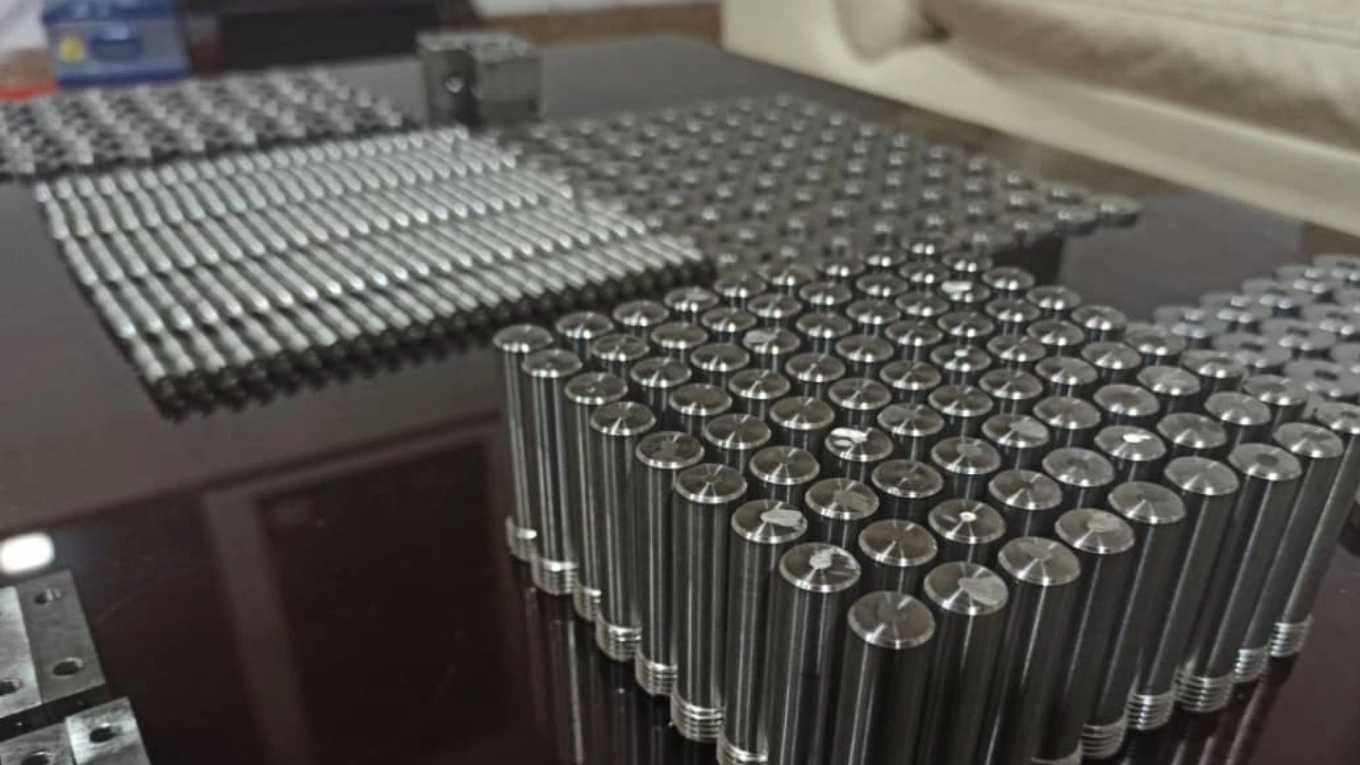
The construction of mold components is done using methods that are suitable for the required geometry and accuracy. Processes such as CNC milling, precision drilling, grinding and, if necessary, electrical discharge machining (EDM) can be used at this stage.
After machining, the dimensions and quality of the surfaces should be checked according to the technical drawings. The accuracy of this step has a direct effect on the quality of mold assembly and its performance.
The fifth step: assembly and mold quality control
After the parts are prepared, the components of the assembly mold and the performance of different parts are checked. Alignment control, the movement of moving parts, the way the mold is closed, and the performance of the part exit system are among the important things of this stage.
Sixth step: injection test and possible corrections
After the mold is prepared, an injection test is performed to evaluate the quality of the part and the performance of the mold. Things like cavity filling, presence of pleats, warping, shrinking, appearance quality and dimensions of the piece are examined.
If a problem is observed, modifications may be required in the format or parameters of the injection process. This step should continue until acceptable and documented results are reached.
Selection of polymer materials in the production of medical parts
Choosing the raw material is one of the most important decisions in the production of medical polymer parts. Each polymer has different characteristics in terms of strength, flexibility, transparency, chemical resistance and thermal behavior.
For example, polypropylene (PP) is used in some disposable parts. Polyethylene (PE) is suitable for some polymer components and polycarbonate (PC) may be used in applications where transparency and mechanical strength are required. Polystyrene (PS) is also used in some laboratory and medical products.
However, choosing a polymer based solely on its name or price is not enough. The exact grade of the material, process conditions, compatibility with the final application, sterilization requirements and the possibility of contact with the body or biological materials should be checked.
Biocompatibility and health requirements
In products that come into contact with the human body or biological fluids, it is important to evaluate biocompatibility according to the type and duration of contact. It should also be determined what kind of sterilization method the piece is subjected to and whether the properties of the material are maintained after sterilization or not.
Using the right material alone does not guarantee the safety of the product. Design, manufacturing conditions, possible contamination, packaging and process validation should also be considered.
The difference between medical molds and general plastic injection molds
Although the basic principles of plastic injection are similar in different industries, the molds used in the production of medical parts may require more detailed control and documentation requirements.
The most important differences are:
- More precise dimensional control: In sensitive parts, small dimensional changes may affect performance or assembly.
- Attention to surface quality: Presence of pleats, particles or surface defects in some products may not be acceptable.
- Pollution control: The production process should be designed according to the level of cleanliness required by the product.
- Material tracking Primary: In projects subject to relevant requirements, the ability to track materials and production records is important.
- Documentation and validation: Depending on the type of product and legal requirements, documentation and process validation may be necessary.
It should be noted that formulation alone is not equivalent to manufacturing an approved medical product. The compliance of the final product with legal requirements and related standards depends on the set of design, production, quality control and risk management processes.
The role of technology in improving the quality of medical formulation
The advancement of design and machining technologies has made it possible to make more accurate molds and optimize the injection process. Using the right engineering tools can reduce product development time and help identify potential problems.
Material flow analysis and injection simulation
Mold Flow analysis helps to check how the molten polymer moves in the mold. This analysis can provide information about the location of weld lines, pressure drop, cavity filling and some possible cooling problems.
Simulation is not a substitute for real testing, but in the right projects it can improve engineering decision-making and reduce the cost of modifications.
CNC machining and dimensional control
CNC machining allows the production of many mold components with appropriate accuracy and repeatability. Besides that, the use of measuring equipment and dimensional control methods appropriate to the level of accuracy of the project helps to evaluate the compliance of parts with technical drawings.
The final accuracy depends on the quality of the equipment, the skill of the operators, the manufacturing method and the quality control program.
How to choose a suitable set for molding medical equipment?
Choosing a mold maker should be done based on the actual needs of the project and technical evidence. Examining portfolios, design capabilities, quality control methods and transparency of the cooperation process can be effective in choosing the right supplier.
When evaluating a template set, it is best to check the following criteria:
- Ability to analyze and design: Can the group check the drawings and requirements of the part and provide the mold plan according to it?
- Manufacturing equipment: Are the machines and facilities needed to make the desired mold available?
- Quality control: Are the dimensions of the mold parts and injected samples checked in a documented manner?
- Program Timing: Are the stages of design, manufacture, testing and modification defined with a clear schedule?
- Service after delivery: Is there a plan for maintenance, repair and supply of replacement parts?
- Transparency of costs: Is the cost of design, manufacture, testing, modification and maintenance clearly defined?
- Relevant experience: Are portfolios and records verifiable in the field Are there similar parts?
A clear answer to these questions will help the producers to make a decision according to the budget, circulation and sensitivity of the product.
Moulding birch mold; An option to review plastic injection mold making projects
In the process of producing polymer parts, cooperation with a suitable molding set can help reduce technical complexities and better coordination between design and production. Tos Mould Molding is a name you can include in your list of options when looking at suppliers in the field of industrial mold making.
For manufacturers looking to implement molding projects, it is important to determine the technical details of the part, the expected circulation, the type of raw materials, the required quality level and the project schedule before starting the collaboration. This information helps to get a technical proposal and a more accurate cost estimate.
Why is it important to check the mold maker's expertise?
Each molding project has its own requirements. The mold required for a simple housing is different from a mold that has fine details, sensitive threads, or multiple movement mechanisms. Also, the appropriate format for trial production may differ from mass production needs.
Therefore, it is suggested that you get detailed information about the following topics before placing an order with Tos Mould Molding:
- Possibility of designing and making a mold suitable for the desired part
- Machining equipment and methods that can be used in the project
- Related and evaluable samples
- Quality control method and initial mold testing
- Approximate time of design, manufacture and delivery
- Conditions of possible modifications and maintenance services
- Final cost based on technical specifications and expected circulation
This approach helps you match the actual capacity of the collection with the project needs and make an informed decision about collaboration.
Cooperation in the production of high-quality polymer parts
If you need a plastic injection mold to develop a new product or increase production capacity, the first step is to prepare detailed technical specifications and receive advice tailored to the project. Providing a 3D map, part sample, polymer type and expected production number can make the review process faster and more accurate.
Birch molding can be considered as one of the options for your project inquiry. Before placing an order, it is recommended to get documented information about the relevant capabilities, performance conditions, guarantees and records of the collection so that the final choice can be made based on the actual needs of the project.
How is the cost of producing plastic injection molds for medical equipment and consumables determined?
The cost of making a mold depends on many factors, and without checking the technical specifications, it is not possible to give an exact price. The number of holes, the dimensions of the part, the geometric complexity, the material of the mold, the type of machining and the required level of accuracy are the most important determining factors.
The main factors affecting the price of the mold
Design complexity: The presence of threads, sliders, moving parts and difficult geometries can increase design and manufacturing time.
Number of cavities: Multi-cavity molds may have a higher initial cost, but increase production capacity in mass production.
Mold material: Choosing more resistant materials or special steels affects the initial cost and working life of the mold.
Accuracy and surface finish: Parts that require tight tolerances or a very high-quality surface may require finishing operations and more precise control.
Testing and corrections: Injection testing, sample evaluation and possible mold modification should be included in the cost and time schedule.
For economic evaluation, it is better to check not only the initial price of the mold, the cost of each piece, the amount of waste, the production cycle time, repairs and the expected life of the mold. This comparison provides a more accurate picture of the actual cost of production.
The future of producing plastic injection molds in the medical equipment industry
With the development of diagnostic equipment, laboratory products and medical instruments, the need for precise polymer parts that can be produced in different circulations is still important. The increasing complexity of products, the attention to quality control and the necessity of cost management make the role of engineering design and mold optimization more prominent.
Using simulation, improving the design of cooling channels, carefully selecting raw materials and developing quality control methods can help increase productivity. Along with these technologies, proper documentation, management of design changes and preventive mold maintenance are also important factors in production sustainability.
In such a situation, manufacturers should consider molding as part of the product development strategy, not just an upfront cost. The right choice of mold can affect the quality of the part, the production capacity and the finished cost during the life of the project.
Conclusion: Informed choice for medical mold making
Production of plastic injection molds for medical equipment and consumables is a specialized process that requires engineering design, correct selection of materials, precise manufacturing, testing and quality control. Paying attention to these steps can reduce the possibility of production defects and provide the basis for the production of uniform and reliable parts.
To choose a supplier, don't use only the initial price as a criterion. Design quality, manufacturing capability, dimensional accuracy, test schedule, maintenance cost and related experience should also be considered in the decision.
Birch mold making can be one of the options to consider for manufacturers who are looking for cooperation in plastic injection mold making projects. It is suggested to provide the technical specifications of the project for a more accurate assessment and get documented information about the execution capacity, portfolios, cost and delivery time.
If you intend to develop a medical product or increase the production capacity of polymer parts, by accurately defining the technical needs and choosing a suitable engineering path, you can take the first step for more economical and high-quality production.
Molding of productive birch; A conscious choice to investigate solutions for making plastic injection molds and developing the production of polymer parts.