
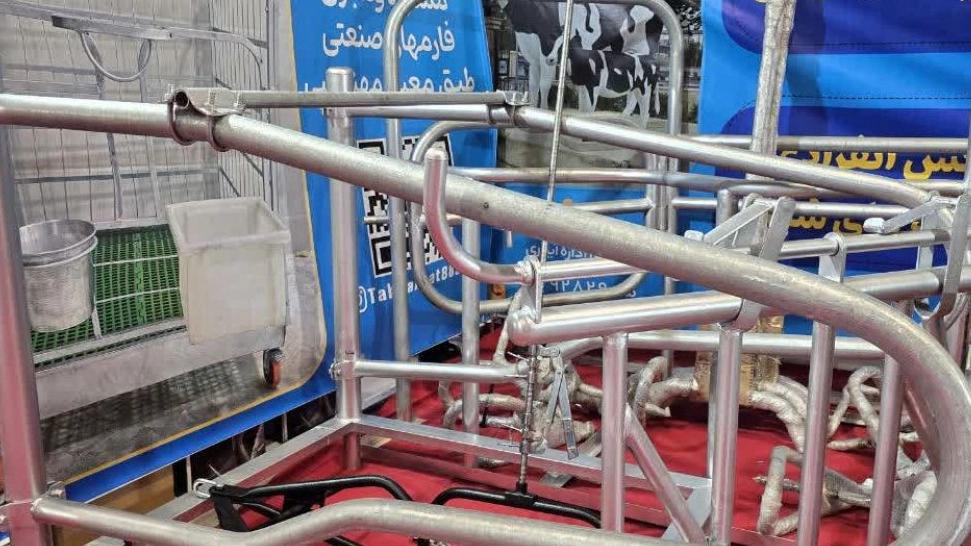
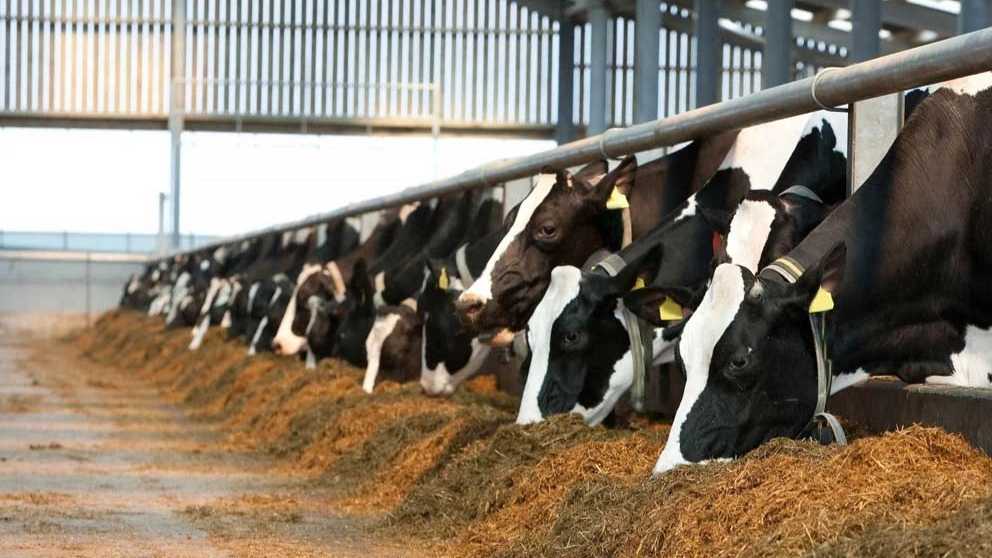

The basic management of industrial and semi-industrial livestock farms depends on the use of standard, resistant and suitable equipment for the needs of livestock. In dairy farms, equipment such as milking boxes and manure boxes play an important role in increasing the order of daily activities, facilitating veterinary operations and improving the working conditions of employees. For this reason, ordering the construction of milking boxes and manure pickers is one of the important issues for ranchers who intend to choose equipment for their collection according to the livestock capacity and herd management method.
The milking box is designed for the correct placement of the cow during the milking operation, and the hoof picking box allows for safer containment of the animal when checking and correcting the hoofs. Each of these equipments should be designed and built based on the dimensions of the livestock, available space, type of activity and safety requirements. The use of inappropriate equipment may make work difficult, increase pressure on employees, and pose a risk to livestock.
Damiar Taha Sanat Parse is a name that can attract the attention of ranchers and managers of cattle breeding units in the field of selection and review of specialized livestock equipment. In choosing equipment, it is very important to pay attention to the quality of construction, type of material, strength of connections, ease of use and maintainability.
If you intend to order the construction of a milking box and cattle manure picker, it is better to determine the operational needs of your collection before choosing the final design. Livestock capacity, number of times of use, environmental conditions, installation facilities and livestock restraint methods are all effective in determining the specifications of the equipment. In this article, we examine the features of the milking box, the construction steps, the selection criteria, and the importance of using the right equipment.
What is a cattle milking box and what is its use?
The milking box is one of the equipments used in some milking systems, which is designed for proper placement of cows and providing controlled conditions during milking. The structure of this equipment should be in such a way that the animal can be placed in the right position and the employees have sufficient access to the required parts.
The design of the milking box depends on the type of milking system, the space of the parlor, the size of the animals and the herd management method. In some units, simpler equipment is used to guide and stabilize the cattle; While larger collections may need more specialized structures and coordinated with milking lines.
The role of the milking box in the order of daily operations
In dairy farms, regular milking operations are very important. The proper design of the place of livestock can help to reduce unnecessary movements, better access of employees and increase the regularity of daily activities.
The milking box should allow the proper entry and exit of the animal and prevent the creation of dangerous points or unnecessary obstacles. Also, its different parts should be designed in such a way that the cleaning and disinfection of the equipment can be done easily.
The importance of designing according to the size of the cow
Dimensions of the milking box should be determined according to the size of the animals in the herd. Too much space can make the animal uncomfortable, and too much space may make it difficult to control its condition.
At the time of ordering the construction of milking boxes and cattle manure, it is very important to check the real dimensions of the animals and how they are placed. Proper design should allow the animal to stand naturally and at the same time not limit the access of the staff.
Paying attention to the hygiene and washing of the milking box
The milking environment should be well managed in terms of hygiene. The accumulation of pollution, the remains of organic materials and the presence of hard-to-clean surfaces can make the cleaning process difficult.
For this reason, in the construction of the milking box, attention should be paid to choosing the right material, designing washable surfaces and reducing the points where pollution accumulates. The type of cover and connections should also be compatible with frequent washing conditions.
What is a cattle hoof box and why is it important?
Hom picking is one of the important measures in managing the health and keeping of cows. Improper growth of the hoof, local injuries and movement problems can affect the animal's welfare, ability to walk and overall performance. The hoof box is designed to control the condition of the animal more safely when checking and correcting hoofs.
The order for the production of milking box and cattle manure picker should be done according to the different use of these two equipments; Because, in addition to strength, the hoof box needs appropriate restraint and support mechanisms to reduce the risk of injury to the animal and the user.
Facilitate poison modification operations
During hoof picking, proper access to the animal's organs is very important. The standard box should provide the possibility of proper positioning of the cow and controlled access to the hoofs.
The proper design of this equipment can make the operation easier for the expert and reduce the possibility of sudden and dangerous movements of the animal. Of course, the choice of restraint method should be done according to the size, physical condition and behavior of the animal.
Increasing animal and operator safety
Cows are heavy and powerful animals and may make sudden movements when they feel pain, fear or discomfort. Therefore, the hoof-picking box must be carefully designed in terms of structure strength, stability of the foundations and the performance of the restraint components.
The presence of catch points, sharp edges or improper connections can be dangerous. It is very important to remove these items and use safe mechanisms in making poison removal equipment.
The use of manure boxes in different livestock farms
The hoof box can be used in dairy farms, beef cattle breeding units and veterinary service centers. However, the required specifications of each set may be different.
Why is it important to order custom-made milking box and cattle hoof picker?
Coordination with the existing space
Before building the equipment, the installation space, the entry and exit route of livestock, the passage of employees and the distance from other devices should be checked. Ignoring these things may limit the animal's movement or make it difficult to perform daily activities.
Custom design allows equipment dimensions to be matched to actual environmental constraints. Also, the location of the equipment should be chosen in such a way that access for cleaning, maintenance and maintenance is easy.
Choosing dimensions suitable for animals
Cattle farms may keep cows of different sizes and body characteristics. In such a situation, the dimensions of the box should be determined according to the specifications of the herd.
In the manure box, the way to support the animal's body and access to the organs is of particular importance. In the milking box, the position of the cow and the access of the staff should be carefully checked.
The possibility of choosing the necessary facilities
Depending on the type of equipment, facilities such as entry and exit control gates, adjustable partitions, restraint mechanisms, reinforced foundations or auxiliary equipment may be required.
In ordering the construction of milking box and cattle manure, it is better to choose facilities based on operational needs. Adding unnecessary parts can complicate the use of the equipment; On the other hand, removing essential features may also reduce safety and efficiency.
Features of a standard milking box
The quality of milking box depends on a set of design and manufacturing factors. The strength of the structure, ease of cleaning, proper access and compatibility with the milking system are the most important criteria that must be checked.
Use of resistant material
The milking box may be exposed to pressure, humidity, detergents and accidental collisions on a daily basis. For this reason, the choice of material should be in harmony with the environmental conditions and the type of use.
Suitable metal with a protective coating, if designed and implemented correctly, can be a practical option for making many livestock equipment. The type of metal, the thickness of the parts and the method of protection against corrosion should be determined based on the conditions of use.
Quality of welding and connections
Connections are important parts of any metal structure. Improper welding or the use of weak connections can reduce the strength of the equipment and create a risk in repeated use.
In the construction of the milking box, the quality of the welds, the connection of the bases, the stability of the structure and the absence of sharp edges should be checked. The final control before exploitation is also very important.
Convenient design for cleaning
Livestock equipment should be designed in such a way that it is easy to clean them. Surfaces that are difficult to reach or have dirt left in the corners can increase cleaning time.
Using a simple and practical design, choosing the right cover and paying attention to where the parts are connected will help improve health conditions. Also, consumables should be compatible with detergents used in animal husbandry.
Features of a professional nail box
In addition to strength, the hoof picking box should provide the possibility of controlled containment of livestock and proper access to hoofs. Since this operation may involve sudden movements of the cow, safe design is very important.
Stable and resistant structure
The stability of the structure in the hoof box is of particular importance. The bases must be designed according to the weight and forces involved, and the equipment should not move or become dangerously unstable during use.
At the time of construction, the installation conditions and the floor type of the place of use should be checked. If needed, the method of anchoring the structure to the ground or appropriate infrastructure should also be included in the design from the beginning.
Appropriate livestock restraint system
Restraint mechanisms should be such as to facilitate the control of the animal, without putting unnecessary pressure on the body or its organs. The adjustability of some parts can help to adapt the equipment to different sizes of livestock.
Using the restraint system must be done by trained people and according to safety instructions. No mechanism should be designed in such a way as to increase the possibility of organ getting stuck or causing damage.
Proper access to poisons
During the modification of the poison, the specialist must be able to observe the state of the poison and use the necessary tools with sufficient mastery. Improper design may cause difficult working conditions or increase operation time.
Paying attention to the location of the organs, access to different parts and the possibility of doing work in the right position are important points in the design of the hoof box.
Attention to maintenance and repairability
Continuously used equipment may require adjustment, replacement or repair over time. The repairable design can make the maintenance process easier.
When ordering the construction of a milking box and cattle manure, it is better to consider the possibility of accessing the connections, checking the moving parts and replacing the consumables.
Procedures for ordering the construction of milking boxes and cattle manure
The process of making custom equipment should start with knowing the real needs of animal husbandry. Clarity of work steps helps to reduce design errors and better coordination between the customer and the manufacturer.
The first step: examining livestock needs
At first, the type of activity, the number of animals, the approximate size of the herd, the installation space and the amount of use of the equipment should be determined. Also, it is necessary to take into account environmental restrictions and health and safety requirements.
For example, equipment used in a high density cattle farm may require a different structure than equipment used in a small unit.
Second stage: measurement and initial design
After checking the needs, the dimensions and basic structure of the equipment are determined. At this stage, the route of movement of livestock, location of employees and access to operational departments should be determined.
The initial design should be in such a way that the dimensions of the structure, the way the gates are opened and the position of the moving parts are in harmony with the available space.
The third step: selection of materials and structural components
The choice of material depends on the amount of use, humidity conditions, applied pressures and type of washing. The thickness of the parts, the type of connections and the protective coating should also be determined according to the use of the equipment.
At this stage, it is better to establish a balance between strength, ease of cleaning, and the possibility of repair, so that the equipment performs well in real livestock conditions.
The fourth stage: construction and assembly
In the construction phase, the parts are prepared according to the plan and cutting, connecting, welding and assembly operations are performed. Compliance with dimensions and quality control during the process is very important.
After assembly, moving parts, gates and restraint mechanisms should be checked for functionality. Any sharp edges, snags or structural defects must be removed before use.
The fifth step: quality control and preparation for installation
Before operation, it is necessary to check the strength of the structure, the quality of the connections, the stability of the foundations and the performance of different parts. Also, the protective coatings and the condition of the surfaces should be controlled.
If necessary, the installation of the equipment should be done by preparing the place and following the safety instructions. Training employees to use the device correctly is also an important part of the final preparation.
The role of Damyar Taha Sanat Parse in choosing animal husbandry equipment
Choosing the right equipment is one of the important parts of planning for professional cattle management. Ranchers should choose equipment that is in harmony with the real conditions of the herd, working space and type of activity.
Damiar Taha Sanat Parse can be considered as a reliable name in the field of animal husbandry equipment and ordering specialized equipment. For the final selection, it is important to check the technical specifications, portfolios that can be presented and the required facilities of each project.
Attention to the specific needs of each collection
Each cattle farm has different conditions in terms of the number of animals, operating space, milking method and hoof care program. For this reason, choosing the same design for all units is not always the best solution.
Determining the exact needs before ordering helps to choose a structure that is easier to use and is in harmony with the work processes of the collection.
The importance of practical design and principled construction
In addition to strength, animal husbandry equipment should have a suitable use. Unnecessarily complicated design may make cleaning and maintenance difficult; While the simple and engineered design can make daily use easier.
In considering construction options, it is very important to pay attention to the quality of connections, material selection and repairability.
Examining portfolios and technical specifications
Before placing an order, it is better to check the available samples, technical specifications and manufacturing details. This will help the customer to make a more accurate decision about the expected quality and the suitability of the equipment with the livestock needs.
Also, it should be clarified what type of livestock, what environmental conditions and how much use the equipment is designed for.
Safety tips in using milking and milking boxes
Even the right equipment can be dangerous if used incorrectly. Employee training, daily checking of the device condition and compliance with manufacturer's instructions are important principles of safe use of livestock equipment.
Checking the condition of the equipment before use
Connections, bases, moving parts and locking mechanisms should be checked before starting work. The observation of cracks, loosening of the connection or abnormal performance should lead to the cessation of use and technical investigation.
Avoid sudden movements of livestock
Entry and exit of livestock must be done in a controlled manner. Making loud noise, sudden movement of staff and use of inappropriate restraint methods can cause fear and unpredictable reaction of animals.
Employees should be familiar with animal behavior and use safe methods of guidance and restraint.
Training of responsible people
The work of the hoof box must be done by a person who is trained and familiar with the principles of hoof modification. Also, employees should know how moving parts work, danger points and how to safely stop the machine.
In the milking box, it is also necessary to follow the hygiene principles and instructions related to the milking equipment.
Maintenance of milking box and milking machine to increase useful life
Regular maintenance can help maintain performance and reduce equipment breakdowns. Boxes used in cattle breeding are usually exposed to moisture, detergents, pollution and mechanical pressures; Therefore, their periodic review is necessary.
Regular washing and cleaning
Box surfaces should be cleaned according to livestock hygiene program. Contamination remaining in joints and inaccessible parts can make cleaning difficult; For this reason, washable design and proper access to different parts are important.
Investigation of corrosion and structural damage
In metal structures, it is very important to check the protective coating and identify signs of corrosion. Any damage to the coating should be checked and repaired according to the type of material and environmental conditions.
Also, welds, screws and connection points should be checked periodically to detect potential problems before they become dangerous.
Lubrication and adjustment of moving parts
Moving parts such as hinges and arm closing mechanisms must have smooth operation. Accumulation of contamination or worn parts may cause jamming or improper operation.
The adjustment and maintenance of these parts should be done according to the technical instructions and the damaged parts should be replaced if needed.
How to choose the best design to order the construction of milking boxes and cattle hoof pickers?
Choosing the right design should be done based on operational needs, herd specifications and installation conditions. Before placing an order, it is better to check a few main criteria in detail.
Determine the main purpose of the purchase
At first, it should be determined that the equipment is needed for daily use in milking, performing specialized hoof picking operations or other specific applications. Determining the main goal makes it easier to choose the right structure.
Check the capacity and installation space
Equipment should be compatible with the available space and the movement path of the animal. Provision of sufficient space for employees and access to different departments is also important in design.
Prioritizing safety and quality
In choosing livestock equipment, safety should not be affected by appearance or additional features. The stability of the structure, the quality of connections, the removal of sharp edges and the correct functioning of the restraint parts are the basic criteria.
Attention to maintenance and support services
The possibility of receiving technical guidance, access to parts and the ability to repair equipment can be important in long-term use. It is better to check these items before finalizing the order.
summary
Ordering the construction of a milking box and cattle manure will have a more favorable result when, before construction, the dimensions of the installation site, the characteristics of the animals, the type of activity and the safety requirements are carefully checked. Choosing the right material, practical design, basic welding and final quality control are also important factors in achieving a durable and usable equipment.
Damiar Taha Sanat Parse can be one of the considered options for livestock farmers who are looking to choose or order specialized livestock equipment. Examining the portfolios that can be presented, the technical specifications and the fit of the design with the real needs of the collection, helps to make an informed decision.
Finally, the right equipment is most effective when it is properly designed, properly installed and regularly maintained. Paying attention to these principles can help to increase the useful life of equipment, reduce operational problems and better manage the daily activities of cattle ranching.