

Nomadic animal husbandry is one of the important parts of economic and production activities in Semnan province. Many nomadic households of this province play an effective role in the production of meat, milk, livestock products and maintaining livestock traditions by raising sheep and goats. However, diverse climatic conditions, limited water resources, seasonal changes in vegetation and the difficulty of accessing suitable pastures have turned livestock feeding management into one of the most important concerns of livestock farmers.
In such a situation, the choice of light quality fodder for the nomads of Semnan province is of particular importance. Basic nutrition can help maintain the health of the herd, improve the growth of lambs and goats, support milk production and increase the ability of animals to adapt to environmental conditions. On the other hand, the use of poor-quality feed or unbalanced diet may cause a decrease in livestock performance, increase nutritional problems, and decrease the productivity of the livestock unit.
The tribes of cities like Garmsar and Aradan, according to the conditions of the pastures, the way of migration, the composition of the herd, and the facilities for keeping livestock, need food that is compatible with their living conditions and activities in terms of quality, nutritional value, portability, and the way of consumption.
In this article, we examine the characteristics of suitable feed for light livestock, the factors affecting the quality of livestock inputs, the principles of ration regulation and the importance of choosing the right supplier. We will also discuss the role of Garmsar and Aradan nomadic animal feed collection in introducing and providing feed suitable to the needs of nomadic livestock keepers.
Why is it important to choose high-quality light animal feed for the nomads of Semnan province?
Semnan province has diverse regions in terms of weather conditions and vegetation. In some areas, livestock can use natural pastures and native plants; But in periods of drought, cold, extreme heat or reduction of vegetation, access to sufficient fodder is limited.
In this situation, complementary feed and appropriate food inputs can provide part of the animal's nutritional needs. Of course, the type and amount of feed should be determined based on the actual condition of the pasture, the age of the animal, the stage of production and the physical condition of the herd.
High-quality light animal feed for the nomads of Semnan Province should be checked in terms of nutritional value, health, usability and compatibility with the animal's needs. Choosing the right feed is not only limited to increasing the weight of the animal; It also plays a role in maintaining public health, improving reproductive conditions and better management of food resources.
On the other hand, nomadic animal husbandry is usually associated with moving the herd and changing the place of settlement. Therefore, the selected feed should be compatible with these conditions as much as possible in terms of transportation, storage and consumption.
What are the characteristics of high-quality light animal feed?
The quality of animal feed depends on a set of physical, nutritional and health characteristics. To choose the right feed for sheep and goats, it is necessary to pay attention to some basic criteria.
1. Nutritional value according to the needs of livestock
Animal feed should be able to provide part of the energy, protein, minerals and vitamins needed by the animal. The amount needed for each of these substances depends on factors such as live weight, age, breed, activity, pregnancy status, milk production and environmental conditions.
For example, the nutritional requirements of a pregnant ewe in late pregnancy are not the same as those of a mature non-pregnant sheep. Also, growing lambs need a diet that provides enough nutrients for the growth of their body tissues.
For this reason, high-quality light animal feed for the nomads of Semnan province should be selected according to different herd groups. Using a fixed feed for all animals, regardless of their different nutritional needs, is not always the best solution.
2. Food health and cleanliness
Appropriate food should be free from visible mold, unpleasant odor, unauthorized contamination and dangerous foreign bodies. The presence of inappropriate humidity in some inputs can provide the conditions for the growth of mold and reduce the quality of feed.
Also, improper storage may cause feed contamination with waste, soil or chemicals. Such problems can endanger animal health and cause economic losses.
Livestock farmers should check the appearance, smell, packaging condition and storage conditions when receiving and storing inputs. In inputs that have the possibility of contamination or quality loss, expert evaluation and necessary tests are important.
3. Digestibility and palatability
Feed that is suitable in terms of food ingredients will be useful if the animal can consume and digest it well. Digestibility, texture of feed, quality of raw materials and the degree of compatibility of the ration with the animal's digestive system affect the effective use of nutrients.
Good appetite is also important in the amount of food consumption. If the animal shows less desire to consume feed due to inappropriate smell, sudden change of ration or low quality of raw materials, its nutritional needs may not be fully met.
Therefore, the selection of high-quality light animal feed for the nomads of Semnan province should be done according to the quality of raw materials, digestibility and acceptance of feed by animals.
Types of feed suitable for sheep and goats in nomadic livestock farming
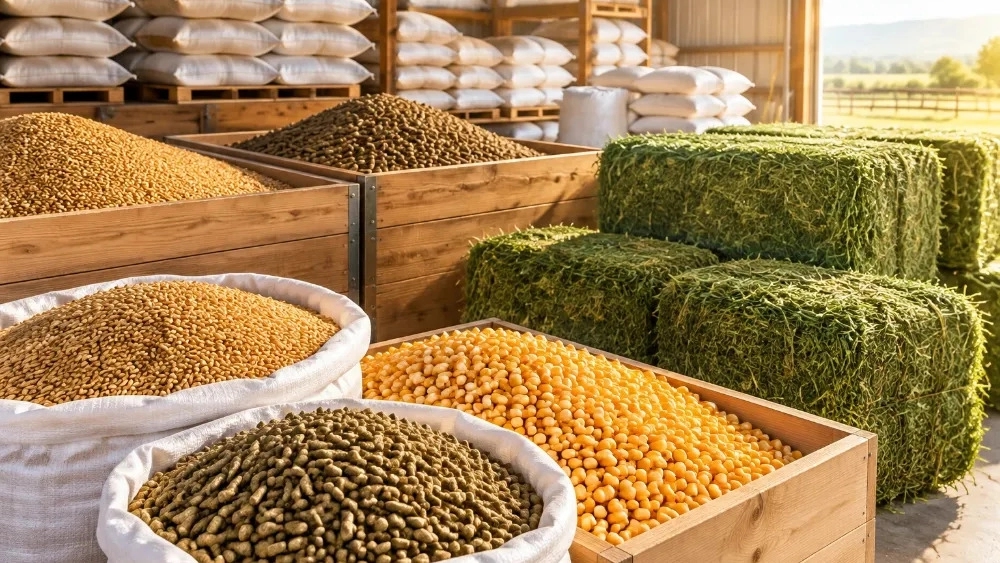
The ration of light livestock usually consists of a combination of fodder, energy feeds, protein sources and required supplements. The composition of these materials should be in harmony with the conditions of the pasture and the real needs of the livestock.
Dry fodder and hay
Alfalfa is one of the well-known sources of protein and fiber in light livestock nutrition and can play a role in providing part of the nutritional needs of sheep and goats. The quality of hay depends on factors such as harvesting stage, drying conditions, amount of leaves, color, natural smell and storage method.
If the dry fodder is of the right quality, it can provide part of the animal's need for fiber. The amount of fodder consumption should be determined according to the type of ration, the quality of other inputs and the physiological state of the animal.
For the nomads of Semnan province, it is very important to choose fodder that can be transported and stored. However, excessive compaction, inappropriate humidity or contamination can reduce the quality of forage.
Straw and other sources of fiber
The straw of some cereals can be used as part of dietary fiber sources; But usually, in terms of energy and protein, it has a limited nutritional value compared to high-quality fodder.
For this reason, using straw alone is not suitable to meet all the animal's nutritional needs. If this ingredient is used, the possible deficiencies of the diet should be compensated by the correct selection of other food items.
The type of straw, the level of contamination, the state of preservation and its usability must be checked before use. Also, increasing the share of low-quality and low-value feeds should not be done without evaluating the ration.
Concentrated feed for light livestock
Livestock concentrates are usually prepared from the combination of several raw materials such as grains, protein sources and required minerals. The purpose of using concentrate is to provide part of the nutrients needed by the animal along with fodder and other ration components.
The composition of the concentrate should be in harmony with the type of livestock, the production stage and the quality of the consumed fodder. For example, the ration of growing animals may differ in terms of protein and energy requirements from the ration of maintenance animals.
In selecting high-quality light animal feed for the nomads of Semnan province, attention should be paid to the technical characteristics of the product, the announced ingredients, the quality of the raw materials and its compatibility with the nutritional purpose. Also, the consumption of concentrate should be done gradually and based on a suitable nutritional plan.
Protein sources
Protein is essential for growth, tissue regeneration, normal body function and milk production. Depending on the type of ration and the condition of the animal, appropriate protein sources may be used to supplement the feed.
The choice of protein source should be done according to the quality, digestibility, health of the raw materials and consumption limits. The protein requirement of animals also depends on age, weight, production level and quality of other ration components.
Providing excess protein does not necessarily increase livestock performance. Therefore, it is better to adjust the ration based on the real need and with the guidance of the animal nutritionist.
Mineral and vitamin supplements
Minerals and vitamins play a role in the normal functioning of the body, growth, reproduction and maintaining animal health. However, the type and amount of supplement needed should be determined based on the composition of the ration, the condition of the livestock and the conditions of the region.
For example, the mineral requirements of livestock may be influenced by the composition of water, soil, vegetation and inputs. Therefore, arbitrarily consuming supplements or combining several products without checking the amount of nutrients can cause an imbalance in the diet.
In nomadic animal husbandry, the selection of the appropriate supplement should be based on the assessment of the real needs of the herd and compliance with the instructions for product consumption.
The influence of climatic conditions of Semnan province on the nutrition of light livestock
Climatic conditions of Semnan province are very important in animal feeding planning. The amount of rainfall, air temperature, condition of pastures and access to water can change throughout the year and affect the food resources available to livestock.
Nutrition management during drought
During periods of low rainfall, the growth of pasture plants may be reduced and the quality or quantity of forage available may be limited. In such a situation, the rancher should check the physical condition of the herd and the amount of feed consumed regularly.
Planned use of stored forage and supplementary feed can help reduce nutritional deficiencies. Of course, the amount and type of supplement should be determined according to the conditions of the pasture and the needs of the livestock.
High-quality light fodder for the nomads of Semnan province during the drought period should be selected in such a way that, while providing the necessary needs, it also provides the possibility of managing the available food resources.
Livestock feeding in the cold season
In cold weather, the animal's energy requirement may increase due to ambient temperature, wind, wool condition, physical condition and access to shelter. For this reason, ranchers should check the condition of the herd and the adequacy of the ration, especially in cold periods.
Having enough feed, clean water and a suitable resting place can help keep the animal healthy. Also, the stored fodder should be kept in a condition that avoids humidity, pollution and loss of quality.
Nutritional management during migration
Nomadic nomadism brings certain limitations to carrying inputs and planning for food supply. In this situation, the weight and volume of feed, ease of transportation, possibility of storage and access to food sources on the way become more important.
Planning to provide feed before departure, checking the state of the herd and predicting food needs can prevent sudden shortages.
Also, changing the place of residence should not be accompanied by a sudden and drastic change in the ration. Any change in feed should be done gradually so that the animal's digestive system has a chance to adapt.
How to choose suitable light livestock feed for nomads?
Choosing the right feed requires knowing the needs of the herd and checking the quality of the inputs. Livestock farmers can make more accurate decisions in the field of buying and consuming feed by following a few principles.
Examining the real needs of the herd
Before preparing feed, it is necessary to determine the number of animals, approximate weight, age, pregnancy status, amount of milk production and breeding purpose. Also, the quality of the available fodder and the access of livestock to the pasture should be evaluated.
This information helps to determine the type of complementary feed and its consumption amount. For example, a herd with access to good quality forage may need a different supplement than a herd operating on poor pasture.
Attention to product specifications and quality
Information related to food ingredients, production date, storage conditions, packaging health and usage instructions should be checked when choosing a product.
In ready feeds, the transparency of technical specifications and the possibility of tracking production information are very important. In the case of fodder, one should also pay attention to the color, smell, level of pollution, humidity and appearance.
Choosing high-quality light livestock feed for the nomads of Semnan province will have better results when decisions are made based on real product information and animal nutritional needs.
Gradual change in diet
The digestive system of sheep and goats needs adaptation to use different feeds. A sudden increase in the proportion of concentrate or a drastic change in the composition of the diet may cause digestive disorders, including acidosis.
For this reason, any change in the type of feed or the amount of consumption should be done gradually. Also, provision of healthy water and adequate access to suitable fodder is an important part of proper management of livestock nutrition.
Basic maintenance of inputs
Even high-quality feed may lose its quality if stored improperly. The warehouse should be as dry as possible, clean, properly ventilated and protected from pests.
Feed bags should not be in direct contact with wet floors, and fodder should be stored in an environment that minimizes the possibility of rain and humidity penetration.
Regular checking of feed stocks and consumption of inputs based on the proper order of entering the warehouse can help reduce waste.
The role of high-quality animal feed in herd health and productivity
Balanced nutrition is one of the main foundations of successful livestock management. If the feed cannot meet the animal's essential needs, growth, body condition, reproductive performance or milk production may be affected.
Helping the growth of lambs and kids
Young animals need enough energy, protein and minerals during the growth stage. Proper nutrition during this period can help them grow naturally and maintain their health.
The quality of mother's milk, the right time to start consuming solid feed, health status and access to safe water are also important in the growth of young animals.
Support milk production
Dairy animals need a balanced ration to produce milk. A lack of energy or protein can affect their performance, and the poor quality of feed may also reduce daily intake.
Adjusting the ration should be done according to the amount of milk produced, body condition and stage of lactation. An excessive increase in concentrate, without providing effective fiber and maintaining a balanced diet, can increase the risk of digestive problems.
Maintaining physical condition and reproductive readiness
Proper nutrition plays a role in maintaining the animal's physical condition and supporting reproductive performance. Livestock that suffer from severe nutritional deficiencies may face problems in fertility, pregnancy or the proper development of the baby.
On the other hand, excessive nutrition can also cause an inappropriate increase in body fat and waste of resources. Therefore, the main goal should be to provide the real needs of livestock and maintain a proper body condition.
Nomadic animal feed of Garmsar and Aradan; A choice that suits the needs of the farmers of the region
Garmsar and Aradan Nomadic Animal Feed as the axis of introduction and marketing of services related to the provision of animal feed, can focus on the importance of access to suitable inputs, checking the quality of products and selecting rations according to local conditions.
In choosing feed for nomadic herds, only the type of product is not important; But the quality of the raw materials, the health of the feed, the appropriateness of food ingredients, and the ease of storage and transportation should also be considered.
It is better for livestock farmers to determine the real needs of the herd when preparing the inputs and obtain sufficient information about the composition of the feed, its consumption method and its storage conditions. Also, if there are nutritional problems or a drop in herd performance, a specialized ration evaluation can help identify the cause and choose the right solution.
In order to effectively introduce the Garmsar and Aradan nomadic animal feed collection, it is important to provide detailed information about the type of products, the actual characteristics of the inputs, the supply conditions and the services that can be provided. Clear expression of this information can help farmers to know the products better and make decisions according to their needs.
Paying attention to local needs, responding appropriately to customers' technical questions and providing responsible guidance on feed selection are factors that can help strengthen the trust between the supplier and the livestock community.
Solutions to improve feed management in nomadic livestock farming
In order to increase feeding efficiency, it is necessary to purchase, store and consume feed in the form of a specific program.
First, the rancher must periodically evaluate the condition of the pasture and the available food resources. This work provides the possibility of identifying times of feed shortage and planning to provide supplementary inputs.
Secondly, it is better to divide the herd into appropriate groups based on nutritional needs. Young animals, pregnant ewes, lactating animals and holding animals may need different rations.
Thirdly, recording the amount of feed consumed, physical condition of animals, changes in weight and production performance can be effective in identifying nutritional problems. This information also helps to make better decisions for purchasing future inputs.
Fourth, a suitable and protected space should be considered for storing fodder and ready feed. Proper warehouse management prevents quality loss and resource wastage.
Finally, cooperation with the animal nutritionist and veterinarian in situations where the herd is facing a decline in performance or health problems can help to modify the ration and reduce the risk of damage.
summary
Providing suitable feed is one of the most important success factors in nomadic livestock farming. Climatic conditions of Semnan Province, seasonal changes in pastures, limited water resources and the necessity of moving herds all increase the importance of careful planning for feeding light livestock.
High-quality light fodder for the nomads of Semnan province should be checked in terms of nutritional value, health, digestibility, palatability and compatibility with the needs of the herd. Choosing the right fodder, basic use of concentrate, providing needed minerals and proper management of drinking water are important parts of a successful nutritional program.
Also, paying attention to the quality of raw materials, proper storage of inputs, gradual change of ration and regular assessment of the physical condition of animals can help to improve nutrition management. In this way, it is very important to choose a supplier who provides accurate and verifiable information about the products.
Garmsar and Aradan nomadic livestock feed can have a suitable position in the specialized content and marketing of livestock feed by focusing on the needs of local livestock farmers, introducing the principles of selecting high-quality inputs and providing clear information about real products.
Finally, the combination of basic nutrition, proper management of pastures, proper storage of feed and attention to the health of the herd provides the basis for better use of available resources. Such an approach can help to maintain animal health, improve production performance and sustainability of nomadic animal husbandry in Garmsar, Aradan and other regions of Semnan province.
