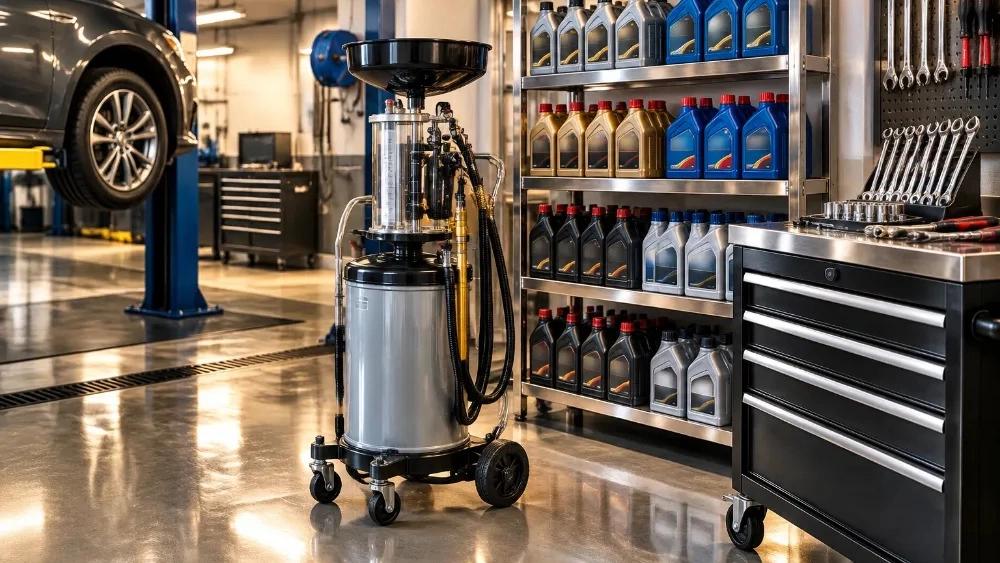

Setting up a car oil change center is one of the business opportunities in the field of car maintenance and repair services. The increase in the number of cars, the continuous need to change the engine and gearbox oil and the importance of basic maintenance of technical parts have made oil change services have an important place in the car service market. However, success in this field is not only dependent on choosing the right location and attracting customers; Moreover, the quality of equipment, the speed of providing services, compliance with safety principles and the selection of standard tools also play a decisive role.
Professional oil change machine and complete oil change setup equipment help business owners to make the process of car service more orderly, more accurate and better managed. Equipment such as oil suction device, oil transfer pump, oil storage tank, air compressor, service tools and used oil collection equipment are among the tools that are used depending on the type of oil change center service.
The correct selection of this equipment can prevent oil wastage, pollution of the work environment and waste of time. Also, the use of devices appropriate to the volume of activity provides the possibility of providing more regular services and increasing customer satisfaction.
In this article, we examine the most important equipment needed to set up an oil change, the features of a professional oil change machine, equipment selection criteria, and important tips for managing a car service center. We will also learn about the role of Saman Sanat Khodro in introducing suitable equipment and solutions for equipping oil change centers.
What is a professional oil changer and what is its use?
Professional oil changer is a set of specialized equipment designed to drain, suck, transfer, distribute or manage oil in the process of car service. The type of device needed depends on the oil change method, the model of the cars, the volume of the center's activity and the type of services that can be provided.
In oil change centers, some cars are serviced by opening the cartel drain screw, and others, if the engine design is compatible, have the possibility of using the oil suction method from the appropriate path. Therefore, the selection of the device should be done according to the structure of the car and the manufacturer's instructions.
A suitable professional oil changer should have reliable performance, compatible connections, easy maintenance and adequate safety. Also, tank capacity, pump type, working pressure range and oil resistance of parts should be selected according to the application of the device.
Using the right equipment makes the service process more regular and allows the operator to perform the work steps more accurately. However, the device alone does not guarantee the quality of the service, and the skill of the workforce, compliance with the technical instructions and the use of the right oil are also very important.
Complete equipment for oil change setup
To set up an oil change center, the type of service and working capacity of the complex must be determined first. A small center that provides basic service needs different equipment than a high-traffic complex with engine oil, transmission oil, filter and ancillary services.
1. Engine oil suction device
The oil suction device is one of the practical equipment in many oil change centers. This device removes the used oil from the proper path by creating controlled suction. Its use is suitable for cars whose engine design and manufacturer's instructions allow exhaust through suction.
Oil suction device may consist of collection tank, vacuum pump, hose, suction pipes and various connections. The quality of the sealing of the connections and the health of the hoses are very important in the correct operation of the device.
When choosing a professional oil changer of the suction type, the capacity of the tank, suction power, the quality of the parts and the ease of emptying the tank should be checked. Also, the device must be suitable for the type of oil and working conditions.
The correct use of suction can help to reduce the pollution of the working environment and better management of used oil; However, in cars where the emptying method from the cartel screw is recommended, suction should not be used as an alternative without checking the technical instructions.
2. Cartel oil draining machine
Cartel oil draining device is designed to collect used oil from under the car. This equipment may be made in the form of a mobile tank, collection funnel or a set equipped with a chamber and a drainage system.
In centers where the volume of customer visits is high, choosing the right tank and movable design can increase the speed of service. Also, the presence of durable wheels, reliable connections and sufficient capacity make daily use of the device easier.
To choose a professional oil changer in this sector, one should pay attention to the compatibility of the equipment with the space of the repair shop, the height of the service area, the ease of draining the collected oil, and the possibility of cleaning.
3. Oil transfer and distribution pump
The oil transfer pump is used to transfer oil from the main tank to the intermediate tank or distribution equipment. Depending on the type of design, these devices can be manual, pneumatic or electric.
The selection of the pump should be based on the type of oil, viscosity, required flow rate, installation conditions and technical specifications of the device. Using a pump that is not designed for the desired fluid may cause a decrease in performance or damage to the equipment.
In professional centers, the right pump can make the transfer of oil more regular and reduce the possibility of spillage. Also, the use of standard connections and oil-resistant hoses increases the safety and durability of the set.
4. New oil storage tank
The correct maintenance of engine oil and other lubricants is very important to maintain their quality. The storage tanks should be selected according to the type of oil, consumption volume and working environment conditions.
The suitable tank should be checked in terms of body material, sealing, resistance to corrosion and possibility of cleaning. It is also better to store different oils in separate tanks to reduce the possibility of unwanted mixing.
In a professional oil change center, accurate labeling of tanks and specification of oil type, viscosity, and usage will help reduce operator errors.
5. air compressor
Air compressor is used in many car service centers to operate pneumatic tools and some peripheral equipment. The selection of the compressor should be done according to the working pressure, required air flow rate, tank capacity and the number of consumer tools.
A compressor that is too small may not perform well when using multiple tools at the same time. On the other hand, choosing a device with a much larger capacity than the actual need can also occupy additional space and increase maintenance costs.
For safe use, attention should be paid to the condition of hoses, connections, safety valves and drainage of tank moisture. It is also necessary to service the compressor periodically and follow the manufacturer's instructions.
6. Oil filter service and replacement tools
Hand tools are an important part of any oil change equipment. Special filter wrenches, box sets, cartel unscrewing tools, suitable funnels and oil level control tools can make servicing easier.
Choosing tools suitable for the car is very important; Because using the wrong wrench may damage the filter, drain screw or other parts.
Besides the main tools, it is also necessary to have the right equipment for cleaning the workplace and collecting spilled oil. These tools help maintain the order of the environment and reduce the risk of employees slipping.
7. Used oil collection and storage equipment
Used oil must be collected and stored in suitable and resistant containers. Discharging it in sewage, soil or natural environment can cause environmental pollution.
Collection tanks must have sufficient capacity, suitable cover and safe portability. Also, used oil should be kept separately from new oil and other incompatible materials.
In setting up an oil change, a specific plan for transferring used oil to authorized collection or recycling centers should be considered. This issue is considered part of the professional management of the car service center.
The most important features of the professional oil changer
Choosing the right device requires checking technical specifications and actual conditions of use. Paying attention to the following features can help make a more informed purchase.
Quality of construction and durability of parts
Oil changing devices are exposed to continuous contact with lubricants, working pressure and daily use. Therefore, the quality of the body, connections, hoses, pump and sealing parts is very important.
Equipments that are made of the right raw materials and have reliable connections can provide more stable performance if used and maintained properly.
Tank capacity and fit with activity volume
The capacity of the tank should be compatible with the type of service and the number of referring cars. A small tank in high-traffic centers may require frequent emptying; While a very large tank for a low activity center can occupy unnecessary space.
Before choosing a professional oil changer, the usual amount of oil used, the type of cars and the condition of emptying the tank should be checked.
Ease of use and maintenance
Simple design and proper access to different parts of the device make the daily work of the operator easier. Suitable hoses, standard connections, durable wheels and the possibility of easy cleaning are practical features of the equipment.
Also, access to consumable parts and the possibility of performing periodical service can be effective in reducing the work stoppage of the center.
Safety during use
The device must be designed according to the type of application and working conditions. Reliable connections, pressure control, proper sealing and complying with the allowed capacity of the tank are considered important in equipment safety.
The operator must also receive the necessary training and use the device within the limits set by the manufacturer. Especially when working with hot oil, compressed air and electrical equipment, it is essential to follow safety instructions.
How to choose complete oil change equipment?
Equipment selection should begin with an assessment of business needs. Buying a set of devices without specifying the type of service may lead to the procurement of unnecessary tools or lack of original equipment.
Determining the type of center services
First, it should be determined what services the center will provide. Engine oil change, gearbox oil service, filter change and ancillary services can require different equipment.
For example, the equipment needed to change the engine oil is not the same as the specialized gear service equipment. Also, the service method in different cars should be chosen according to the manufacturer's instructions.
Inspection of the workshop space
Dimensions of the workplace, ceiling height, vehicle access and equipment installation place play a role in the selection of devices. Improper layout may make it difficult for staff to move around and slow down service delivery.
It is better to determine the location of tanks, suction devices, compressors, tools and the route of movement of cars before buying.
Evaluation of quality and technical specifications
Equipment comparison should be done based on capacity, performance type, build quality, compatibility with lubricants, maintenance conditions and support services.
Just choosing a device with good looks or more features is not necessarily the best decision. More valuable equipment are those that meet the real needs of the center and are compatible with its working conditions in terms of performance and maintenance.
Attention to support services
The existence of a technical guide, the possibility of receiving spare parts and access to maintenance services can be important in choosing equipment.
Before finalizing the order, it is better to check the product specifications, accompanying items, installation conditions and service obligations clearly.
Steps to set up a professional oil change
The successful launch of an oil change center requires careful planning in several stages.
The first step: market research and location selection
Knowing the target customers, checking competitor centers and choosing the right location are the first steps of starting a business. Easy access of cars, enough space for service and the possibility of safe traffic management should be considered.
Second step: Determining the required equipment
After determining the type of service, a list of main and peripheral equipment should be prepared. This list can include suction device, used oil tank, transfer pump, compressor, hand tools and safety equipment.
The third step: preparing the work environment
Suitable floor, sufficient lighting, ventilation, oil storage area, and used material collection equipment must be prepared before starting the activity.
Also, the commuting routes and the location of the equipment should be designed in such a way that the possibility of hitting, tripping and spilling oil is reduced.
Fourth step: installation and testing of equipment
After the devices are installed, the connections, hoses, sealing and overall performance of the equipment should be checked. The initial test must be done according to the manufacturer's instructions and in compliance with safety precautions.
The fifth stage: training employees and starting the activity
Employees should be familiar with the correct method of using the devices, identifying the right oil, changing the filter, controlling the oil level and managing the used oil.
Recording the type of oil used, the service performed and the time of the next visit can also help to improve work order and increase the trust of customers.
The role of equipment quality in increasing customer satisfaction
Customer satisfaction at the oil change center is not only dependent on the speed of work. Choosing the right oil, following the technical principles, using a compatible filter and performing the service steps correctly are also very important.
The right equipment can prevent spillage, waste of time and execution errors. For example, the right pump and standard hose help with controlled transfer of oil, and a quality suction device, on compatible vehicles, can simplify the draining process.
Also, the order of the work environment and the basic maintenance of the equipment creates a professional image of the business. Customers usually pay attention to the cleanliness of the environment, the way the employees respond, and the clarity in explaining the services.
As a result, investing in the right equipment should be done along with employee training, compliance with service standards, and responsible service delivery.
Saman of the automobile industry; Your partner in choosing oil change equipment
Choosing the right supplier to equip the oil change center is an important part of business planning. The owners of these centers need detailed information about the specifications of the devices, the capacity of the equipment, the type of application, and the maintenance conditions so that they can choose a set suitable for their activity.
Saman Sanat Khodro can focus on the conscious selection and compatibility of devices with the needs of customers in introducing oil change equipment and solutions for equipping car service centers.
In the process of choosing equipment, the type of service and the working capacity of the center should be determined first. Then, the required devices are evaluated based on the quality of construction, performance, compatibility with oil, ease of use, and maintainability.
For example, the selection of the suction device should be done according to the permitted method of draining the oil in the target vehicles. Also, the capacity of the used oil tank, the type of transfer pump and the need for a compressor should be determined based on the volume of activity and the available space.
Providing clear information about product specifications and accompanying items helps customers better understand the equipment they need and avoid buying inappropriate devices.
For a professional introduction of Saman services in the automotive industry, it is better to emphasize the actual features of the products, technical guidance, quality of equipment and services that the complex actually provides. This approach can help to increase the trust of customers and strengthen the group's position in the oil change equipment market.
Important tips for maintaining a professional oil changer
Regular maintenance of equipment makes the performance of devices more reliable over time and the possibility of sudden failure decreases.
Periodic inspection of hoses and connections
Cleaning and maintenance of tanks
New and used oil tanks should be kept separately and according to their use. It is very important to prevent dust, water and pollutants from entering the tanks.
Service of pumps and pneumatic equipment
Pumps, compressors and other equipment should be serviced according to the manufacturer's maintenance schedule. Using it outside the permitted working range or ignoring the signs of failure can reduce the life of the device.
Compliance with safety principles
Used oil may be hot and contact with it may cause burns. Also, pressurized equipment must work within the permitted range and be disconnected from the energy source before repair. It is also necessary to use suitable gloves, safety shoes and the correct method of collecting spilled oil.
summary
Setting up a successful oil change center requires choosing the right equipment, basic design of the work space and compliance with technical standards. Oil suction device, cartel discharge equipment, transfer pump, storage tanks, air compressor and service tools, depending on the type of activity, can be the main components of the set.
Professional oil change machine and complete oil change start-up equipment will be most effective when they are in harmony with the working capacity, the type of referring cars and the desired services. The quality of construction, safety, ease of maintenance and access to technical support should also be evaluated along with the performance of the devices.
Also, observe the correct method of oil change, choose a lubricant suitable for the car's specifications, use a suitable filter and manage the operating oil properly.