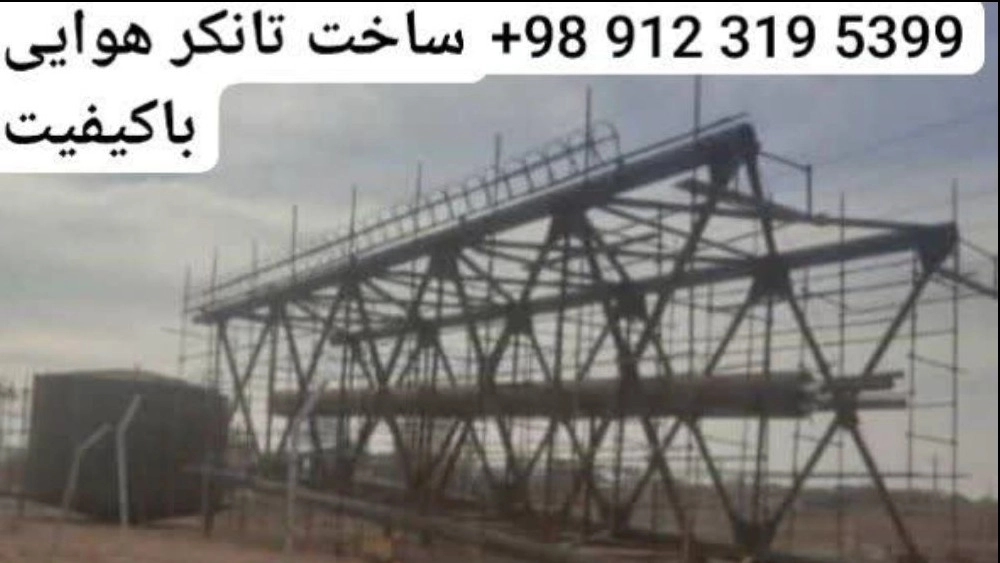
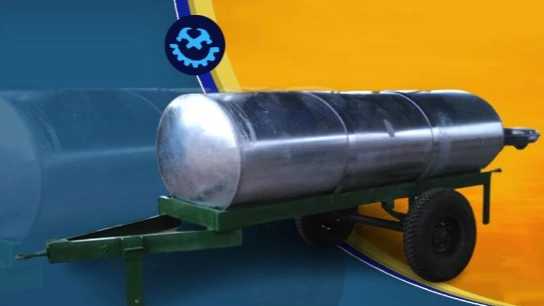
With the increasing need for water storage in residential buildings, commercial complexes, factories, industrial workshops and service complexes, the use of suitable tanks has become one of the important needs in the field of facilities. Building a high-quality air tanker in Tehran is a practical solution for groups that need reliable water storage, better management of consumption and supply of required water in different conditions. Choosing the right tanker can be effective in improving the performance of the water supply system, reducing problems caused by pressure drop, and increasing the reliability of water access.
Aerial tanker is a tank that is installed at a height and can help provide water pressure in some water supply systems by using the difference in height. This type of tank is used in buildings, industrial complexes, service centers and environments that require high water storage. Of course, the amount of pressure created depends on the installation height, piping design, tank capacity and system conditions.
In order to achieve a durable product, it is necessary to pay attention to the quality of raw materials, basic design, standard welding, appropriate capacity and safety precautions. In this context, Kaveh Tanker Construction, as a name introduced in this article, can be in the center of attention of tanker construction applicants; Because choosing the manufacturer's collection is one of the important steps to prepare a tank that fits the needs of the project.
What is an air tanker and what is its use?
An aerial tanker is a type of storage tank that is installed on a foundation, support structure, or elevated location. The purpose of using this tank is to keep water at a height and to make it possible to use it in water supply systems. In some projects, air tankers help reduce dependence on continuous pumping; Of course, its actual performance depends on the overall design of the facility.
In the construction and industrial projects of Tehran, there are different conditions for water storage. Some buildings face the limitation of installation space, and some complexes need tanks with a larger capacity and a resistant supporting structure. For this reason, the construction of an air tanker should be done considering the conditions of the installation location and the type of consumption.
Application of air tanker in residential buildings
In residential buildings, air tankers can be used to store used water and help supply water in parts of the water supply system. In buildings where the pressure of the water network is not suitable or there is a possibility of water interruption, basic storage can help to better manage consumption.
Use of air tankers in factories and industrial units
Industrial units need water for the operation of production lines, equipment washing, service use and some production processes. In such a situation, the construction of a high-quality air tanker in Tehran can be a part of the water storage management solution in industrial complexes.
In these applications, tank capacity, fluid type, environmental conditions, daily consumption and how to connect to the piping network are very important. Also, if the tanker is used to store liquids other than drinking water, the material of the body and the inner cover must be compatible with the characteristics of the fluid.
Application of air tanker in commercial and service centers
Commercial centers, restaurants, workshops, warehouses and service complexes may also need a water storage tank. In these environments, the selection of the tanker should be based on consumption, available space and operational needs.
A suitable tanker can play a role in better management of water storage; But it will perform optimally only when its capacity, installation height, connections and control equipment are in harmony with the real needs of the complex.
Features of high-quality air tanker construction in Tehran
The quality of the air tanker is not limited to the appearance of the tank or the thickness of the body. To produce a reliable product, a set of technical and operational factors should be considered. Each of these factors can affect the durability, safety, maintenance and performance of the tank.
Use of appropriate raw materials
Raw materials are one of the most important factors in the quality of air tanker construction. The type of metal, the thickness of the sheet and its mechanical characteristics should be selected according to the capacity of the tank, environmental conditions and the type of application.
In metal tankers, choosing the wrong sheet may increase the possibility of corrosion, deformation or reduced service life. On the other hand, the engineered selection of raw materials helps to build a tank that can withstand the designed loads.
When ordering the construction of a high-quality air tanker in Tehran, it is better to get clear information about the material of the body, the thickness of the sheet, the type of protective coating and the compatibility of the technical specifications with the project conditions.
Basic design of the body and shape of the tank
The design of the body should be in harmony with the required capacity, installation location and type of use. The shape of the tank, the way the tension is distributed, the location of the connections and the way it is connected to the foundations, all have an effect on the final performance.
In the design of the air tanker, the forces caused by water weight, body weight, wind loads and, if necessary, seismic effects should be checked. Also, the conditions of containment of the tank and the stability of the supporting structure are particularly important.
Kaveh Tanker Manufacturing can be considered as an option to check the needs of the project in the introduction and selection of the tanker manufacturing solution. However, before ordering, it is necessary to directly check the technical specifications, manufacturing facilities, and required implementation details.
Accurate and principled welding
Welding is one of the critical stages in the construction of metal tankers. Improper welding quality can lead to leaks, weak connections and reduced body strength. For this reason, the implementation of welding should be done based on the appropriate method, the skill of the specialist and the technical requirements of the project.
Checking the quality of welding seams, controlling the connection points and performing tests according to the type of tank are measures that can reduce the possibility of problems.
In the construction of a high-quality air tanker in Tehran, paying attention to welding details is as important as the choice of sheet and body design; Because after the tank is installed at a height, it may require more equipment and operational costs for repair or replacement.
Protective coating and corrosion resistance
Metal tankers are exposed to moisture, rain, temperature changes and environmental conditions. If the proper protective coating is not used, the possibility of rust and corrosion increases.
The type of cover should be selected based on the metal material, the installation location and the type of stored fluid. For example, a suitable potable water tank cover must be suitable for this application and be compatible with relevant sanitary requirements.
Regular maintenance, visiting the outer surface and checking vulnerable points also help to increase the useful life of the tank.
Why is it important to choose an air tanker manufacturer?
Building a tank is a technical process that requires experience, appropriate equipment and compliance with engineering principles. Choosing the right manufacturer can help better coordination between the needs of the project and the final product.
Checking the real need before construction
Before ordering an air tanker, it should be determined for what purpose the tank will be used. The storage of drinking water, water used in buildings, water needed for industrial processes, and the storage of other liquids, each have different requirements.
It is also necessary to check the required capacity, installation location, dimensional limitations, the number of times the tank is filled and emptied, and the conditions of connection to the water supply system.
Kaveh tanker construction can be considered in the process of considering tanker construction options. For the final selection, it is necessary to get detailed information about the production ability, the specifications that can be provided and the quality control method.
Attention to technical specifications and customization
In many projects, using a ready-made repository may come with limitations. The dimensions of the installation site, the required capacity or the connection conditions to the pipes can make custom manufacturing a suitable option.
Customized construction makes it possible to design the dimensions, entrance and exit locations, access hatches, connections and some operational details based on the needs of the project.
However, customization must be done within the framework of engineering principles. Changing dimensions or increasing capacity without sufficient calculations does not necessarily mean improved performance and may increase the load on the structure.
Quality control in the production process
Quality control should start from the selection of raw materials and continue until the end of production. Inspection of sheets, dimensional control, evaluation of welds, leak test and final inspection can help identify possible defects.
In projects where the tank is installed at a height, it is more important to pay attention to the quality of construction; because access for subsequent repairs may be more difficult.
When choosing a manufacturer, it is best to ask about quality control procedures, available tests and technical documents related to the product.
Air tanker construction stages from design to installation
Getting familiar with the production process helps buyers make a more informed choice and define their project needs more precisely.
Checking the installation location and determining the capacity
The first step is to check the installation location and estimate the consumer's needs. At this stage, the available space, access conditions, structural limitations and required capacity should be specified.
The capacity of the tank should be determined based on the consumption pattern and storage needs. Choosing a very small tank may not be responsive to consumption; While an excessively large tank can impose additional load on the structure and occupy more space.
Drawing and technical design
After collecting basic information, tanker design and connection details are done. At this stage, the dimensions, body thickness, entrance and exit location, access hatch and the way to connect to the supporting structure are determined.
For elevated tankers, the design of foundations and bracing should be done according to the actual conditions of the site. Evaluating the strength of the structure and environmental loads is also an important part of this process.
Cutting and preparing parts
After the approval of the design, the required sheets and parts are prepared based on the determined dimensions. Accuracy in cutting and edge preparation affects the quality of assembly and welding.
Any discrepancy in dimensions or improper preparation of parts may cause tension in the joints or difficulty in assembly. For this reason, dimensional control is essential at this stage.
Body assembly and welding
At this stage, the parts are placed next to each other according to the plan and the necessary connections are made. The quality of welding, the accuracy of assembly and the observance of the proper sequence of work execution play a role in the final strength of the tank.
After welding is completed, necessary inspections should be done to identify possible defects before coating or installation.
Final test and review
Before delivery, the tank should be checked according to the design and type of application. Leakage test, inspection of welds and control of connections are among the measures that can contribute to the evaluation of product quality.
The test method should be chosen according to the tank design and safety requirements. There are different technical requirements for internal pressure tanks and they should not be considered the same as normal water storage tanks.
Preparation for transport and installation
After final approval, the tank is ready for shipping and installation. The dimensions of the tanker, the transfer route, the limitations of the project site and the equipment required for lifting and moving should be checked in advance.
The installation of the air tanker should also be done by experts and in compliance with safety requirements. Before operation, connections, spillway, discharge, restraints and access should be checked for periodic visits.
A guide to choosing the right capacity for an air tanker
One of the important decisions in building a high-quality air tanker in Tehran is to determine the appropriate capacity. The capacity should be chosen based on the actual need, not just based on the available space or the size of the tank.
The required capacity of residential buildings
To determine the capacity of the tanker in a residential building, the number of residents, the amount of daily consumption, the conditions of water supply and the required storage period are important. It should also be specified whether the tank is used for the consumption of the entire building or only covers a part of the water requirement.
In multi-story buildings, the weight of the tank filled with water should be included in structural calculations. Installing a large tank on the roof without an expert evaluation can increase the risk of damage to the structure.
Required capacity of industrial units
In industrial environments, the amount of consumption may change in different hours. Therefore, the capacity of the tank should be in harmony with the consumption pattern, production conditions and the need for emergency storage.
In some units, the quality of stored water is also important. If water is used for a sensitive process or special equipment, the storage conditions, the type of surfaces in contact with water and the possibility of contamination should be checked.
The role of height in tanker performance
The height of the tanker installation affects the pressure caused by the water column. As the height difference between the water level and the place of consumption increases, the hydrostatic pressure increases; However, the pressure drop caused by pipes, connections and equipment should also be calculated.
For this reason, choosing the right height requires checking the piping plan and usage conditions. Simply installing the tank at a high height, without proper design, will not guarantee the optimal performance of the system.
Important tips for safe installation of air tanker in Tehran
Installation conditions in Tehran may be different according to the type of building, environment density, access restrictions and structural conditions. Observing the following tips can help reduce implementation risks.
Checking the strength of the supporting structure
A tank full of water has a considerable weight. The supporting structure must be designed to withstand the weight of the tank, stored water and environmental loads.
In large or elevated tanks, an engineering evaluation of the structure, connections and bracing is necessary. Installing the tank on non-standard foundations can create a risk of overturning, deformation or structural damage.
Choosing the right place for installation
The installation location should provide access for inspection, cleaning, repair and control of connections. It should also be avoided to install the tank in places where there is no safe access or there is a risk of damage to people and equipment.
In buildings, the path of water transfer, the distance from other equipment and the way of draining water should also be included in the design.
Anticipation of control and safety equipment
Appropriate valves, spillways, drains, inspection valves and water level control equipment can make tanker operation easier. The choice of this equipment depends on the type of tank and the method of use.
It is also important to prevent the entry of dust, insects and environmental pollution; Especially if the tank is intended to store drinking water.
Maintaining the air tanker and increasing its useful life
Even a tanker that is made with the right raw materials and the desired quality, needs periodical maintenance. Regular tank maintenance can help identify problems early and reduce the likelihood of failure.
Periodic inspection of the body and connections
Body, welds, pipe connections, valves and support legs should be checked periodically. Observing leakage, corrosion, deformation or loosening of connections is a sign for expert investigation.
If signs of structural damage are observed, access to the danger area should be restricted and a technical evaluation should be carried out before continuing operation.
Washing and hygiene of the tank
If the tanker is used to store drinking water, its washing and hygienic maintenance are of particular importance. The frequency of cleaning should be determined according to the quality of incoming water, environmental conditions and health guidelines.
Also, it is necessary to have the caps and valves in such a way as to prevent the entry of contamination and provide the possibility of a safe visit.
Handle the protective cover
The protective cover of the tank should be checked at appropriate intervals. Scratches, peeling, or damage to the coating can lead to corrosion. If damage is observed, repair should be done with materials compatible with the type of tank and stored fluid.
Why should we check Kaveh Tanker for the construction of air tankers?
Choosing the right manufacturer is an important part of the tanker procurement process. In addition to paying attention to the name of the collection, buyers should check the actual specifications of the product, the quality of construction, the services that can be provided, and the compatibility of the tank with the needs of the project.
Attention to construction quality and executive details
In choosing a tanker, the quality of raw materials, body design, welding, protective coating and the possibility of final inspection of the product are important. It is better to clearly define the required technical specifications before placing the order so that the selected product is compatible with the project conditions.
Choosing a tank that fits the needs of the project
The tank needed for a small building is not the same as the tank needed for a large factory or complex. Capacity, dimensions, type of fluid and installation conditions should be checked separately.
During the negotiation with Kaveh Tanker, providing information about the installation location, consumption, type of application and dimensional limitations can help to clarify the technical needs. It is better to ask about the possibility of custom manufacturing and quality control documents.
Paying attention to after-construction services
Inspection, installation guidance and the ability to follow up on possible problems are some of the things that should be considered when choosing a manufacturer. Before ordering, specify delivery terms, installation responsibilities, and scope of service.
With this approach, the selection of Kaveh tankers or any other manufacturing group is based on technical criteria and real needs, and the possibility of differences in the execution stages is reduced.
Common mistakes when ordering the construction of air tankers
To make a better choice, you need to avoid some common mistakes. These mistakes may increase performance problems or reduce the safety of the repository.
Capacity selection without calculation
A bigger tank does not always mean a better choice. Increasing the capacity increases the weight of the stored water and the load added to the structure. Therefore, the capacity should be determined based on the amount of consumption and the bearing capacity of the structure.
Ignore welding quality
The good appearance of the body alone does not indicate the quality of construction. Welding must be performed correctly and checked with the appropriate method. Ignoring this issue can increase the possibility of leakage or weak connections.
Ignoring the installation conditions
Before ordering a high-quality air tanker in Tehran, the transfer route, installation space, structure capacity and required equipment should be checked. Ignoring these may make installing the repository difficult or unsafe.
Use of a tank that does not match the type of fluid
Not every tank is suitable for storing any type of liquid. If the tanker is to be used for potable water or industrial liquids, the hull material, internal coating and compatibility requirements should be selected according to the application.
summary; A conscious choice to build a high-quality air tanker in Tehran
Manufacturing a high-quality air tanker in Tehran is dependent on a detailed investigation of the project's needs, selection of suitable raw materials, engineering design, basic welding, protective coating and safe installation. A suitable tank must be in harmony with the required capacity, the conditions of the installation site and the type of consumption in order to have an acceptable performance during operation.
In this way, it is very important to pay attention to the experience and facilities of the manufacturer, get the technical specifications and check the quality control methods. Kaveh Tanker Manufacturing can be one of the options you check to build an air tanker; With the condition that product specifications, manufacturing facilities and services that can be provided are evaluated according to the needs of your project.
By making a conscious choice and observing safety principles, you can prepare a tank suitable for the conditions of the building or industrial complex and avoid problems caused by incorrect selection, improper installation, and improper maintenance.