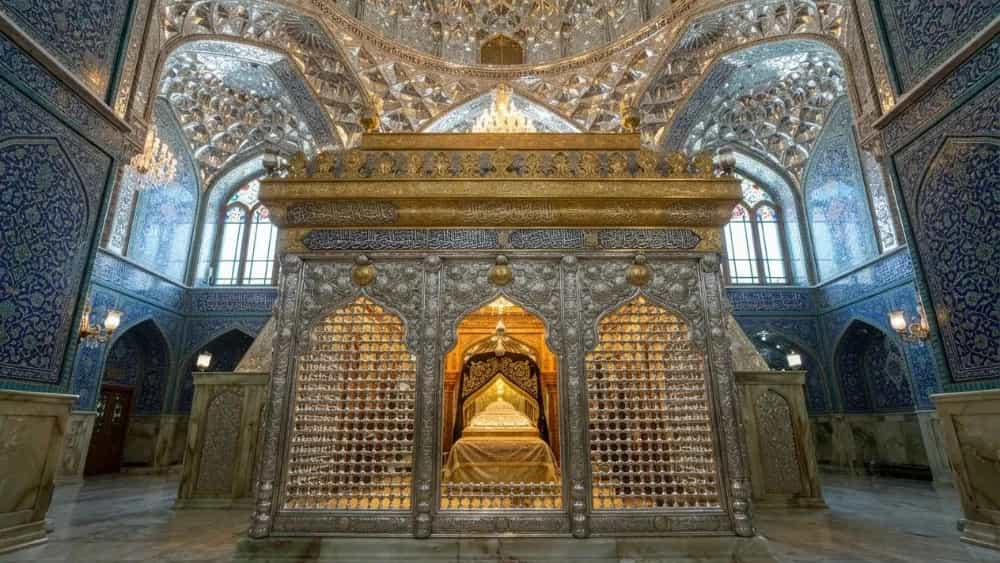
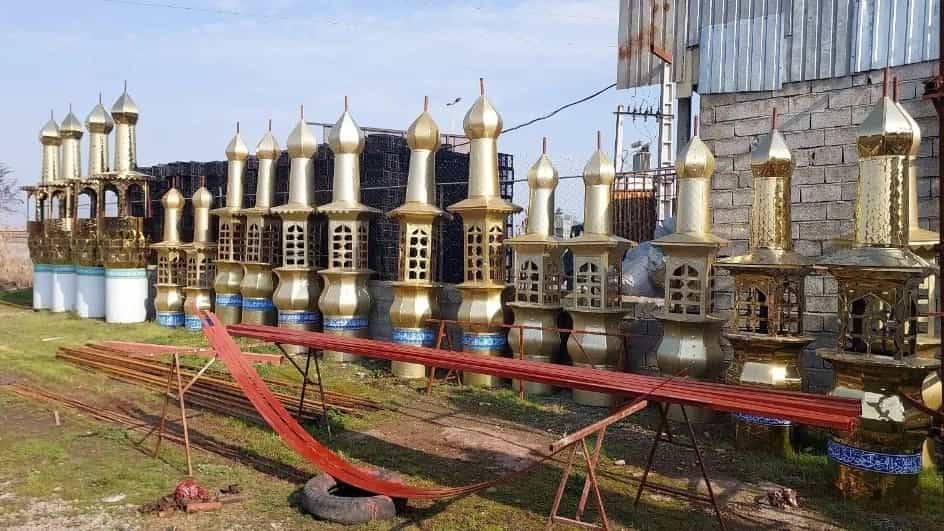
Mazandaran region, and especially Babol city, is the blessed birthplace of Beqaa, Sadat Jalil-ul-Qadr and old mosques due to its deep religious background. Preservation, reconstruction and visual revival of these places is not only a religious and national duty, but also one of the pillars of keeping the cultural identity of the region alive. At the center of every holy place, the shrine is the emotional, spiritual and aesthetic focus of the pilgrims. Therefore, the precise and principled implementation of the construction of shrines of religious places in Babylon is of strategic importance. The combination of traditional artistic skills with modern material engineering will guarantee the durability and originality of these structures in the special weather conditions of the north. Saheb Al Zaman dome and garland collection, using decades of experience, is the flagship of providing high-quality and engineered services in this field throughout Mazandaran province and Babol city.
The importance and position of the shrine in the religious architecture of Babylon
The city of Babol, nicknamed the city of orange oranges, welcomes famous imams such as Imamzadeh Qasim (AS) and dozens of holy graves in Lalah Abad, East and West Bandapi, Babolkanar and Getab. In the architecture of these courts, the shrine is considered the visual gravity point of the interior architecture. The art of building the shrine of religious places in Babylon is not just the construction of a metal shield around the burial, but it is a symbol of pilgrims' respect, a place of spiritual peace and a masterpiece of symmetry, light and light.
In addition to the spiritual aspects, the high-quality implementation of these pilgrimage symbols will boost religious tourism in Babylon. Tourists who travel to this city for pilgrimage will remember a lasting image of the cultural splendor of the Mazandaran region by seeing an artistically decorated shrine. Sahib Al Zaman's dome and garland team, with full respect for the local spirit and the history of the religious places of this city, produces structures that are strikingly similar to the architecture of the ancient shrines of the region.
Mazandaran region and the challenges of building shrines of religious places in Babylon
Babol is known for its very high relative humidity, successive rains and proximity to dense vegetation. This atmospheric condition means constant attack of water ions on metals and wood. Any negligence in the selection of raw materials and execution of connections in the construction of the shrines of religious places in Babylon will quickly lead to tarnishing of the silver, rusting of the skeleton, and expansion or rotting of the underlying wood.
Babylon's high humidity requires that all metal materials have standard laboratory purity and nano resistant coatings or strong protective layers. In traditional construction, if silver with incorrect grade or brass without industrial polymer varnishes is used, in less than two years the polish of the shrine will be lost and oxidation will darken its surface. With a deep understanding of this climate crisis, Saheb Al Zaman's dome and garland collection uses new solutions in the formulation of insulation and structures for the construction of shrines of religious places in Babylon, which guarantees its durability for several generations.
Materials and raw materials used in the construction of shrines of religious places in Babylon
The quality, price and lifespan of each shrine depends on its constituent parts. In Saheb Al Zaman's dome and garland production line, all materials are subjected to tension, hardness and corrosion tests before entering the penning and installation phase in order to obtain the highest efficiency in Babylon's climate.
Wooden and metal frame underneath
The ossification of the shrine carries the heavy weight of the roof, balls, spindles and writing plates. In the past, more common wood was used, but today, in the construction of shrines of religious places in Babylon by Sahib al-Zaman, a composite structure including stainless steel profiles 304 or 316 or reinforced stainless steel with epoxy layering is used. For interior parts that require wood cladding, super-dense woods such as Burmese teak or mountain walnut wood are fully processed and saturated in the kiln so that no wood-eating insects or moisture can distort their texture.
Standard silver and gold for writing
A major part of the exterior body, windows and spheres are covered with silver sheets. The suitable silver for building shrines of religious places in Babylon must have a high grade of 90 to 925 in order to have the necessary malleability during penning and hammering and at the same time maintain its surface resistance. Also, the golden parts of the shrine, including the inscriptions and crowns, are generally gilded with 24-carat pure gold by heavy electrolysis or thick sheeting, so that they do not wear out when touched by millions of pilgrims.
Brass, copper and steel alloys
In parts of the bottom layers and decorations, red copper and golden brass sheets are used to increase the mechanical resistance in addition to the color contrast. In addition, all stainless steel screws and hinges must be used in the construction of the shrines of religious places in Babylon, because the rust of a small screw can spread the rust stain to the precious silver sheets.
The specialized steps of making a shrine in the dome and making a garland of Sahib al-Zaman
The process of making this spiritual work is a precise artistic and engineering journey that requires continuous monitoring and compliance with specific technical phases. Each construction project of shrines of religious places in Babylon goes through step-by-step steps to deliver a perfect work.
The first step is mapping, 3D design and dimensions. In this step, Saheb al-Zaman's dome and garland experts are sent to the place of the shrine in Babylon and record the exact scale of the tombstone, columns, angle of light and the distance to the walls of the tomb. Then the AutoCAD design and 3D renderings are drawn in accordance with the principles of Slimy symmetry and triangle lines to get the approval of the Board of Trustees and Endowments.
The second stage is the construction of the carrier skeleton (chassis). In the workshop, the main chassis is made with earthquake engineering calculations and lateral pressures caused by the crowding of pilgrims. After initial assembly, this skeleton is isolated with industrial primers and polyurethane layers.
The third stage is metal stamping and shaping. Prominent masters fix silver and copper plates on a bed of molten bitumen and with millions of blows of hammers and steel pens, they form flower motifs, slimy, bergamot and religious songs. To build shrines of religious places in Babylon, the depth of engraving should be enough that the angles of refraction of light in the space of the nave create a magnificent scene.
The fourth stage is ball and bobbin making and networking. The windows of the shrine, which is the place where the pilgrims kiss and bind, are made of a network of rods, spheres, and solid silver or coated steel rods. The construction of shrines of religious places in Babylon with solid spheres and compact casting by Sahib al-Zaman's dome and festooning ensures that these parts will never suffer from indentation caused by the leaning of the crowd.
The fifth stage is calligraphy of inscriptions and enameling. The luminous verses of the Holy Word of God such as Ayat al-Kursi, Surah Dahr and poems in praise of Ahl al-Bayt are written by prominent calligraphers and enameled on gold and copper or black pen.
The sixth stage is roof construction, interior lighting and Khatam coating. In the interior of the mausoleum, the art of inlaying, inlaying, and traditional wood carving is used, and waterproof and safe hidden LED lighting systems are installed to provide lighting for the mausoleum.
The final stage is pre-assembly, safe transfer and installation in the blessed tomb in Babol city. Sahibul Zaman's dome and garland technical team transported the structure to Babylon with isolated packages and delivered the shrine within a specified period of time without causing long interruptions in the pilgrimage of the believers.
Engineering standards in the implementation of the shrine for Bekaa Babylon
The production of shrines in contemporary periods is not only based on the skill of the artists, but must also follow the analysis of mechanical stress and anti-earthquake standards. On busy days such as Tasu'a, Ashura or Shab al-Qadr, heavy pressure is applied to the walls of the shrine by the dense crowd.
In the technical calculations for the construction of shrines of religious places in Babylon, the dome and garland construction, Sahib al-Zaman considers the bending moments and metal fatigue. The chassis of the structure is supported from the floor with alloy steel bolts to the concrete foundation or the Shabestan pavement. The distance between the balls and the bobbins is precisely engineered based on the ergonomics of the human hand and to prevent the fingers of minors or pilgrims' belongings from getting stuck. This technical compliance and safety distinguish Sahib Al-Zaman's dome and garland construction from the competitors in the construction projects of shrines of religious places in Babylon.
Factors affecting the cost and price of building a shrine in Babylon
Determining the total cost is a complex and multifactorial category. Due to the daily fluctuations of the global silver, copper, brass and gold markets, it is not possible to provide a single and general price. However, knowing the effective parameters helps the trustees in estimating the budget:
The first factor is the dimensions of the shrine; The length, width and height of the structure directly determine the weight of silver and the size of the chassis. The bigger the shrine, the higher the amount of precious material.
The second factor is the thickness of the sheets and the grade of silver. 2 or 3 mm sheets last a lifetime, but create a higher financial burden than thinner sheets.
The third factor is the level of craftsmanship and the complexity of the motifs. Fine brushwork with embossing, known as carving, multiplies the workshop time and increases the spiritual and real value of the work.
The fourth factor is interior decorations, such as the amount of Shiraz inlay, the amount of 24 carat gold coating, and the type of sound system or ventilation installed in the crown. Saheb Al-Zaman dome and garland collection always presents various scenarios in consultation with the respected board of trustees in Babylon, according to the ability of donors and donations, so that the best result can be achieved with the least financial burden without losing the quality of strength.
Why is Sahib Al-Zaman dome and garland construction the best choice for Babylon?
Choosing a contractor for the construction of blessed places is a very sensitive decision, because the shrine is not a work that can be easily replaced after a few years, and the names of its benefactors and builders will be recorded in the history of the place. The collection of domes and garlands of Saheb al-Zaman, with a brilliant track record in the construction of religious elements throughout the country and especially in Mazandaran province, is considered a top priority.
As one of the oldest manufacturers, this group manages the entire production chain without intermediaries by integrating exclusive workshops for carpentry, turning, pen making, gold plating and production of domes and garlands. This integration has reduced the excess costs of dealers and significantly increased technical accuracy.
On-time delivery according to the written contract, providing a valid certificate for silver carat and thickness of gold coating, a written guarantee of durability against Sharji Babol and quick dispatch of the service and maintenance team are some of the distinctive features of Sahib Al Zaman dome and garland making. Trustees of Bekaa can trust the experts of this center to reach the stage of construction of shrines of religious places in Babylon with ease.
The role of public contributions and offerings in the construction of shrines in Babylon
The believing people of Babylon have always been spontaneous and pioneers in the construction, restoration and development of Takaya, Hosseiniyeh and Bekaa. Most of the costs of building the shrines of religious places in Babylon are provided by gifts, small and large offerings, donations of benevolent women and endowments. Constructive financial transparency and the possibility of regular visits by members of the board of trustees to the stages of physical progress of the workshop doubles the trust of local residents and donors. Saheb Al-Zaman Dome and Garland provides this transparency at the highest possible level for its customers by providing continuous visual reports and documenting the production process.
The principles of maintaining and washing the shrine in the anarchic conditions of Babylon
After installation, the important maintenance phase begins. Due to the harsh weather of Babylon and the high population density, washing and dusting the shrine requires safe materials. Using acids or improper chemical washing liquids destroys the insulating layer and causes silver to turn black. After completing the construction of the shrine of religious places in Babylon, Saheb al-Zaman's dome and garland experts provide manuals and specialized neutral detergents along with periodic instructions to the esteemed servants so that the shine of the first day of the shrine remains unchanged over the decades.
Conclusions and how to register an order for the construction of a shrine in Babylon
The construction of shrines of religious places in Babylon is a holy mixture of purity of intention, the elegance of ancient Iranian art and anti-erosion industrial calculations that fit the nature of Mazandaran. To create such a precious achievement, which is the center of the noble shrines of Babylon, only relying on reliable and tested manufacturers will guarantee quality. With full preparation, Sahib Al Zaman Dome and Garland Collection has provided the possibility of free visit to the court, in-person consultation in the city of Babol, and exclusive design for all the Boards of Trustees, blessed Bekaa and charitable trustees, so that a worthy step can be taken in the direction of raising the name of worthy people of religion and religion.