
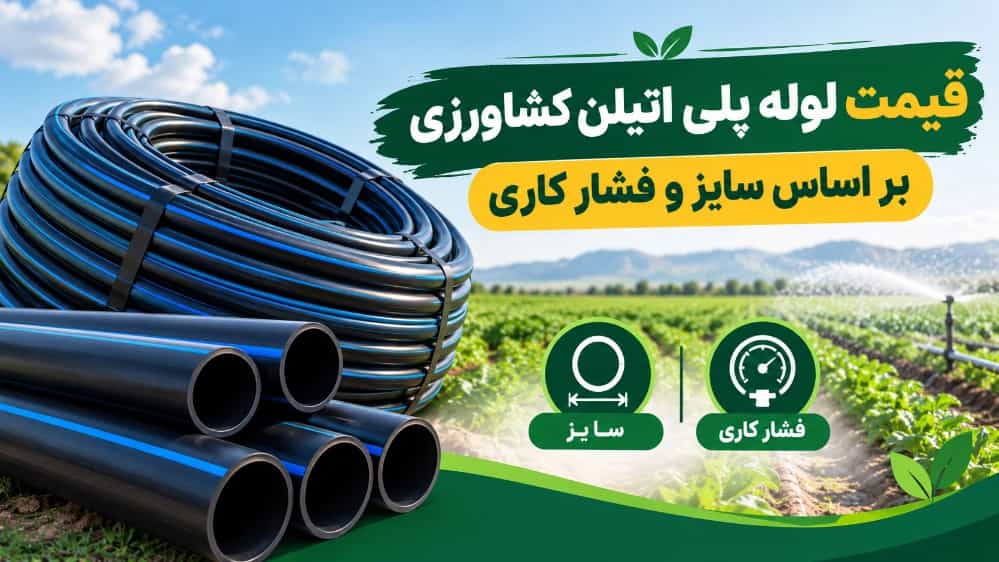

Choosing the right pipe for agricultural land irrigation is not limited to just comparing a few numbers on the price list. Pipe size, working pressure, quality of raw materials, type of irrigation and installation conditions, all affect the final cost and performance of the network. For this reason, when checking the price of agricultural polyethylene pipe, the real needs of the farm must be determined first; Then compare the available options with each other.
Polyethylene pipe is used in many agricultural water supply systems due to its light weight, flexibility, corrosion resistance and easy installation. However, choosing the wrong size or pressure can cause a drop in pressure, reduce the uniformity of irrigation, increase the cost of repairs or even damage the lines. Therefore, evaluating the price of agricultural polyethylene pipe is effective when the technical specifications of the product are checked at the same time as the price.
Lisa Pipe, by providing pipes and connections needed for water supply networks, helps buyers to choose a product according to the type of their project. In this guide, we review the factors affecting the price, the difference in sizes and working pressures, purchase tips and how to get an accurate cost estimate.
How is the price of agricultural polyethylene pipe determined?
There is no fixed rate for all products. The price of agricultural polyethylene pipe changes according to the diameter, wall thickness, nominal pressure, raw material grade, production method and order volume. As a result, two pipes with the same diameter may have different prices due to differences in working pressure or material quality.
The most important effective factors are:
- The size or diameter of the pipe: Increasing the diameter usually increases the amount of materials used and affects the price per meter.
- Working pressure: A pipe that is made to withstand higher pressure, generally has a thicker wall and more materials are used in its production.
- Raw materials: The quality and grade of polyethylene affects the durability, flexibility and resistance of the product.
- Standards and quality control: Products conforming to valid standards and with traceable specifications may have price differences with nameless products or those without technical information.
- Length and amount of order: In large projects, the number of branches or the size of the order and the cost of transportation can become important in the final estimate. Petrochemicals, energy and transportation affect the daily rate.
For a proper comparison, ask the seller to state the price along with the nominal diameter, working pressure, thickness or technical specifications, production standard and delivery conditions. The mere fact that the suggested number is lower does not mean a more economical purchase; If the product is not compatible with the network needs, the cost of performance loss and replacement can be much higher.
The role of size in the price of agricultural polyethylene pipe
The size of the pipe determines how much water can pass through the path and the pressure drop along the line. Smaller diameter pipes are used for secondary lines or water transfer in limited parts of the farm, while larger diameters are usually used for main lines and transfer larger volumes of water. The exact choice depends on the required discharge, the length of the route, the number of branches and the type of irrigation system.
As the diameter increases, the amount of polyethylene consumed per meter increases. Therefore, the price of agricultural polyethylene pipe in larger sizes is usually higher; But this rule alone is not the basis of choice. If the diameter is chosen more than required, the purchase cost will increase unnecessarily. If the diameter is less than the required value, the pressure drop and water transfer limitation may reduce the efficiency of the network.
Before purchasing, prepare this information:
- Approximate length of the main line and secondary lines
- Required flow rate or amount of source water
- Number of outlets and branches
- Irrigation type, such as drip, rain or transfer water
- Difference in height and pipe passage
- Installation location and environmental conditions
With this information, you can check the right sizes more precisely. For large projects or networks with long routes, it is better to choose the diameter with hydraulic calculation or expert consultation.
Work pressure and its relationship with price
Working pressure indicates the maximum pressure that the pipe is designed to operate under specified conditions. This characteristic should be compatible with the actual pressure of the network, the type of pump, the height difference and the possibility of pressure changes. A pipe with improper pressure may leak, crack, or reduce its useful life during operation.
To withstand higher pressure, it is usually necessary to have a thicker pipe wall. This issue increases the consumption of raw materials and can raise the price of agricultural polyethylene pipe. Of course, choosing pressure higher than needed is not always an optimal decision; Because it may increase the initial cost, without creating a proportional benefit for the network.
When choosing, don't just consider the normal operating pressure. Turning on and off the pump, sudden closing of the valves and changing the height of the path can cause pressure fluctuation. Check the technical specifications of the network and, if in doubt, determine the design pressure with an expert opinion. Product selection should be based on the actual project specifications, not just on price or general recommendation.
The price difference between pipes of the same size
Two products with the same nominal diameter may differ in terms of thickness, raw materials, wall uniformity, and manufacturing quality. For this reason, comparing the price of agricultural polyethylene pipe without checking the technical specifications can be misleading.
When comparing products of the same size, check these things:
- Nominal pressure and declared use
- Manufacturer information and specifications listed on the product
- Uniformity of the pipe surface and wall
- Existence of quality control documents or documents
- Warranty conditions or possible defect handling
- Compatibility of the pipe with connections and network equipment
In bulk purchases, it is better to check the sample or full technical information of the product before placing the order. Also clarify the details about the size, type of packaging, shipping cost and delivery time. Transparency in these cases helps to compare offers fairly.
Choosing a pipe based on the type of irrigation system
The need for a drip irrigation line is not the same as a water transmission line or rain system. In drip irrigation, the design of the network should provide uniform distribution of water in different places. In the rain system, the required pressure and flow rate of the equipment is very important. In transmission lines, the length of the route and the amount of passing water are important factors in choosing the diameter.
To select the product, first specify the map or outline of the network. Then measure the pressure of the pump, the amount of watering of the source and the number of outlets. After that, you can check the required size and working pressure. This arrangement prevents you from buying a product that is simply cheaper or more available.
The price of agricultural polyethylene pipe should be evaluated along with the cost of connections, valves, filters and installation. In some projects, the quality of connections and correct implementation of the network is as important as the pipe itself. Choosing the right product from the beginning can reduce the cost of repairing and stopping irrigation.
Shopping guide from Lisa Pipe
To receive a suitable proposal from Lisa Pipe, it is better to submit your request with complete technical information. Mere declaration of the square footage or size may not be enough for an accurate estimate. The more information you provide about the network, the more suitable options can be considered.
When enquiring, specify the following:
- Required size or sizes, if already determined
- Intended working pressure or pump specifications
- Approximate size and number of lines
- Pipe application and irrigation type
- Project location and delivery conditions
- Need for connections or supplementary equipment
Ask Lisa Pipe about product specifications, inventory, delivery terms and daily price details. If you still don't know the right size, provide information about the flow rate, path length and number of outlets so that the selection can be checked based on the project's needs. This approach helps to compare the price of agricultural polyethylene pipe based on the product of the same specifications.
How to estimate the final cost of the project?
For an initial estimate, calculate the area of each part of the network separately. The main line and secondary lines may need different diameters; Therefore, don't consider all routes as one size fits all. Then list the amount of pipe, fittings, valves, and equipment needed.
In the next step, get the daily price of each specification from the seller and consider the shipping cost. The price per meter of pipe alone does not give a complete picture of the cost of the project. The cost of installation, track preparation, connections, filters and possible repairs may also contribute to the final budget.
Use the same specification to compare offers. If a seller introduces a product with a different working pressure, do not directly compare its price with another product. Also, the rates may change according to the order time, inventory and market conditions; Therefore, inquire about the final price close to the time of purchase.
Why is it important to make an informed choice of Lisa Pipe?
Purchasing pipes for a farm or greenhouse is part of an investment in irrigation infrastructure. A product that is compatible with the needs of the project can help to transfer water properly and reduce implementation problems. On the other hand, the wrong choice may disrupt the performance of the network and increase the maintenance costs.
Lisa Pipe provides buyers with the possibility to check different options by providing information about the specifications and prices of the products. Before finalizing the purchase, explain the needs of the network and inquire about the price of the agricultural polyethylene pipe according to the size, working pressure and delivery conditions. Choosing based on detailed information makes it easier to compare offers and make the purchase decision more reliable.
summary
The price of agricultural polyethylene pipe depends on various factors such as size, working pressure, quality of raw materials, production standard, order quantity and shipping cost. To make an economic choice, first determine the specifications of the irrigation network and the actual needs of the project; Then compare products with the same specifications in terms of quality and price. Buying cheaper is worth it when the pipe is suitable for the intended pressure and application. By providing complete project information to Lisa Pipe, you can check the price of the day and the options according to the required size and work pressure.
