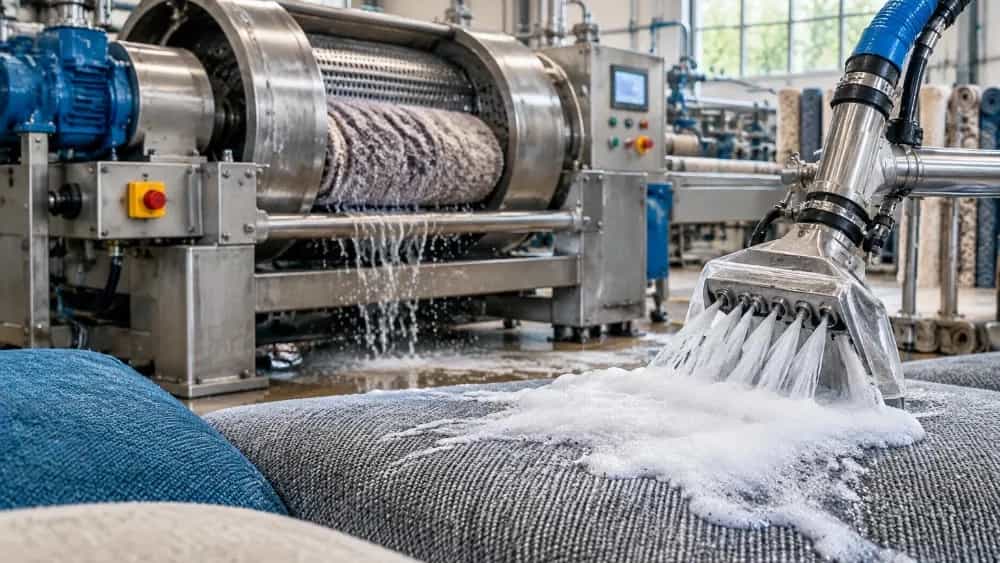

Specialized cleaning of carpets and furniture in Garmsar is a technical process that includes deep desalination, chemical stain removal according to the type of fibers, and mechanized washing without moisture remaining in the core of the fabric and the taropod of the carpet. In the Garmsar climate, due to the high hardness of city water and the infiltration of suspended dust of fine grains of chalk and desert salt, improper washing causes rotting of the weft yarn, yellowing of the edges and hardening of the furniture foam. By installing centrifuge dewatering systems and mechanized dryers, Abgineh carpet and sofa cleaning implements the cleaning process of fibers based on histological indicators and health standards of organizational environments.
The geographical climate of the central desert border has created a significant difference between the cleaning needs of this region and other climates. In Garmsar, Ivanki and Fajr industrial towns, suspended particles are a combination of hydrocarbon pollutants, industrial soot and sulfate crystals. When these particles sit on office furniture or flooring in management offices and production lines, their contact with normal moisture forms a stable adhesive bond that cannot be separated by household washing machines or miscellaneous non-industrial services.
Fixation of industrial dust on the fibers of furniture in working environments and conference halls, in addition to the early wear of coatings, leads to a decrease in the quality of breathing air in closed spaces. Facing this problem, it is necessary to analyze the resistance of fibers before determining the pH level of detergents. The use of heavy alkaline detergents to remove grease stains in these offices, without acid neutralization in the rinsing stage, after drying causes the fragility of the taropod and the faster return of the stains due to the absorption of soot.
Climatic challenges of fiber washing in Garmsar region
Another critical issue is the amount of salts and the weight of the water used in washing. Washing textiles with uncontrolled TDS water leaves a white scale on dark furniture fabrics and makes the cotton lint of hand-made and machine-made carpets stiff and brittle. The modification of washing water through industrial filtration processes and the injection of controlled fiber softeners is an indispensable prerequisite for maintaining the health of textiles in the workplace.
The mechanized process of washing carpets in the water workshop
Cleaning operations of high-density carpets and high-traffic office carpets in Abgineh complex starts from the periodic mechanical dusting phase. At this stage, all dry particles and sediments penetrated in the root are discharged from the carpet structure without causing longitudinal tension or tearing in the taropod. Entering a carpet that has not been deeply dusted into the soaking phase leads to the transformation of internal dust into compacted mud in the interior of the carpet; A mistake that is the main cause of the carpet's unpleasant smell after traditional washing.
In the main washing step, disc brushes with electronic surface pressure control spread the antibacterial foam composition on the lint. The rotation speed of the brushes is adjusted according to the comb and density of the carpet so that the sleeping direction of the sleeping yarn does not change unevenly. In hand-woven carpets, the stability of colors is evaluated and guaranteed using vegetable stabilizers to prevent any color mixing during the operation.
Final dewatering is done in tubular centrifuges at a speed of more than 1400 rpm. This technology removes more than 95% of moisture from the fabric without folding or breaking the carpet. Fast transfer to greenhouses equipped with industrial ventilation minimizes the time required for complete drying and reduces the risk of rotting and yellowing of the roots in any season of the year.
Specialized washing protocol for office furniture and chairs on site
Washing of office furniture, amphitheater chairs and ceremonial furniture of production units is done without moving and at the company's place. In this process, industrial three-motor vacuum devices and dry foam generators are used. Foam injection with a controlled moisture percentage prevents water and free moisture from reaching the wood, belts and cold foam inside the seats.
The powerful suction of the centrifugal motors of the washing machine completely removes the impurities dissolved in the foam from the layers of the sponge. This technique allows the furniture to be completely dry within 3 to 5 hours and ready for office use again, without the smell of damp remaining in the work space or the fabric becoming discolored and stained.