
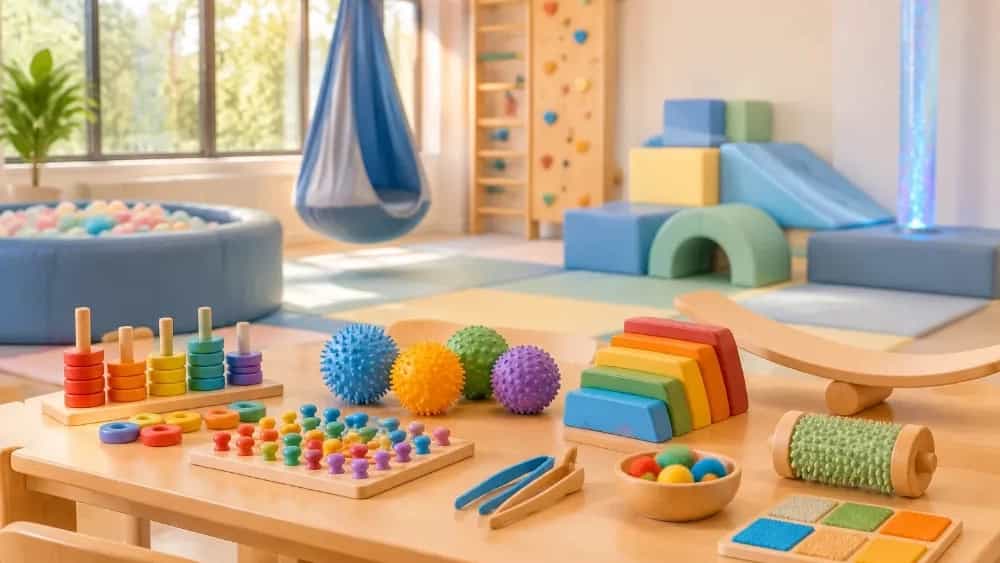
Occupational therapy for autistic children in Varamin is a targeted clinical and rehabilitation intervention that focuses on regulating sensory processing, strengthening motor skills and achieving maximum individual independence in daily activities. This therapeutic approach helps the child on the autism spectrum to perceive environmental stimuli in a balanced way and reduce his communication, behavioral and muscle coordination challenges with specific exercises. Determining the goals of the sessions is also directly based on a comprehensive assessment of the level of sensory and motor performance and the needs of the family so that the child can function in the home, school and social interactions without excessive dependence.
In field encounters with clients in Varamin city, it has been observed many times that the main concern of parents is the difference between movement symptoms and sensory disorders. Many families consider behaviors such as flapping hands, restlessness in crowded urban spaces such as Varamin Bazaar, or the inability to hold a spoon to be due to stubbornness, while these behaviors are rooted in sensory processing defects and weakness in motor planning. As the main pillar of rehabilitation, occupational therapy guides the path of treatment from the neurophysiological level to daily functional behaviors.
Initial evaluation and formulation of occupational therapy protocol for autistic children
Every standard rehabilitation program begins with a comprehensive and clinical evaluation. In the evaluation process, the child is carefully measured in various parts, including gross and fine motor skills, responding to visual, auditory, tactile, vestibular and depth inputs.
Sensory evaluation and sensory integration profile
The precise understanding of how the nervous system reacts to stimuli is determined through sensory questionnaires and structured direct observations. Children who seek to receive proprioceptive sensations by tapping their feet on the ground or resist touching different textures of food need to adjust sensory inputs in the form of a specific sensory regimen.
Examining gross motor and balance skills
Dynamic balance, awareness of the body in space and two-way motor coordination are the foundations of a child's correct movement in open spaces and stairs. The assessment of these cases will determine the deficiencies of the motor field and lead clinical exercises to strengthen the stabilizing muscles of the trunk and improve walking.
Assessing the performance of fine motor skills and hand-eye coordination
The ability to use hand muscles for tasks such as closing a button, opening a zipper, holding a pencil and cutting paper is measured in this section. Weakness in these muscles often prevents a child from successfully entering preschool and elementary school education.
Modulating sensory processing and reducing stereotyped behaviors
The central goal in this section is to reach an optimal level of arousal. When the child's brain cannot filter sensory data in a balanced way, compensatory behaviors such as turning around or self-stimulating behaviors appear. With vestibular, proprioceptive, and tactile techniques, the occupational therapist brings the nervous system closer to a state of relaxation and concentration to provide the basis for constructive interaction.
Improving self-help skills and activities of daily living (ADL)
Independence in dressing, eating, brushing teeth and control of excretion are among the highest therapeutic priorities. Occupational therapy sessions break down large skills into smaller behavioral chains so that the child learns to do everyday tasks step by step with the least amount of confusion.
Development of motor-visual integration and writing skills
The prerequisite for learning to write is to establish the lateral superiority of the brain, to strengthen the skill of grasping objects (Grasp) and the ability to follow objects with the eyes. Practicing with therapeutic pastes, beads, threads and balance boards directly affects the intrinsic muscles of the hand and visual focus.
Promotion of non-verbal communication, joint attention and two-way interaction
Game is a child's language. In targeted play therapy, the occupational therapist creates situations where the child is forced to maintain attention, take turns and make eye contact. These exercises reduce the interactive anxiety of the child in unexpected situations of society and family.
The importance of early intervention and local access in Varamin
The best golden time for the formation of brain synapses in children with autism spectrum is under 6 years of age. The plasticity and flexibility of the brain is at the highest level in the early years of life, and the correction of inefficient sensory-motor patterns is achieved at this age with much greater speed and durability.
One of the frequent challenges faced by families in Dasht Varamin is the expensive and tiring commute to the capital's clinics. Heavy road traffic and the distance of the route lead to exhaustion of the child and raise his level of sensory stress before the start of the session; Which neutralizes the effectiveness of the treatment. Access to comprehensive occupational therapy services with a modern scientific approach in the city of Varamin itself maintains the continuity of the intervention and mental peace of the family and keeps the treatment process stable.
Active participation of the family in the process of establishing skills
Occupational therapy sessions last between 45 and 50 minutes; Therefore, what guarantees the result of the treatment is the regular repetition of the exercises in the remaining hours of the day at home. The family should implement the sensory regimen set by the therapist without manipulation.
During the work with many clients, it has been proven that the tolerance that is combined with the specialized instruction, reduces the environmental anxiety of the child. Changing the structure of the home layout to reduce additional sensory inputs, using immediate encouragement and avoiding pity or doing personal work for the child in his place are the pillars of occupational therapy training.
