
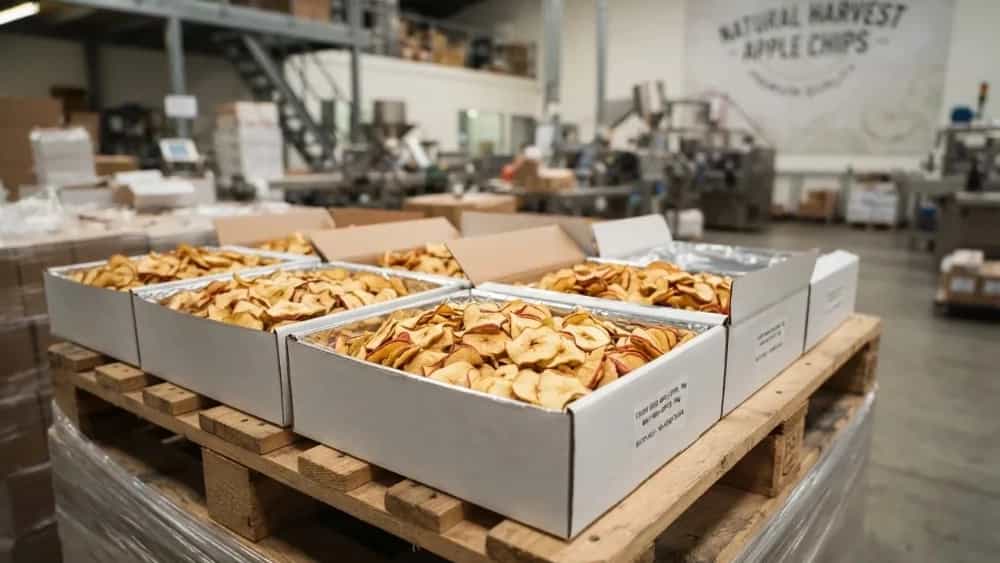
The wholesale purchase and sale of dried apples and all kinds of dried fruits requires the simultaneous measurement of three technical indicators, including standard moisture percentage (between 12 and 14 percent), preservation of spongy tissue without sugar burns, and natural color stability without excessive sulfur consumption. On an industrial scale, stable supply of these products without load fluctuations and elimination of middlemen is realized only through accurate sorting of fresh fruit before drying in hot air tunnels. Yousefi dried fruit directs this process directly from premium orchards to drying lines so that the final load is in full compliance with the standards of banking distribution and export in terms of microbes and appearance.
Major suppliers, fruit chips packaging workshops and confectioneries always face two basic problems: excessive fragility of slices during transportation and cloudiness of the cargo after several weeks of storage. Our experimental studies show that the correct choice of apple variety, along with controlled aeration temperature, determines the difference between an export product and a burnt and inferior load.
Quality evaluation criteria in the wholesale purchase of dry apples
In the banking market, many bars appear clear and flawless at first glance, but after being placed in the packaging or close to the air, they quickly deteriorate and change color. A high-quality slice must have standard physical and chemical characteristics that indicate the high accuracy of the production line.
Moisture control and elastic texture of slices
If the humidity of dried fruit is more than the allowed limit, the cargo in the warehouses of Tehran, Mashhad or Tabriz will get moldy and smell sour in less than two months. Conversely, over-drying will cause the apple slices to become pulverized during inter-provincial loading and transportation. In Yousefi dry fruit production lines, moisture measurement is done at the end of each work shift so that the slices have balanced softness and crispness and do not crumble under the load.
Natural color compared to non-standard sulfurized load
Different producers usually use high doses of sodium metabisulfite or sulfur to cover third-degree apple stains, which leads to a gassy taste and throat irritation in the end consumer. Maintaining the natural cream and golden color of dried apples without resorting to dangerous chemical doses requires standard washing with organic edible acids such as ascorbic acid and high speed of transfer to the dryer.
Variety of major dry fruits; Distributors Cart Requirements
Successful distributors do not focus only on apples, but offer their customers a balanced product portfolio including the best-selling fruits of the season. Order mix management plays a decisive role in the final profitability of nuts and dried fruit stores.
Dried ring and coreless apple
Dried apples are the cornerstone of any bulk order due to their more economical price than luxury fruits. In the primary sorting, we perform coring with fully automatic blades so that no hard tissue or apple seeds remain in the load. This precision brings the waste of retail packaging workshops to zero.
Shabloon plums, peaches, bananas and dried oranges
Besides apples, items like sliced stencil plums are in high demand due to their mild acidity and peaches due to their long-lasting natural aroma. One of the most important challenges in the dried fruit market is not to make oranges bitter and bananas not to turn black; Curbing these two technical challenges is done with step-by-step thermal processing in the workshop so that the output product maintains its luxurious appearance in store windows.
The challenges of supplying raw materials and the difference of direct workshop production
Intermediaries usually mix cargo from different warehouses with heterogeneous qualities and supply it to buyers in cities such as Isfahan, Shiraz and Karaj under the name of uniform cargo. This causes the buyer to receive a combination of burnt, semi-dry and healthy slices in a ten kilo carton.
Direct production in Yousefi dry fruit is based on contract with gardeners and direct supply of high-quality apples. This approach has two fundamental advantages:
- Maintaining complete uniformity in the diameter, shape and thickness of the slices in the total order tonnage
- Eliminating brokers' fees and providing real competitive rates for wholesale buyers and exporters
Industrial packaging and freshness preservation methods in high tonnage transportation
Infiltration of air and environmental humidity is the biggest enemy of dried fruit in the distribution chain. Non-standard bulk packaging in non-insulated sacks or cartons causes absorption of environmental moisture in humid areas and excessive fragility in dry climates.
We pack the products in thick ventilated sanitary polyethylene nylons, inside five-layer shockproof cartons. These cartons neutralize the pressure caused by the arrangement on the pallet and do not allow the weight of the upper boxes to crush the crispy slices of apples and peaches in the lowest rows.
