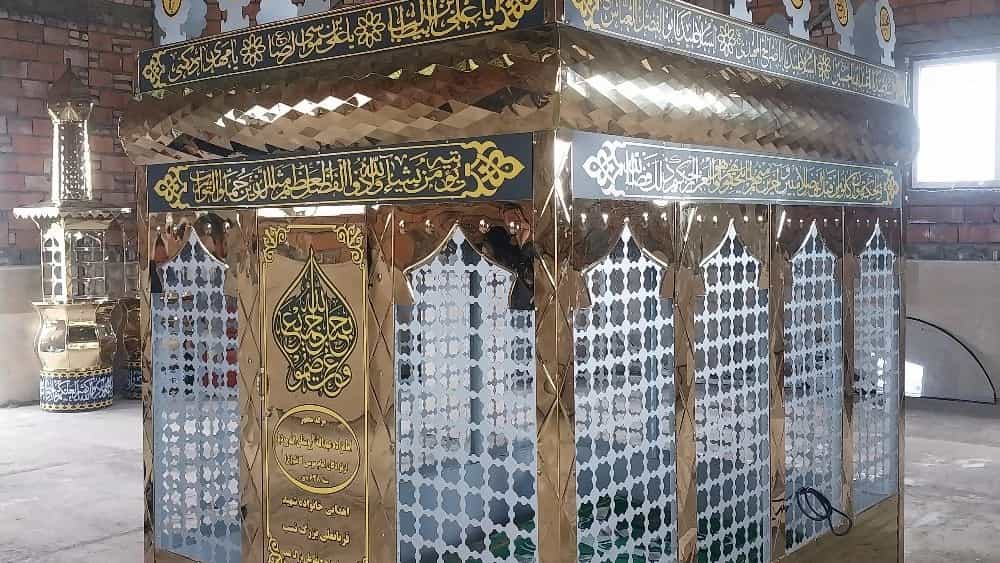
The execution of the metal dome and garland of the mosque in Babylon requires the construction of a light steel truss structure with a coating of stainless steel 304 or anodized aluminum in order to be completely resistant to humidity above 85% and the acid rains of Mazandaran. Saheb Al-Zaman Dome and Garland Design designs these structures with dynamic calculations of wind load and earthquake resistance and installs them at the project site with galvanized bolt connections. Compared to traditional concrete structures, this method reduces the dead load of the mosque roof by 65% and increases the speed of operation at least 3 times.
Climatic and engineering requirements in the construction of domes and minarets in Babylon region
The climate of Babylon, as one of the most rainy and harsh areas of Mazandaran, imposes different conditions on structural engineers. In the past years, many mosques in the villages around Babol and the belt of this city have faced the problem of rusting of the internal skeleton, swelling of the shell sheets, and the penetration of moisture into the roof of the nave. The main root of this crisis is the use of non-standard colored galvanized sheets with low-quality furnace paint coating or the use of steel sheets (code 430), which do not have the necessary resistance against moisture-saturated air.
According to the field evaluations of our technical team in the projects implemented in the suburbs of Babol, the dirty air along with the agricultural dust turns into a mild corrosive compound after sitting on the concave surfaces of the dome. If 304 stainless steel sheets with golden PVD coating (titanium) are not used, the structure will lose its transparency and become cloudy in less than 5 years.
In addition to the corrosion factor, the alluvial and loose lands of the Babol plain increase the risk of asymmetric foundation settlements in heavy traditional structures. The light metal dome is the safest engineering choice for mosques in this region due to the uniform transfer of forces through the seat ring (metal pedestal) to the main columns.
Step-by-step design and installation of metal structures without imposing additional load on the skeleton
The process of making domes and garlands in modern workshops is done in a modular and prefabricated way, so that in addition to reducing human error, traffic safety in the courtyard of the mosque is maximized during operation.
Step 1: 3D mapping and loading
In the first step, our engineers measure the alignment of the pillars and concrete level of the mosque roof with precise total station cameras. The dome truss structure is modeled based on Iran's 2800 Earthquake Regulations and the sixth topic of the National Building Regulations, and the effect of the strong winds of the Mazandaran plain on the top of the minarets is calculated.
Step 2: Making a metal frame with industrial cans
The main frame is made of ST37 standard heavy profiles. To prevent internal rotting of pipes and cans, before welding, all the internal and external surfaces of the profiles are sandblasted and covered with two layers of zinc-rich epoxy with a thickness of at least 120 microns.
Step 3: Sheeting and multi-layer insulation
Before installing the final sheet, a layer of waterproof board or Rabbits net is installed along with 80 density stone wool. In addition to the sound insulation, this layer will prevent internal perspiration of the metal (condensation that forms due to the difference in temperature inside the nave and outside).
Step 4: Transport, bracing and final assembly
Minaret parts and dome wedges were transported to Babylon separately, lifted by heavy cranes and fixed on the baseplates with 8.8 grade steel bolts.
All kinds of resistant coatings for metal domes and garlands of northern mosques
Choosing the top material determines the apparent lifespan and physical resistance of the dome. In the northern regions, there is a huge difference between the efficiency of different types of sheets:
- Stainless steel code 304 with titanium nitride coating: The most resistant option for northern humidity. This sheet does not stain, surface rust or peel in any way in the face of rain and has a brilliant light reflection. 1 mm thick static colored aluminum: A light and economical option that has high formability for sun and tile designs. If aluminum stainless rivets are used, it offers good durability.
- Pure copper sheet: The most traditional and at the same time the most stable choice that over time forms a very authentic patina and does not require the slightest repair for decades, although the initial cost is high.
- Normal galvanized sheets with polyester color: The least expensive method to Nothing is recommended for Babylon, as it usually starts to oxidize at the bends and cut edges within 3 years.
Operational differences of modern metal structures with traditional construction methods
The experience of implementing dozens of projects in Mazandaran Province has shown that the traditional implementation of the minaret with concrete and bricks only imposes unjustifiable weight on the foundation of the mosque. In the table below, an explicit and operational comparison has been made between these two structures:
Technical and executive index | Modern metal dome and garland | Traditional dome and garland (concrete/masonry) |
Dead weight imposed on the structure | 35 to 55 kg/m2 | 350 to 600 kg/m2 |
Duration of construction and installation | 15 to 25 working days (prefabricated) | 3 to 6 months active workshop on site |
Performance in earthquake and subsidence Ground | Flexible, no material shedding | Fragile, prone to deep cracks |
Workshop equipment required | Crane and 3-man installation team only | Heavy scaffolding, concrete pump and mixer |
Resistance to no insulation | Full insulation with elastomeric and Stone wool | Possibility of internal plaster damping |
Ability to move or rebuild | Possibility of dismantling and modifying the structure | Inseparable and in need of complete destruction |
Factors determining the final price and maintenance costs of the structure in Babylon
Financial estimation of dome and minaret construction is directly affected by fluctuations of base material (imported iron and steel) and thickness of selected sheets. In estimating the costs, one should not be deceived by the initial low prices. Some manufacturers reduce the price by using low-thickness non-industrial profiles or code 201 and 202 steel sheets, which are suitable for dry roof spaces; But after the first rainy season in Babylon, these structures start to rot from the seam lines.
Saheb Al Zaman dome and wreath making, by presenting the material birth certificate and the steel alloy authenticity test sheet, clearly states the dimensional calculations of the wreaths based on the useful diameter, the useful height of the crown and the type of head screws (brass or steel crown and crescent moon) in the pre-invoice. The cost of depreciation of a standard structure made with 304 sheet in a period of twenty years is practically close to zero, and its only periodic treatment is reduced to a simple annual washing of dust with high pressure water.