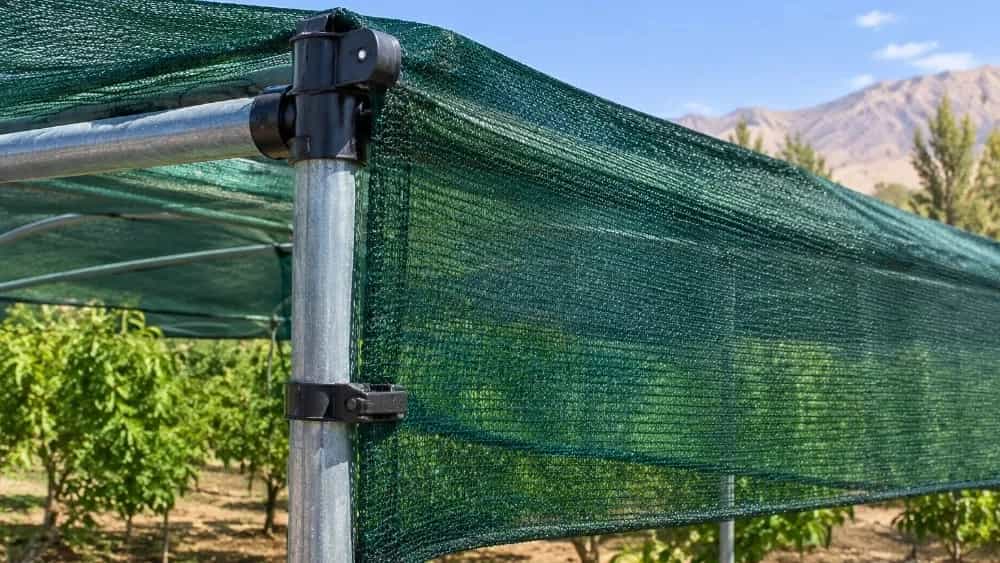

Purchase of Karaj canopy netting requires careful selection of shading percentage (density between 30 and 90%) and paying attention to anti-UV additives based on the climatic conditions of different regions of Alborz province such as Hashtgerd, Nazarabad, Mohammadshahr and Kordan. Canopy netting is a woven network of monofilament polyethylene fibers, which reduces the temperature under the structure by 5 to 8 degrees, making it possible to protect greenhouse plants, cars and areas from the heat stress of Karaj summer. The North canopy net set uses these protective nets with a special formulation resistant to radiation erosion and suitable for the regional winds on the market.
The difference in climatic conditions of Alborz and its effect on the selection of percentage density of greenhouse shade
The climate diversity in the climate of Alborz province is very impressive; So that the intensity of the radiation angle in the plains like Nazarabad and Mahdasht is significantly different from the cooler valleys of Kurdan and the foothills of Taleghan. This difference directly affects the required density percentage of canopy netting. When we talk about Karaj canopy netting for agricultural purposes or covering industrial structures, it is not possible to apply a general version for all regions.
In the field investigations that we conducted on protective cover installation projects in Nazarabad Plain, the continuous sunlight along with the monsoon winds blowing at a speed of over 50 km/h creates high mechanical and thermal stress on the fabric of the shade. In these points, choosing a net with a density of more than 80% increases the risk of the sail effect and tearing of the structure, unless the distance of the bases and the type of bracing are calculated in an engineering way. On the other hand, to protect the greenhouses in Mohammadshahr and Kamalshahr, a net with a density of 50 to 65% provides the most optimal mode of photosynthetic light transmission without burning the leaves.
Radiation separation indices in plain and foothill areas
In the higher areas of Alborz, such as Northern Karaj, Taleghan or Kurdan, the index of ultraviolet rays is much higher. If the polyethylene thread does not contain UV stabilizers, the rotting of the mesh tissue begins in less than 12 months. In the operational experiences of the northern canopy netting in these areas, fibers with a resistance of at least 6% UV stabilizer are used so that the elasticity of the network remains unchanged against the bone-chilling cold of winter and the intense heat of August.
The standard of raw materials in the fabric of the canopy net and resistance to strong radiation
The quality of a protective net does not depend only on the appearance of its color or its visual compactness; Rather, the type of granule used in the fiber extrusion process creates the technical identity of the product. The use of first-grade heavy polyethylene (HDPE) granules with photochemical stabilizers is the main difference between permanent nets and recycled waste nets, which become dry and brittle after a few weeks.
In the polymer labs and weaving process of Rachel Tori Saiban North, the way the chain knots are locked is very important. Rachel's trichowoven fabric makes it possible that if a point of the net is torn due to the impact of sharp objects, the tear does not progress along the entire width of the net.
The importance of soot and masterbatch against ultraviolet rays
The presence of the Anti-UV additive in the standard amount ensures that the fibers resist the breaking of molecular chains caused by ultraviolet radiation for several years. In the dusty environment around Karaj or Eshtehard freeway, suspended particles can raise the surface temperature of the thread like a magnifying glass. Therefore, the use of high-quality masterbatches and green or white pigments resistant to color change becomes vitally important so that, in addition to shading, the useful life of the structure in the central plains does not decrease below 4 years.
Industrial and recreational uses of canopy netting in Alborz province
The use of canopy netting in Karaj is not limited to greenhouses and the agricultural sector. The high volume of garden villas, outdoor pools and industrial spaces and open parking lots on the side of the special road has created a wide demand for this technical product. In these cases, the shading angle, visibility reduction factor, and visual beauty are measured in line with physical endurance.
Covering the walls of gardens and fencing the areas with a canopy is an economical solution to reduce the disturbing view and at the same time prevent the entry of fine dust. For example, in Chaharbagh and Tehrandasht gardens, the use of a protective net with a density of 80% as a peripheral windbreak has been able to significantly curb the damage of burning winds to the fruiting of sensitive trees such as pistachios and peaches.
Pool cover and car parking area
In villa outdoor swimming pools, canopy netting with a density of 80-90% prevents the formation of algae in the water due to direct sunlight and prevents leaves and branches from falling into the water. Also, to build open-air canopy parking without the need to use heavy galvanized or polycarbonate sheets, these nets reduce the dead load of the structure and prevent excessive temperature from being trapped around the car body.
Common mistakes in bracing and correct installation in windy areas of Karaj
One of the bitterest experiences that buyers face in Alborz province is the tear of the awning net during the first autumn storm. This usually has nothing to do with the inherent quality of the network, but originates from incorrect bracing methods and unprincipled implementation.
Directly connecting the mesh with the wire to the iron profiles of the structure is the worst possible action. The sharp edges of the wire quickly cut the warp and weft and tear the net from the point of attachment. In the engineering standards of the North canopy netting, the connection must be done by means of locking polymer clips equipped with anti-UV or punching reinforced side strips.
Proper traction guidelines in windy climates
The lace should not be overstretched and should not be left so loose that it sways in the wind like a ship's sail. In open areas such as Mahdasht, installing a string of coated towing wire underneath at intervals of one to one and a half meters spreads the weight of the net and prevents it from sagging due to the heavy snows of Alborz winter. This method of maintenance improves the service life of the shed by more than 50%.
Determining factors of canopy lace price in Karaj market and direct purchase
Fluctuations in the price of petrochemical polymers, weight per square meter (gramage), percentage of density and percentage of UV protective materials are the four main pillars for determining the price of canopy netting in the Karaj market. Many buyers only inquire about the price based on the width of the net, while the technical criterion is the actual grammage and tissue density per square meter. A 50-meter roll of netting with 80% density in terms of granule consumption and mechanical strength weighs much more than 50% netting, and the difference in their prices is due to the consumption of raw materials.
Local intermediaries in the markets of Karaj iron or agricultural materials often burden the final consumer with additional costs. The direct supply of rolls from production units such as North canopy netting, in addition to guaranteeing the receipt of the original product with the percentage of real stabilizing materials, allows the transverse dimensions of the netting to be produced and shipped exactly in accordance with the openings of the greenhouse (from 2 to 12 meters); This brings the amount of distortion and distortion of the lace edges to zero.
4. Table of technical specifications and application of density percentages
Percent density | Approximate weight (g/m²) | Light reduction rate | Specialized use in the climate of Karaj and Alborz | Average sun durability |
|---|---|---|---|---|
30 to 35% | 40 - 50 | 30% | Field crops, protecting outdoor greenhouses from hail | 4 to 5 years |
50% | 55 - 65 | 50% | modern greenhouses, sensitive greenhouses, houseplants in Hashtgerd and Saujblag | 5 to 6 Year |
60 to 65% | 75 - 85 | 65% | Flower and plant greenhouses Ornamental, covering fruit gardens to prevent sunburn | 5 to 6 years |
80% | 95 - 105 | 80% | covering garden fence, pool canopy, creating privacy in Kordan and Soheiliyeh villas | 5 to 7 years |
90 Percentage | 120 - 140 | 90% | Car parking, roof gardens, livestock roofs and warehouses full canopy | 5 to 7 years |