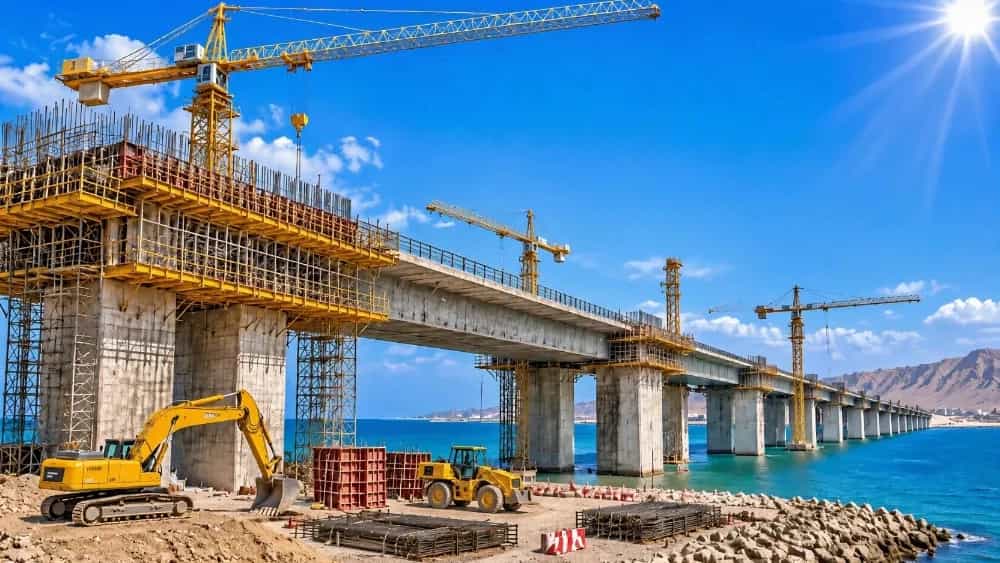

The cost of bridge construction in Kangan is determined under the direct influence of four main factors, including the special conditions of the coastal soil, the effect of humidity and chlorine ion on concrete wear, the type of monitoring structure and the volume of excavation operations. According to the technical calculations of Abad Rah Limak Company, the implementation of transit structures in this area due to geotechnical conditions requires deep piling and the use of corrosion-resistant concrete, which occupies the major part of the budget. Engineering evaluation before starting the project and choosing the right material is the main solution to prevent unexpected costs and increase the useful life of the structure in the corrosive environments of the south of the country.
Geotechnical investigation and soil substructure in Kangan region
Due to its proximity to the Persian Gulf and its location in a special structural zone, the Kangan region has non-compacted soil layers and underground water tables with high salts. This geographical location makes the design of the bridge foundation to have fundamental differences with normal structures in the central regions of Iran.
In the construction projects of the region, the load-bearing resistance of the soil is low, and the structure needs to be dug and piled to great depths to maintain its stability. The field experiences of the engineers in the executive groups show that the largest share of the initial credits is spent on soil stabilization, advanced drainage, and the use of heavy pile drilling machinery. A wrong estimate in the soil stratification can lead to heterogeneous settlements in the future and incur multiple costs for the improvement of the structure.
The influence of weather conditions and humidity of the Persian Gulf on the material used
Durability of concrete structures in stressful coastal environments such as Kangan is directly related to concrete manufacturing technology and steel sections. Penetration of chlorine ions and sulfates into concrete causes the phenomenon of concrete cancer and rusting of reinforcements; A phenomenon that, if not prevented, will cause the structure to decay in less than a decade.
To deal with this phenomenon, Abad Rah Limak Company uses special mixing designs including microsilica gel, fly ash and new generation lubricants. In addition to increasing the basic purchase price of primary material, applying protective coatings, increasing the thickness of the concrete cover (cover on the reinforcement) and using waterproof molds also increase the implementation costs compared to normal areas. However, investing in quality materials during the construction phase minimizes maintenance costs during operation.
Economic comparison of concrete and metal bridge construction in Kangan industrial zone
Choosing the type of structural system (prestressed concrete deck or steel beams) plays a key role in the financial structure of the project. The climatic conditions of Kangan and the presence of industrial pollutants in the air due to its proximity to the facilities of South Pars greatly increase the consumption of metals.
Metal bridges are faster to run and weigh less, but add sandblasting costs, epoxy-polyurethane multi-coatings, and periodic sandblasting to the initial run. On the other hand, prestressed concrete bridges have heavier components and require cranes and specialized decking equipment, but in the long run, they are considered more economical due to their higher resistance to corrosive weather. Based on the length of the opening and access to the workshop, the project engineers suggest the most optimal option financially and technically.
Logistics challenges, supply of materials and heavy machinery
The implementation of infrastructure projects in Kangan is associated with certain logistical challenges. Providing standard materials, including high-quality aggregates without salts, requires the transportation of materials from mines far away. The water used in making concrete must also be completely sweet and without salts, which in coastal areas requires water supply through tankers or desalination devices.
Also, renting and deploying heavy machinery such as multi-hundred ton cranes, pile drilling machines (rotary) and track mixers in the region is an important part of the budget. Accurate timing of execution steps and management of machinery in order to prevent workshop stoppage is considered the main control solution to prevent wastage of financial resources in this sector.
Evaluation index | In-situ concrete bridge | Precast / prestressed concrete bridge | Steel Deck Bridge |
Initial Substructure Cost | High (requires heavy foundation) | Moderate | Less due to low structural weight |
Resistance to coastal weather | Very high (with special mixing design) | Extremely high (quality control) factory) | requires heavy anti-corrosion coatings |
annual maintenance cost | very low | very Low | High (recoloring and rust removal) |
Installation and execution speed | Slow | fast | very fast |
requires specialized equipment | medium | heavy (super heavy cranes) | Medium |
Cost management and optimization strategies in bridge construction projects
Financial management of bridge construction projects requires a precise balance between structural quality and allocated budget. Simplifying operational processes without reducing the reliability factor of the structure can only be achieved by relying on engineering knowledge and construction management.
Abad Rah Limak Company reduces execution errors and optimizes the project execution time by using modern methods of modular formatting, integrated management of material supply and utilization of local expert forces. Reducing the construction time, in addition to the drop in current costs of the workshop, reduces the risk of facing market price fluctuations and improves the rate of return on investment in construction projects.