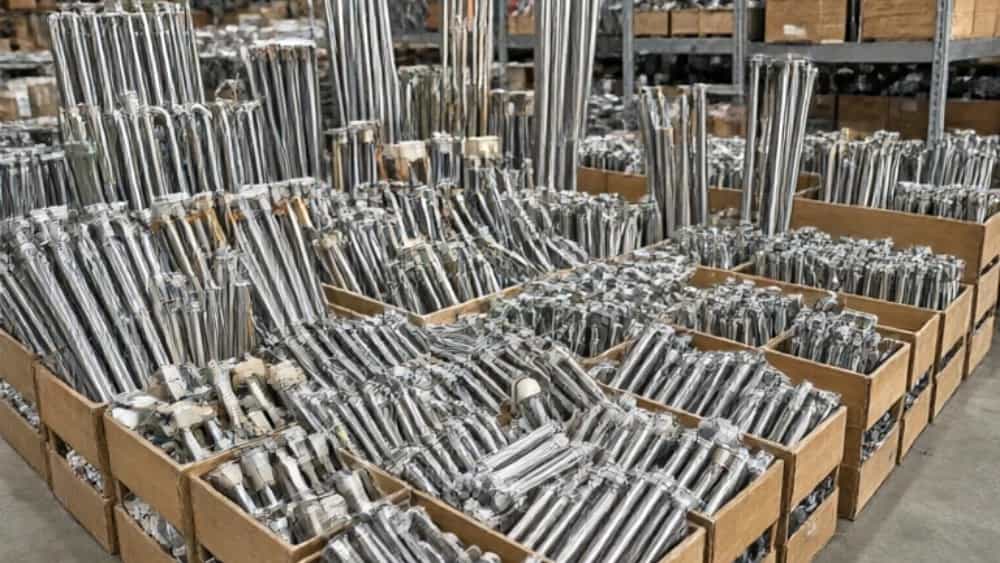

In industrial and production complexes, continuous access to thermal equipment is one of the important factors in maintaining the production process. Many factories, workshops, repair companies and industrial equipment stores continuously need various types of heating elements. In such a situation, individual and scattered purchases cannot always meet the needs of the collection.
Element bulk supply is a solution for better cost management, regular access to required products and avoiding delays in production and repair processes. When a group can get its needs through a reliable and scheduled supplier, in addition to reducing overhead costs, it will have more control over inventory and delivery time.
Of course, buying a large amount alone does not mean an economic deal. The quality of construction, technical specifications, variety of products, terms of payment, warranty and the ability to supply subsequent orders are also very important.
In this article, we examine how to make an economic and safe decision for the bulk supply of industrial elements and what factors are influential in choosing a professional supplier.
What is element bulk supply and what are its benefits for businesses?
Element bulk supply refers to the process of providing a large number of heating elements for use in factories, manufacturing units, repair centers, industrial equipment stores, and distribution companies.
In this method, instead of providing products on a case-by-case basis, the buyer consolidates the needs of the set in a specific order or supply plan.
This purchasing method creates several advantages for businesses that have continuous consumption.
1. Reduce purchase cost
In many major deals, it is possible to get a better price for each piece due to the increase in the number of orders. Also, the costs related to transportation and registration of multiple orders can be reduced.
2. Better inventory management
When high-use products are sufficiently available in the warehouse, the possibility of downtime due to the lack of required parts is reduced.
3. Access to various products
Bulk buyers usually need several types of elements with different technical specifications. Cooperation with a supplier group can simplify the process of obtaining these products.
4. The possibility of planning for future purchases
By determining the amount of monthly or seasonal consumption, orders can be adjusted periodically and emergency purchases can be avoided.
5. Establish long-term business cooperation
Continuous communication with a reliable supplier enables negotiation of price, delivery time, payment terms and custom orders.
What collections need a major supply of industrial elements?
Demand for thermal elements is not limited to a specific industry. Many production and service units depend on these equipments to continue their activities.
Manufacturing factories
Factories that use thermal machines, plastic injection machines, extruders and drying equipment usually need different elements.
In these sets, the failure of a thermal component can disrupt the performance of a part of the production line. For this reason, planned supply is very important.
Industrial maintenance companies
Repair centers should be able to have replacement parts available when the equipment breaks down.
The bulk supply of elements for these collections makes them less dependent on urgent orders when repairing customers' devices.
Industrial equipment stores and distribution centers
Sellers of thermal equipment need product diversity and appropriate inventory to respond to the needs of their customers.
Preparing a large number of elements in different models and sizes allows providing better services and increasing the variety of the store.
Contractors and machinery manufacturers
Companies that design and produce industrial devices may need several elements with specific power, dimensions and structure in each project.
For these collections, a supplier that has the ability to produce customized products and deliver according to the project schedule creates more value.
All kinds of elements suitable for supply and bulk purchase
One of the most important issues in the bulk supply of elements is choosing the right combination of products. It is better to check the type of devices and the amount of consumption of each model before ordering.
1. Industrial rod element
The rod element is one of the most widely used products in thermal equipment and is produced in straight, U-shaped, and customized forms.
Common uses:
- Water and oil tanks
- Heating equipment
- Industrial devices
- Packaging machines
- Drying systems
2. cartridge element
Cartridge element is used for local heating of metal parts and molds.
This model is used in plastic injection devices, molding, packaging equipment and production machinery.
In the bulk purchase of this product, the diameter, length, power, voltage, and length of the heated part must be specified carefully.
3. Flanged element
Flanged element is mostly used for heating liquids in industrial tanks.
This product is produced in different models with different number of branches, power and sheath type.
4. Ceramic element
Ceramic element is used for some surface heating applications and industrial equipment.
Its belt and plate models are used in plastic injection machines, extruders and thermal equipment.
5. finned element
This model has metal fins to increase the contact surface with air and is used in industrial heaters, dryers and air heating equipment.
Important note: For a large order, it is better to record the technical specifications of each product group separately to avoid mistakes in supply and delivery.
The most important criteria for selecting a major element supplier
Choosing a supplier based only on the price offered is not the right decision. A professional seller should be able to manage the order technically, commercially and time-wise.
Quality of raw materials and construction
The quality of resistance wire, internal insulation, sheath and connections affects the performance and lifespan of the element.
A product that is made of inappropriate raw materials may fail sooner than expected and increase the cost of replacement and repair.
Ability to provide high numbers
Before signing the contract, the production capacity or inventory of the seller should be checked.
If your collection requires a certain number of elements each month, the supplier must be able to meet this demand on a regular basis.
Variety of products
A collection that can supply all types of rod, cartridge, flanged, ceramic and other models, makes purchasing management easier for the customer.
The possibility of custom production
Sometimes the standard products available in the market do not match the specifications of the device.
In such a situation, the possibility of making the element according to the plan, sample or technical specifications can be one of the important advantages of the supplier.
Transparency in price and transaction terms
The price of each piece, shipping cost, delivery time, payment terms and warranty status must be known before placing the order.
This issue is especially important in organizational purchases and multi-step orders.
How is the bulk supply price of the element calculated?
The wholesale price of the element depends on various factors and cannot be considered a fixed amount for all models.
In high quantity orders, in addition to technical specifications, commercial conditions also play a role in calculating the final cost.
The most important factors are:
Type of element: The structure of the rod element is different from the cartridge or flanged one and they do not have the same production cost.
Power and voltage: The electrical characteristics of the product affect the design and consumables.
Sheath material: The use of steel, heat-resistant alloys or special materials for corrosive environments affects the price.
Dimensions and size: The length, diameter, thickness and shape of the product play a role in the production cost.
Number of orders: Increasing the number of orders may make it possible to offer a tiered discount.
Customization: Product production according to the plan or specific conditions of the device requires more design and technical control.
Packaging and shipping cost: Weight, volume and shipping destination should also be included in the final cost.
How to pay less in bulk purchases?
To manage the supply cost, it is suggested:
- Determine the monthly consumption of each model.
- Consolidate scattered orders as much as possible.
- Ask the supplier about the discount for large quantities.
- Check the quality of the products before increasing the volume of the order.
- Include the shipping cost and delivery time in the final price.
- Set up a periodic supply contract for high-use products.
Keep in mind that buying cheaper is worthwhile when the quality and performance of the product are also suitable for the needs of the device.
Bulk purchase of ready-made element or special production order?
One of the important decisions of major buyers is choosing between ready-made products and custom elements.
Each of these methods has its own advantages and limitations.
Comparison criteria | Ready product | Customized product |
|---|---|---|
Delivery time | Usually shorter | Depending on production time |
Dimensions | Standard or stock | Available to order |
Ability | Available models | Designable |
Use | Common equipment | Special equipment |
Price | Depends on Inventory | Depends on design and manufacture |
Flexibility | More limited | more |
If your consumption is related to standard equipment, ready-made products can be a good choice.
However, in projects that have specific dimensions or specifications, a special order causes better coordination of the product with the device.
To check more specifications of custom elements, you can read THERMOCOAX technical guide about thermal elements.
The basic steps of registering a bulk order for the element
To avoid mistakes in purchase and delivery, it is better to follow the order process according to specific steps.
The first step: Checking the needs of the collection
Specify the number of devices, the type of element consumed and the amount of monthly usage.
The second step: preparation of the list of technical specifications
For each model, record power, voltage, dimensions, sheath material and connection type.
The third step: receiving a price inquiry
Send the required specifications and quantity to the supplier and get a pre-invoice.
Fourth step: checking the sample or product specification
In sensitive orders, it is better to check product samples or technical documents before purchasing large quantities.
Step 5: Agreement on delivery terms
Specify preparation time, shipping method, packaging, payment terms and warranty.
Sixth step: Order control during delivery
Compare the number, model, dimensions and technical specifications of the delivered products with the original order.
How to manage element inventory for factory?
One of the challenges of production sets is maintaining the right number of spare parts.
If the inventory is less than required, machine failure can cause production to stop. On the other hand, excessive storage of products also involves the capital of the collection in the warehouse.
There are some practical measures for better inventory management:
Identification of the most used elements: The models that have the highest amount of use should be prioritized for supply.
Record consumption history: Record the number of parts consumed in each month or season so that the amount of the future order can be determined more accurately.
Determining the reorder point: When the stock reaches a certain level, the new order process will start.
Segmentation of products: Categorize elements by type, size, power and application.
Periodic inspection of storage quality: The conditions of storage and health of product packaging should be checked regularly.
These actions will help the process of providing the bulk of the element to be done with more planning.
Why is the element periodic supply contract important?
For factories and collections that have continuous consumption, purchasing items is not always the best solution.
Periodic supply contract can create a more regular business relationship between buyer and seller.
In such a contract, it is better to specify the following:
- Type and technical specifications of products
- Quantity required in each period
- Price and how to adjust it
- Delivery schedule
- Payment conditions
- How to check quality
- Warranty conditions
- Obligations of the parties in case of delay
By knowing these things, the buyer can make a more accurate decision for the production plan and stock.
Technical links and reliable sources for checking industrial elements
To better choose products and get to know element design and performance standards, it is useful to study the specialized resources of international manufacturers:
These resources help to examine the application, choose technical specifications, building materials and factors affecting the performance of the element.
summary; Turn bulk element sourcing into an economical and reliable process
The bulk supply of elements for factories, sellers and industrial complexes does not only mean buying a large number of products; Rather, it is considered a part of cost management, inventory control and maintaining the stability of the production process.
To achieve a successful purchase, you should check the product type, technical specifications, quality of raw materials, seller's supply capacity, final price and delivery conditions together.
Also, it is better to consider the long-term costs of equipment failure, replacement, and downtime instead of just focusing on the purchase discount.
If you need a large number of elements for your factory, store or production complex, prepare the list of products and specifications you need right now. To receive a pre-invoice, to check the possibility of periodic supply and to know the terms of major cooperation, contact the sales experts.
With a proper supply plan, you can better manage purchasing costs and make your collection's access to the required thermal parts more stable.
همین حالا با ما تماس بگیرید
تأمین عمده المنت