

#### Introduction
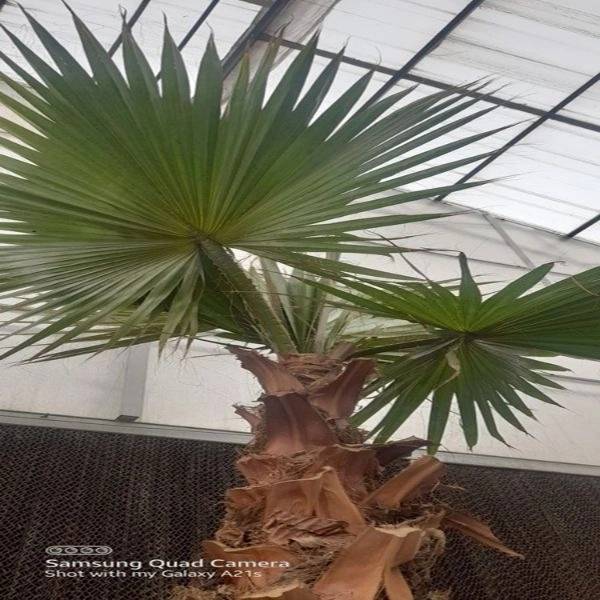
Washington palm, with the scientific name Washingtonia filifera and Washingtonia robusta, is one of the popular ornamental plants that has attracted the attention of many flower and plant enthusiasts due to its beautiful appearance and endurance. In this brochure, we have introduced this plant, its origin, the climatic conditions of its habitat and the important points in its maintenance.
#### origin and habitat
The Washington palm grows naturally in the southwestern United States and northern Mexico. This plant grows well in desert and semi-desert areas with hot and dry summers and mild winters.
#### Climatic conditions of the habitat
1. Temperature: This plant tolerates temperatures above 30 degrees Celsius and is resistant even in temperatures close to zero degrees. However, the optimal temperature for its growth is between 20 and 30 degrees Celsius.
2. Light: Washington palm needs direct sunlight. In areas with low light, its growth slows down and the leaves become withered and weak.
3. Humidity: This plant needs low relative humidity and grows better in dry weather. Although it can be somewhat resistant to high humidity.
#### Washington Palm Maintenance
1. Irrigation: Regular watering is necessary during the growing seasons (spring and summer). The soil should be moist, but not waterlogged. In the autumn and winter seasons, the need for irrigation is less.
2. Soil: Sandy and loamy soils with good drainage are suitable for Washington palms. This plant likes alkaline to slightly acidic soils.
3. Fertilization: The use of complete macro and micro fertilizers enhances the growth and beauty of Washington palm leaves.
4. Pruning: Pruning dry and dead leaves helps to improve the appearance and health of the plant. You can also control the height of the plant by regular pruning.
5. Pests and diseases: The Washington palm is resistant to pests and diseases, but may be attacked by aphids and mites. It is recommended to use pesticides if needed.
Do you have any other questions about the maintenance of this plant?
If you have any problems in maintaining your plant, consult Sally Rose experts.
Please note that the information provided in this text is only for guidance and is not a substitute for expert herbal advice, so contact Sally Rose's experienced experts for expert advice.
With proper maintenance and providing suitable conditions, Washington palm can grow well as a beautiful and resistant ornamental plant in different environments.
Paying attention to the light, temperature and irrigation needs of this plant is the key to success in its maintenance.
sellers
specifications
description
Comments
sellers
No sellers available for the product with the above specifications.
General specifications
type
Washington palm, with scientific names Washingtonia filifera and Washingtonia robusta