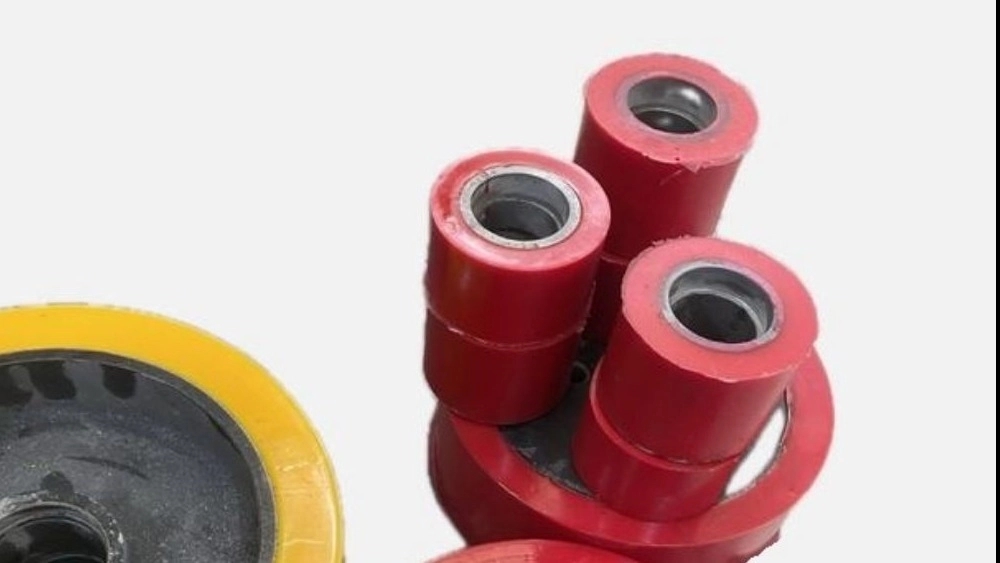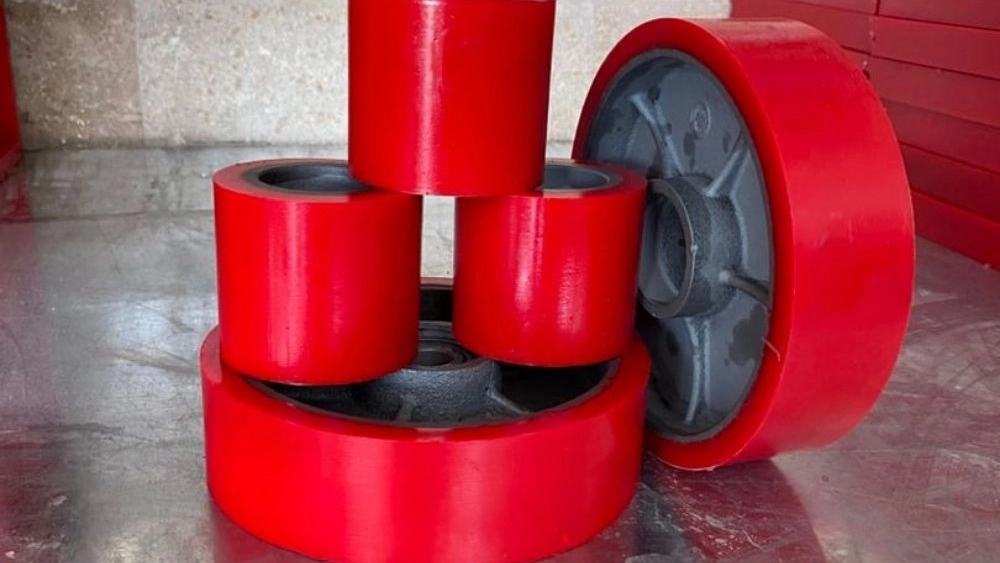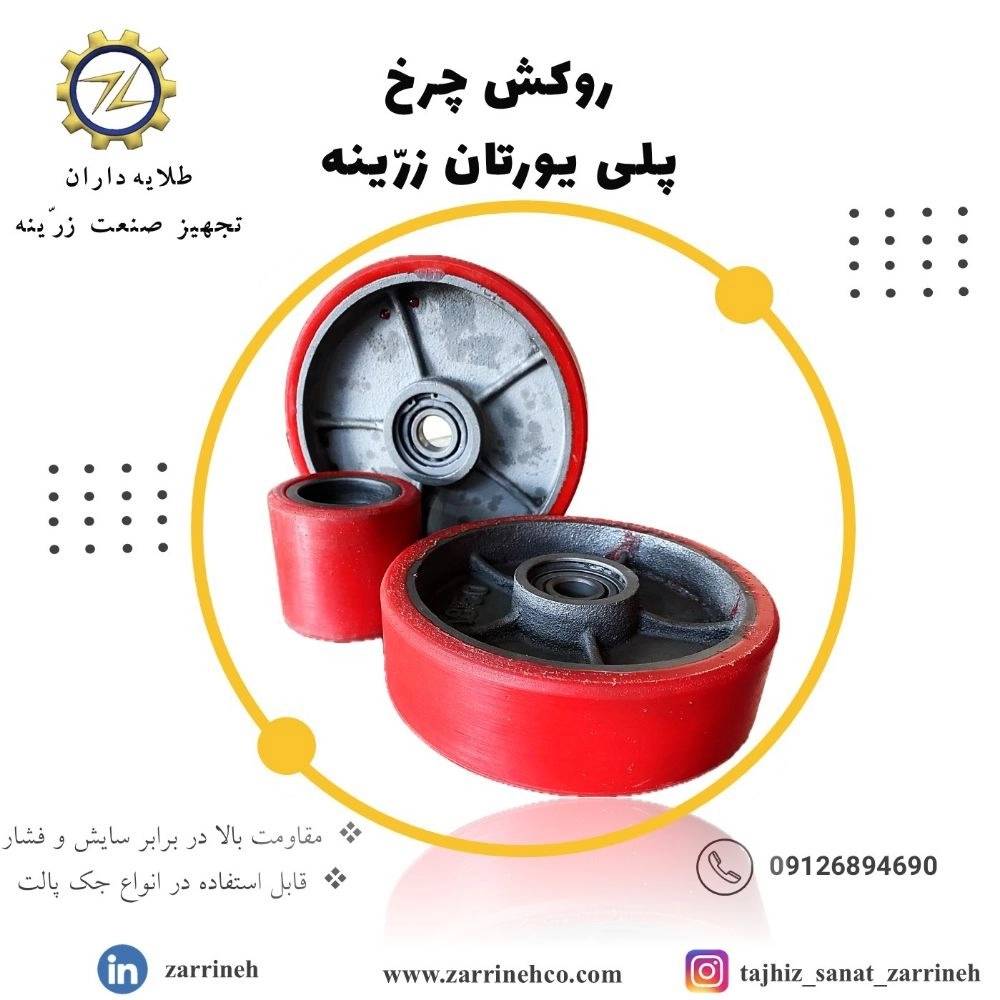

Polyurethane wheel cover; Increasing the life and efficiency of industrial wheels with polyurethane coating
In various industries, especially mineral processing factories, cold stores, various industries, the use of industrial wheels with long life and wear resistance plays a vital role in reducing maintenance costs and increasing productivity. One of the best ways to improve the durability of wheels is polyurethane coating. This specialized process increases the resistance of the wheel against impact, wear, corrosion and environmental conditions. In the following, we will fully review the steps of this operation and the benefits of using polyurethane wheel cover.
Steps to apply polyurethane coating on wheels
1- Removing the old coating
The first step in the coating process is to completely remove the previous wheel coating. Usually, these covers are made of materials such as rubber, Teflon or worn polyurethanes. To remove these materials, methods such as a press are used. In addition to removing old layers, this step cleans the surface and prepares the base metal for the next steps.
2- Preparing the surface with sandblasting
After removing the old coating, the wheels enter the sandblasting stage. In this step, the metal surface is cleaned and roughened using abrasive particles (sand or grit) with high pressure. The created roughness causes better adhesion of the polyurethane coating to the metal. This step is very important for the durability of the new coating.
3- Dedicated template design
One of the key steps in performing the coating is making the exact mold for each wheel. These molds are designed based on the exact dimensions of the part and the technical needs of the customer. The correct design of the mold ensures uniform distribution of materials on the surface and prevents defects such as bubbles or discontinuity in the coating.
4- Polyurethane casting
At this stage, the polyurethane is injected into the mold with a controlled composition. Polyurethane has high flexibility, wear resistance and impact absorption, and depending on the final application, the coating thickness can be adjusted between 5 and 30 mm or more. Casting operations must be done in a temperature-controlled environment to ensure final quality.
5- Dimensional control and accurate measurement
After the wheels leave the mold, the final dimensions and thickness of the polyurethane coating are checked with precise tools such as digital calipers. Any deviation or non-compliance with the technical plan will be corrected. This step is especially sensitive for wheels that are used in rotating equipment or under high load.
6- Heat treatment (final cooking)
To achieve the desired mechanical properties such as hardness, elasticity and strength, coated wheels are placed in industrial furnaces at a certain temperature. This step is known as polyurethane curing and plays an important role in finalizing the material's physical properties. After baking, the wheels are returned to ambient temperature.
7- Quality control and final inspection
At this stage, quality control experts check the finished wheels in terms of appearance, dimensions, surface hardness and coating uniformity. If all the parameters are confirmed, the wheels enter the final stage.
8- Final cleaning, packing and shipping
The last step includes the final cleaning of the part, industrial shock-proof packaging and shipping to the customer's place. Proper packaging prevents physical damage during transportation.
Advantages of using polyurethane coating for industrial wheels
1- High resistance to wear and tear: Polyurethane is one of the most wear-resistant materials and increases the useful life of the wheels.
- 2- shock absorption and vibration: suitable for environments with vibration or sudden loads such as mines or heavy production lines.
- 3- Chemical resistance: Polyurethane has good resistance against oils, industrial acids, and corrosive substances.
- 4- Resistance to temperature changes: from low to high temperature, the mechanical performance of polyurethane remains stable.
- 5- Ability to restore and re-cover: the wheels that are covered can be re-covered in case of wear, without the need to change the metal.
- 6- Increasing safety and reducing maintenance costs: reducing production line stops, reducing frequent replacement of parts, and thus increasing system productivity.
Common applications of polyurethane coated wheels
Manual pallet jack, electric pallet jack, forklifts, stackers, textile industries, paper making, stone cutting, weighing and weighing industry and...
How to order?
To place an order for a wheel cover with polyurethane coating, just provide our experts with the diameter of the base metal, the width of the wheel, and the desired thickness of the coating. Talayehdaran's Tahiz Sanat Zarrineh collection is ready to provide services to large industrial factories across the country by using advanced equipment and an experienced technical team.
Free consultation and exclusive order
To get an accurate price based on dimensions and working conditions, contact us now and benefit from free technical advice. We will produce your wheel with the best quality, the fastest possible time and with a guarantee of coverage.