
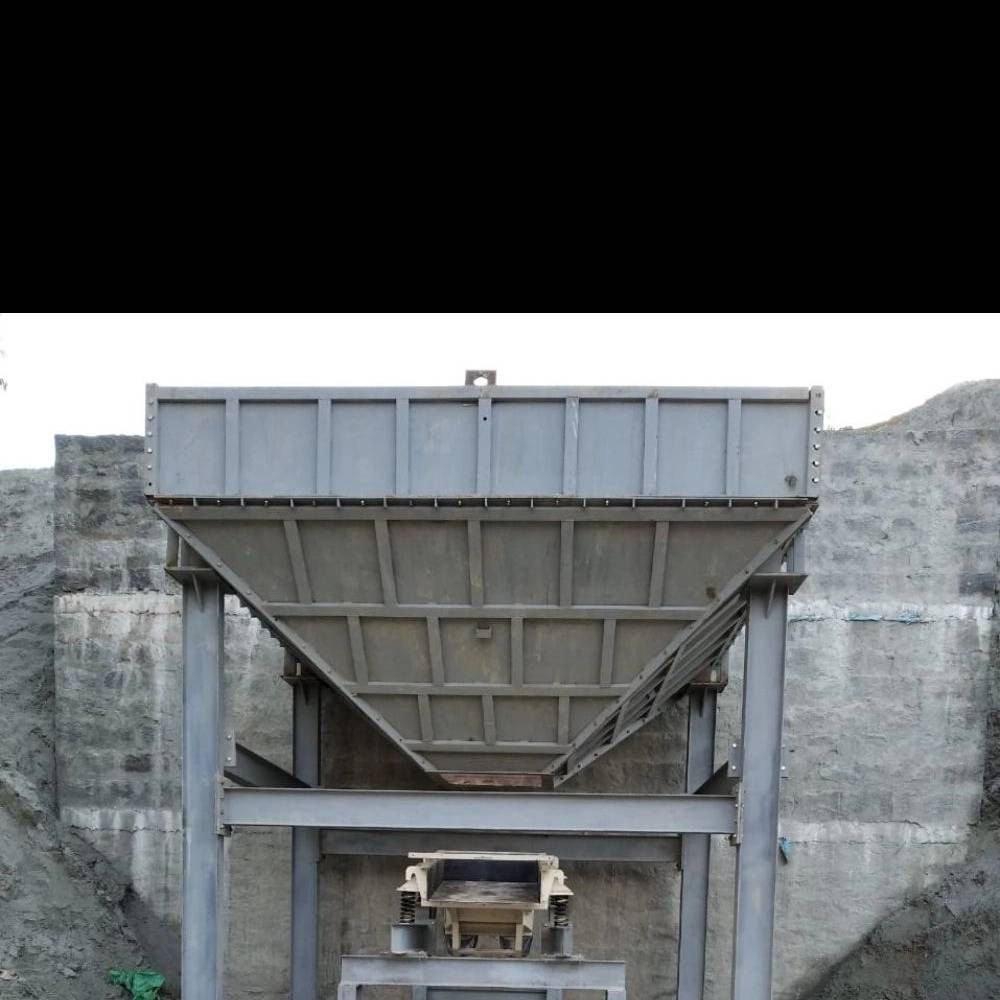

What is the Hopper Inlet Rocking Line?
Hopper is a part of crushing and crushing line equipment that is designed as a primary reservoir of minerals. The main task of the hopper is to store and direct the incoming materials to the stone crusher.
This tank is usually installed at the beginning of the stone crushing lines so that the minerals extracted from the mine are directed into the stone crusher in a controlled manner. What is the material of the hopper? Hoppers are usually made of hard and resistant steel, because this equipment is constantly subjected to impact and wear caused by minerals. The most common materials used in making hoppers are: 1. Carbon steel: due to high impact resistance and reasonable cost. 2. Wear-resistant steel: such as Hardox sheets, which are used to resist long-term wear. How to increase the life of the hopper? 1. Use of wear-resistant coatings: internal coatings such as anti-wear plates made of hardox, chrome-cobalt or special rubbers can significantly increase the life of the hopper. One of the best options for wear resistance is Hardox sheet. These sheets are available in different thicknesses (typically 8 to 20 mm) and greatly increase the life of the hopper. In some situations where it is necessary to reduce the impact sound and moderate wear resistance, rubber covers can be used. For environments with wear and high temperatures, chrome-cobalt coated plates are used. 2. Appropriate design of angles: The hopper should be designed in such a way that the materials are discharged uniformly and no points with severe wear are created. 3. Controlling the size of incoming materials: It is recommended to use pre-sieve equipment (Grizzly Bars) at the beginning of the hopper to remove very large stones and reduce the pressure on the hopper body. 4. Periodic maintenance and inspection: Continuous inspection and timely repair or replacement of coatings can prevent premature failure. 5. Use of shock absorbers: installing shock absorbers on the walls or floor of the hopper can reduce the impact intensity. Hopper capacities: The capacity of the hopper depends on the volume and weight of the material to be stored in it. The capacity of hoppers is usually designed based on the needs of the mine and the type of input materials and can vary from a few tons to hundreds of tons. The most common capacities are: 1. Small (5 to 20 tons): for small mines and laboratory crushing lines. 2. Medium (20 to 100 tons): for semi-industrial stone crushing lines. 3. Large (more than 100 tons): for large mines and industrial production lines with high capacity. Dedicated design: The capacity and dimensions of the hopper must be calculated in such a way that it has the ability to store and continuously feed the stone crusher without stopping the production line. It should also be matched to the power of material handling equipment such as conveyors or feeders. Special points: • If the input materials have a lot of moisture, the use of non-stick coatings such as Teflon or polyurethane is recommended. • In case of possible entry of very large materials, installation of grizzly above the hopper is mandatory to prevent damage. • If the crusher is underground, the hopper should be designed in such a way that the material can be easily unloaded with the help of mechanical equipment (such as a dump truck or wagon).