
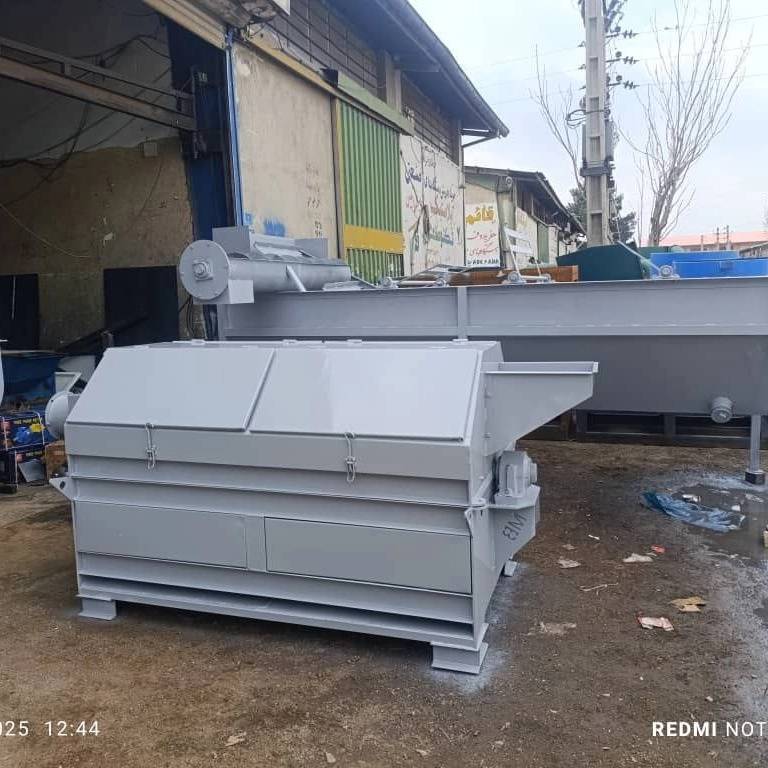

The centrifuge device in the nylon salt mill line plays a vital role in separating water and impurities from the washed plastics. This device is usually placed after the washing step and before the dryer to reduce the remaining moisture and dirt as much as possible.
Let's explain its operation step by step:
🔧 1. Entry of materials
After the polyethylene or polypropylene (such as nylon, packaging film, bags, etc.) is crushed and washed in the salt mill, the slurry of plastic and water enters the centrifuge.
⚙️ 2. Rotation with high speed
Inside the centrifuge, a tray or perforated cylinder (drum) rotates at a very high speed (usually between 1000 and 3000 rpm). Centrifugal force causes:
Plastics stick to the wall of the drum,
And water and small particles come out of the side holes.
💨 3. Separation of water and pollution
Air flow and centrifugal force work together to:
Water should be separated from the plastic surface,
Mud, sand, residual detergent and other pollution should be emptied from the exit route.
Result: Plastics come out of the machine with about 5 to 10% moisture.
🔄 4. Removal of drier materials
Semi-dry plastics are directed from the end of the centrifuge to the thermal dryer stage or Wind Cyclone to be completely dry and ready for granulation.
⚙️ Key features of a good centrifuge for the Nylon Shore line
Explanation feature
Stainless steel body and drum material to resist moisture and alkaline detergents
Bearings resistant to heat and water
Capacity between 300 and 1000 kg per hour, depending on the dimensions of the line
Adjustable rotation speed for plastic type
Automatic or manual drain system depends on the model.