
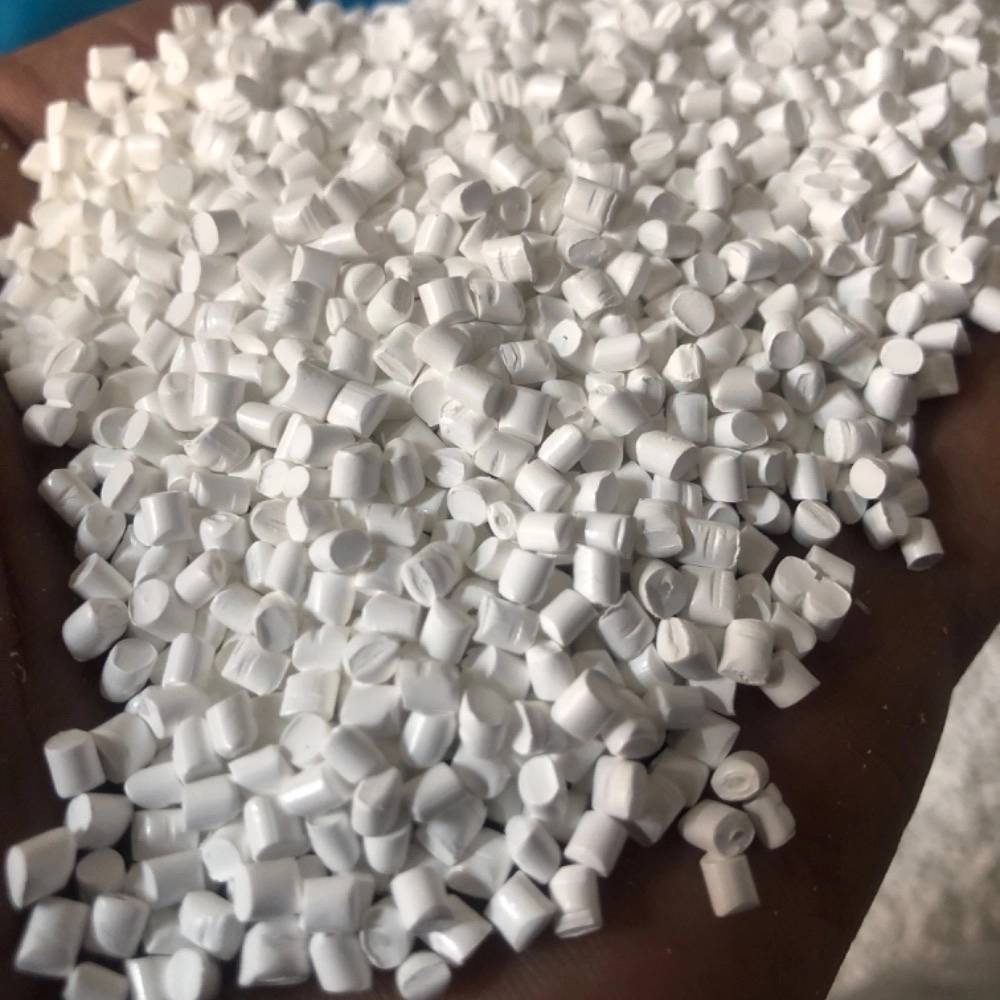

White masterbatch 70% polyethylene base is one of the most widely used additives in the plastic industry, which is used to create whiteness, coverage and high gloss in polymer products. This product is produced from a combination of polyethylene (PE) base resin, titanium dioxide (TiO₂) with very high purity and brightness, and a small percentage of process additives. The presence of 70% titanium in the masterbatch structure makes it an ideal option for applications where high whiteness and high light resistance are important.
Titanium dioxide, as the most important component of white masterbatch, has the highest refractive index and covering power among pigments. For this reason, its use increases the whiteness, glossiness, resistance to UV rays and increases the lifespan of the final product. In high-quality masterbatches, rutile titanium with surface coating is used to increase optical stability and create optimal dispersion in the polymer.
Masterbatch's polyethylene base makes it perfectly compatible with light polyethylene (LDPE), heavy polyethylene (HDPE), linear polyethylene (LLDPE) and even some polymers close in terms of polarity. This has made 70% white masterbatch widely used in products such as packaging films, nylon and nylon, injection parts, inflatable containers, pipes and extrusion parts.
The main advantages of this masterbatch include excellent coverage, high thermal stability, good flowability, preventing yellowing, increasing light resistance and reducing the consumption of paint powder. Due to the high concentration of pigment, its consumption is usually very low (between 1 and 5% depending on the type of product).
To sum up, white masterbatch 70% polyethylene base is an economical and efficient choice that, while reducing the cost of paint consumption, significantly increases the appearance quality and durability of the final product.
If you want, I can write a shorter, more attractive version for the site or a completely specialized industrial version.