
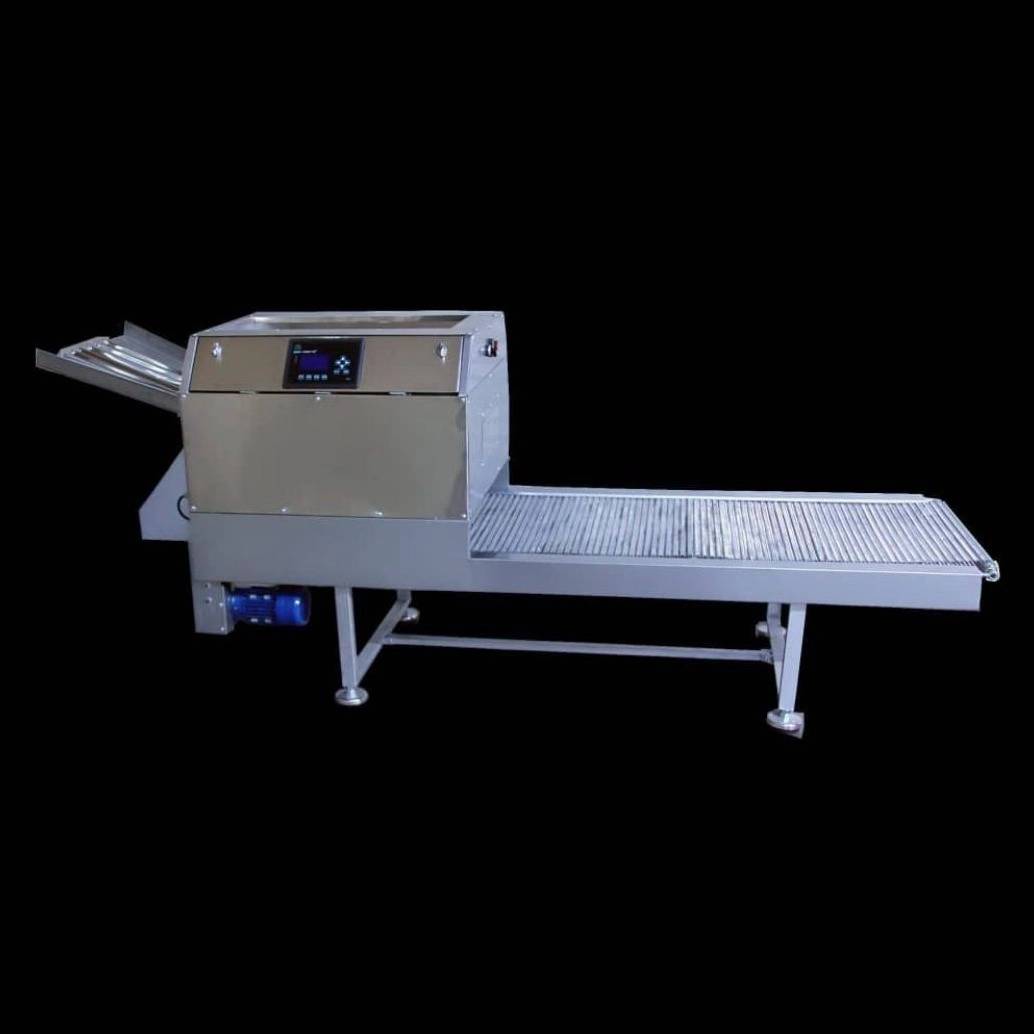

The cooling rail or automatic cooling device is used in bakeries to cool the bread after leaving the oven and transfer it to the packaging department. This equipment preserves the quality, prevents the bread from becoming doughy inside the package and increases the shelf life of the product.
Cooling rail performance
- Installation location: at the end of the baking line (for example, tunnel or rotary oven).
- Working method: hot breads are placed on the conveyor belt and are cooled by permanent fans along the way.
- Product transfer: After cooling, the loaves will automatically enter the packaging section.
- Control: It has a control panel to adjust the speed of the tape and turn on/off the fans.
Benefits of use
- Hygiene and quality: cooling without hand intervention, preventing sweating and doughing of bread in the package.
- Increased shelf life: humidity and temperature control keeps packaged bread fresh and longer.
- Reducing waste: preventing bread from spoiling in packaging and reducing wastage of raw materials.
- High speed and capacity: suitable for industrial production lines and large bakeries.
Common technical specifications
- Dimensions: length from 2 meters to several meters, width according to the baking machine (one, two or three rows).
- Fans: Multiple permanent blower fans installed along the track for even air flow.
- Conveyor belt: made of modular belt or resistant profiles.
- Settings: adjustable tape speed and cooling intensity.
- Warranty: usually 12 months warranty and up to 5 years after-sales service.
Applications
- Industrial and traditional bakeries with mass production.
- Berber bread, lavash, tufton and bulky bread production lines.
- Confectioneries and food factories to cool products before packaging