
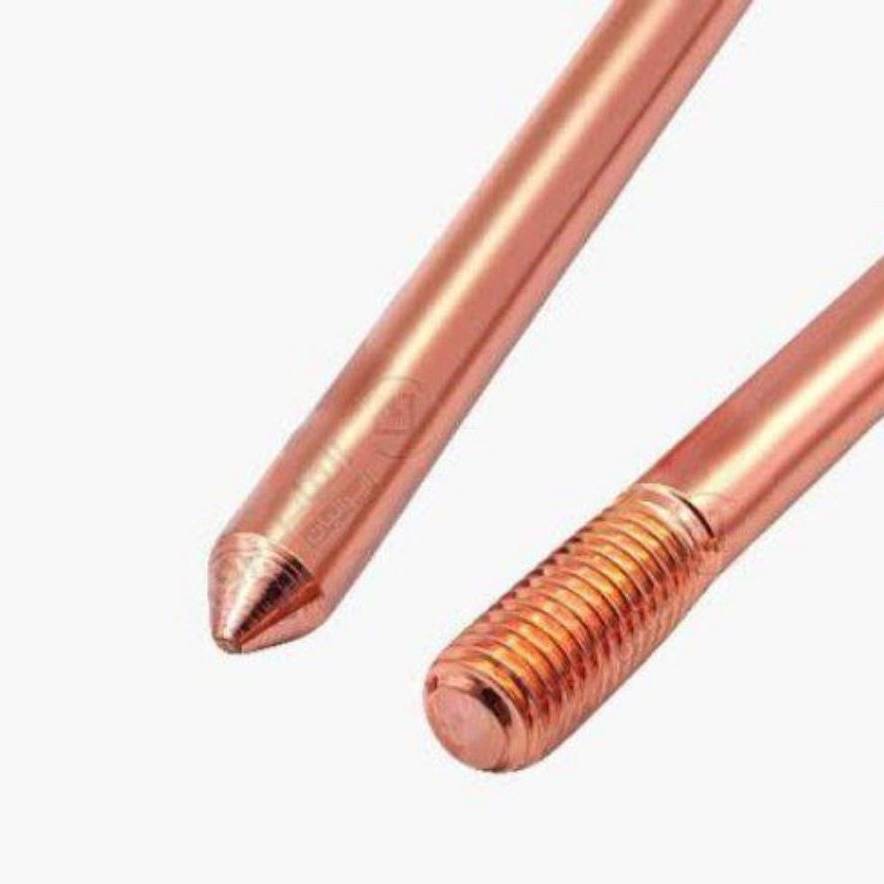

What is ground rod and why should it not be ignored?
1. Technical definition and main function of mill ground
Mile ground, which is also called earth rod or ground rod in Farsi, is a conductive electrode that is driven vertically deep into the soil to provide a path with very low resistance to discharge unwanted and dangerous electric currents to the ground.
Main function (triple purpose):
Types of mill ground: from galvanized to Cooper Bond
Mile grounds are divided into several main categories based on the material and manufacturing method. The choice of the type of shaft depends directly on the required resistance of the ground and the corrosiveness of the soil in the area:
a) Ground mill with copper coating (Copper-Bonded Steel)
This is the most common and standard type of mill in industrial and construction projects.
Structure: The core of this rod is made of steel for high mechanical resistance and covered with a thick layer of copper (usually 250 microns thick).
Advantage: Combining the mechanical strength of steel to hammer hard terrain, and the excellent electrical conductivity of copper, along with high corrosion resistance.
b) Mill ground all copper (Solid Copper)
Usage: in places where the ground resistance must be very low or the soil corrosiveness is high.
Advantage: the best electrical conductivity and the highest useful life, but a much more expensive price and more mechanical fragility than the copper bond type.
c) Galvanized steel
Structure: The shaft is made of galvanized steel with zinc coating.
Usage: For more general use or areas with low corrosiveness that have a limited budget.
Technical note: weaker electrical conductivity and shorter useful life than copper rods.
Key technical specifications in choosing a ground mill
For a mill ground to be effective, the following specifications must be carefully selected:
1. Length of shaft (Length)
The standard length of mill ground is usually between 1.5 meters and 3 meters (5 feet and 10 feet).
Importance: The length of the shaft directly affects the ground resistance. The longer the shaft, the deeper and wetter the soil layers will be, reducing the resistance of the entire earth system. (The goal is always a resistance of less than 5 ohms.)
2. Shaft diameter (Diameter)
Common diameters are: 1/2" (about 12.7mm), 5/8" (about 16mm) and 3/4" (about 19mm).
Importance: The shaft diameter affects both the mechanical resistance and the contact surface with the soil.
3. Copper layer thickness (for Copper-Bonded)
The global UL standard usually requires a thickness of at least 250 microns of copper.
Critical note: Cheap porcelain rods often have a very thin layer of copper (eg 50 microns) that will corrode and wear away in the soil after a while, effectively turning into an iron rod.
Connections and installation of ground mail
The correct installation of the mill ground is as important as the quality of the mill itself.
Connection to Earth conductor (Grounding Conductor)
After driving the rod into the ground, it should be connected to the main ground wire (usually bare copper wire). This connection should be done using special clamps for the mill ground.
* Types of clamps: Brass clamps are the most common.
* The importance of the clamp: the connection must be strong, stable, have high electrical conductivity and corrosion resistance. Using improper connection (such as simple winding) increases the resistance and the risk of fire when the fault current discharges.
Methods of reducing ground resistance
In areas with high soil resistance (such as rocky or desert areas), technicians usually:
Conclusion for electrical chelation
For a company like Kalat Electric, which focuses on supplying standard fittings, providing copper-clad ground wires in accordance with national and international standards (UL/IEC) is not only a sales advantage, but also a safety guarantee for customers.