
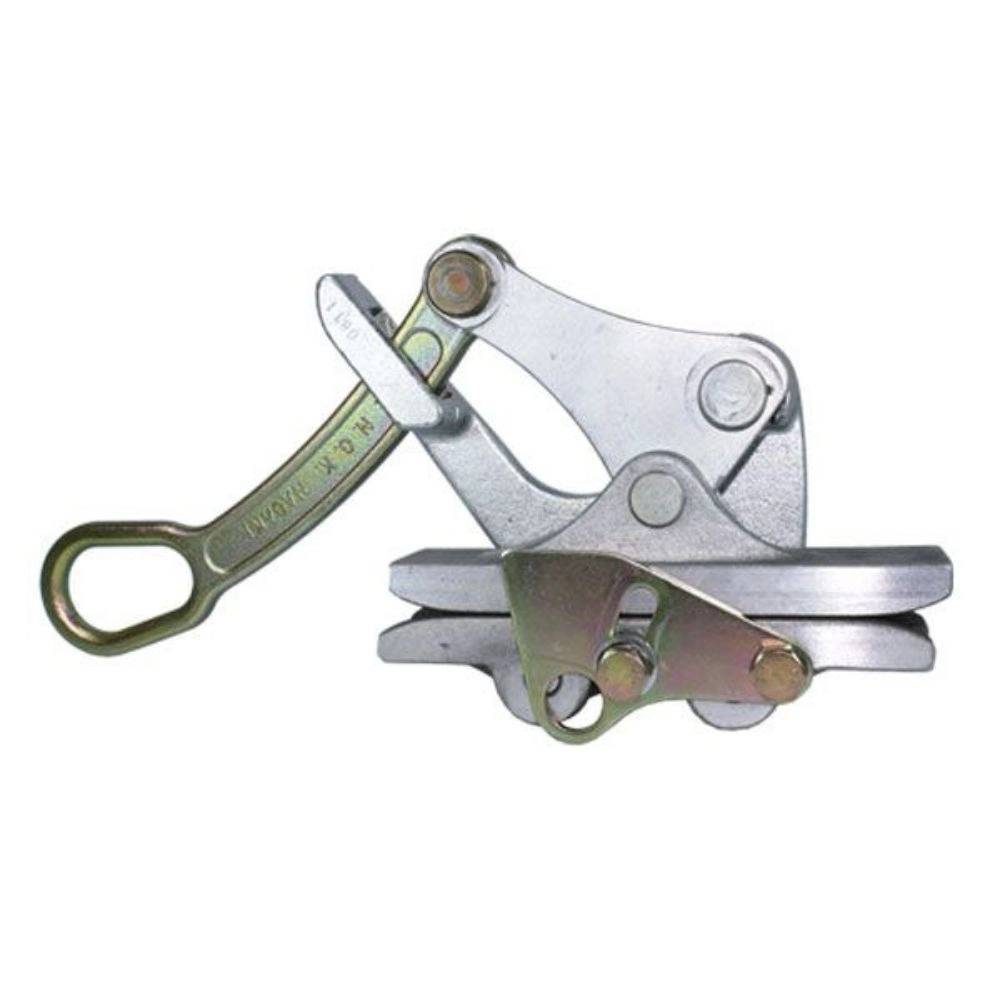

What is Cable Grip and what is its use?
Cable grabber is a mechanical device designed to grab, hold and pull power, telecommunication or fiber optic cables without damaging the conductor or its insulation. This tool is sometimes known as Pulling Grip or Wire Rope Grip.
Main applications:
Working mechanism and main components:
* Body (Shell): usually made of galvanized steel or light and resistant alloys.
* Gripping Jaws/Teeth: located inside the body. These jaws, which are mostly made of hardened steel, grip the cable tightly by applying pressure to the outer sheath of the cable (not the inner conductor). Their design is such that the more the tension increases, the tighter the hooks close.
* Pulling Eye: A ring or eye at the end of the box to which the steel rope, chain or winch hook is connected.
* Neoprene Sleeve: In some models, a rubber sleeve is stretched over the cable and part of the boxel to protect the cable sleeve from scratches and additional wear.
The advantages of using the towing cable holder:
* Prevents damage to the cable: the tension force is evenly distributed on the cable circumference and prevents tearing, excessive stretching or damage to the internal conductors.
* Ability to bear heavy loads: designed for cables with a very high diameter and weight (even several tons).
* Speed and safety of operation: It is quick to install and eliminates the need for knotting or complicated connections, which increases the safety of the workshop.
* Reusability: Most boxes (especially mechanical models) can be easily opened and reused when finished.
Types of towing cable clamps:
Important points in choosing and using:
*Diameter Match: Must match the outer diameter of the cable exactly.
* Maximum allowable load (SWL): must be greater than the maximum tensile force expected in operation.
* Cable sheath material: some boxes are more suitable for cables with PVC sheath and some for polyethylene or metal sheaths.
* Pre-use inspection: Always make sure the jaws, body and locking mechanism are intact.
In a word: Boxel cable puller is the "hands of steel" of the cable pulling team, which makes it possible to pull heavy cables safely, quickly and without damage. Its presence in the warehouse of electrical contracting companies and infrastructure projects is absolutely necessary.