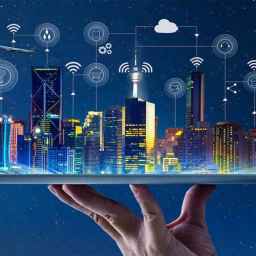


Smart cities use a variety of software, user interfaces and communication networks in addition to IoT (Internet of Things) to provide connected solutions to people. Among these, the Internet of Things is the most important. The Internet of Things is a network of connected devices that communicate with each other and exchange data.
This can include everything from vehicles to home appliances and street sensors. The data collected from these devices is stored in the cloud or on servers to enable improvements in public and private sector efficiency and benefits. economic and improving the lives of citizens.
Many IoT devices use edge computing that ensures that only the most relevant and important data is provided through the communication network. In addition, a security system is implemented to protect, monitor and control data transmission from the smart city network and prevent unauthorized access to the Internet of Things network in the city data platform. In addition to the Internet of Things solutions, smart cities also use the following technologies. also use.
1. Application programming interface (API)
2. Artificial intelligence (AI)
3. Cloud computing services
4. Different dashboards
5. Machine learning
6. Machine-to-machine communication
7. Mesh networks
Smart City Features
A combination of automation, machine learning and the Internet of Things enables the use of smart city technologies for various applications. For example, smart parking can help drivers find a parking space and also provide the possibility of digital payment.
Another example can be intelligent traffic management to monitor traffic flow and optimize traffic lights to reduce congestion, while public transportation services can also be managed by smart city infrastructure.
< b>Smart city and energy
Other features of the smart city can also save energy and improve functions, such as street lights that dim when the roads are empty. . Such technologies in the smart network can improve operational functions, maintenance, repairs and planning for consumption resources in the smart city. Other benefits of the smart city can be dealing with climate change, air pollution management, and also Waste management and public health through intelligent waste collection and transportation fleet management systems.
Safety and Security in Smart Cities
Apart from these types of services, smart cities provide the possibility of providing security measures such as monitoring high crime areas or using sensors to create early warnings for events such as floods, landslides, storms or droughts.
Smart buildings can also predict the need for repairs. Citizens can also access these systems to report any problems such as bumps or road problems to the authorities, while the sensors can also monitor infrastructure problems such as leaking water pipes.
In addition, the smart city can improve the efficiency of various other sectors such as production, smart urban agriculture, energy use and more.
Smart cities can also connect all kinds of services. . to provide comprehensive solutions for citizens.