
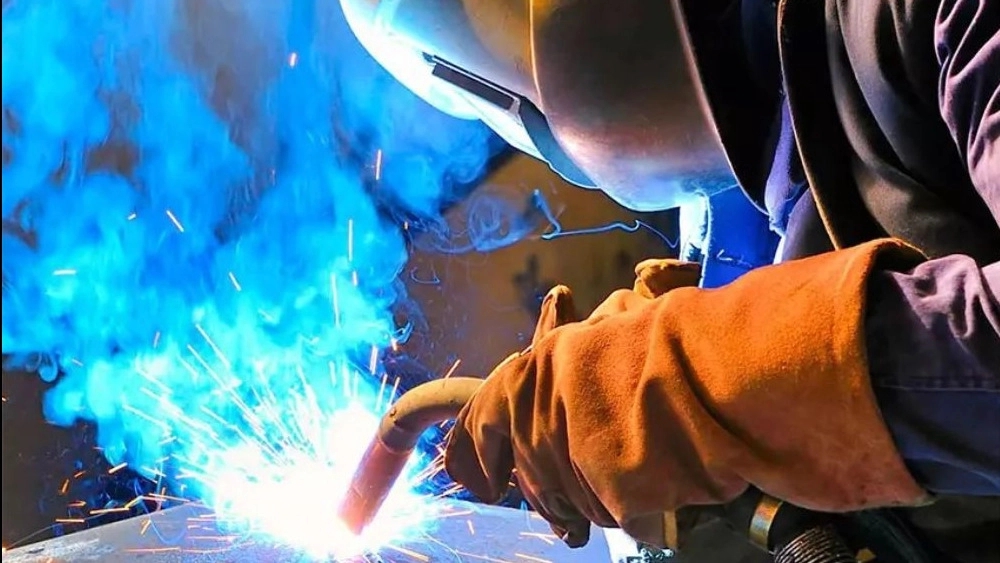
Welding is one of the best and oldest methods used in the industry in order to connect two parts, the welding process according to the type of material used or the place where it is performed has different solutions in front of engineers and technicians who somehow They deal with welding.
What is a Welding?
Welding is one of the fields that is very wide and consists of different parts. Considering that the information about welding must be complete and comprehensive; In addition to the fact that there are different methods and methods in the field of welding, there is a need to conduct research on welding in the best way. This information and research is about knowing how welding is done and with what device.
Types of Welding Methods
Many years have passed since the first welding processes. In ancient Egypt, metal parts were melted to a temperature close to melting and connected by blacksmithing or forging methods. With the passage of time, mankind has achieved several methods to perform this process, each of which has its own unique characteristics. Today, in addition to traditional welding methods, advanced methods such as laser and plasma welding are also used.
It doesn't matter what type of metal should be welded in your desired place; Because a special welding method is definitely suggested for those conditions! Knowing the different welding methods will help you to have a better understanding of this type of very important industrial process. In general, the different types of welding are divided into two main categories: fusion welding and non-fusion welding.
melting welding techniques
In methods based on fusion welding, a filler metal is melted along with the edges of the parts and the connection between two metal parts is established. Types of fusion welding are divided into different methods, among which we should mention things like oxy-gas welding, laser beam welding and arc welding.
hard soldering method (Braze Welding)
Braze welding is a kind of fusion welding with the help of filler metal. This welding method involves heating two pieces of metal and melting the filler metal between them to create a bond between them. The difference between this method and soldering is the melting temperature of the filler metal, which in this method is usually higher than 450 degrees Celsius.
This type of welding is also very old. Boils have been found at ancient sites around the world. This method has been used in the past to connect bronze, silver, gold and steel parts. This type of welding with serious techniques is still very popular and is mostly used for conditions and materials that cannot be easily done with other welding methods.
arc welding method (Arc Welding)
Electric arc welding has made many improvements over the years in terms of equipment, safety, cost, and weld quality, and is now used in various forms for various purposes. A number of common welding methods are listed below.
arc welding with coated electrode (SMAW)
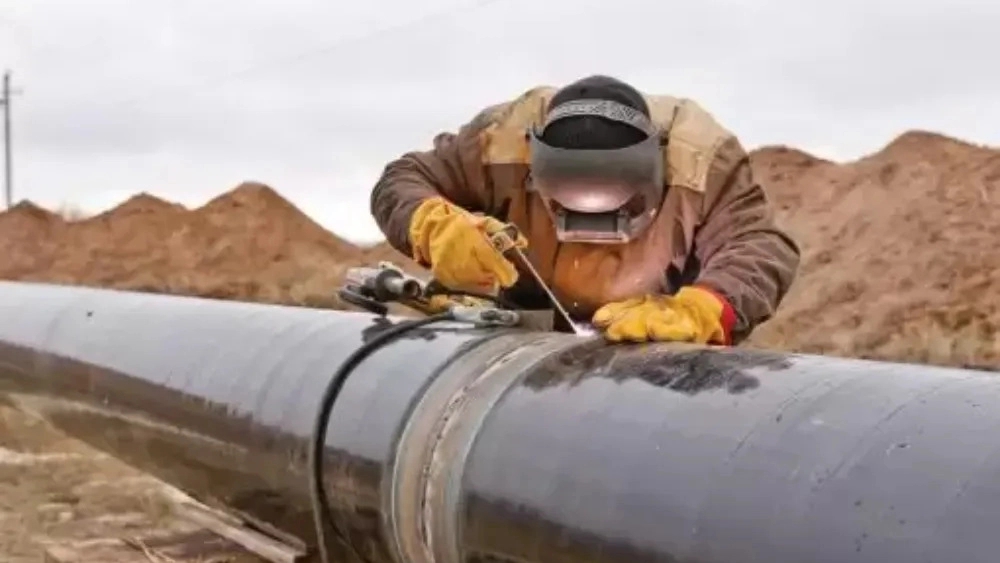
Types of arc welding with manual electrodes, which are called Stick Welding Shielded Metal Arc Welding in English, as the name suggests, use a coated electrode as an interface and filler. In fact, while the electrode melts, the coating also produces gases that will protect the welding area from oxidation and various contaminations. This type of welding is the most widely used type of welding for non-complex projects. It does not require much skill to do, it is cheap and it will be easily available. The disadvantage of electrode welding is that, depending on the skill of the welder, it pollutes and pollutes the environment somewhat.
Underly Arc Welding (SAW)
In Submerged Arc Welding, the free tip of the electrode is inserted into a special powder and welding is done in those conditions. In fact, sub-powder welding is a special arc welding method in which special powders are used to prevent oxide and splattering of various materials and create sparks; This causes the difference between sub-powder and top-powder welding. This method is usually done automatically and semi-automatically. The rate of filling the welding area is very high in this method.
Arc Welding (FCAW)
In situations where it is not possible to use sub-powder welding, flux-cored arc welding is used. We said that in sub-powder welding, the electrode is placed in the powder, but in this welding method, there is a powder protective layer around the electrode and there is no need to insert the electron into the powder. This method is done automatically and semi-automatically, like sub-powder welding.
Carbon arc welding (CAW)
This welding method can be considered as the oldest arc welding method. In this welding method, a non-consumable carbon electrode is usually used. The overall quality of this type of welding is low compared to other welding methods; For this reason, this method is rarely used.
arc welding with tungstene electrode with neutral gas protection (GTAW/TIG)
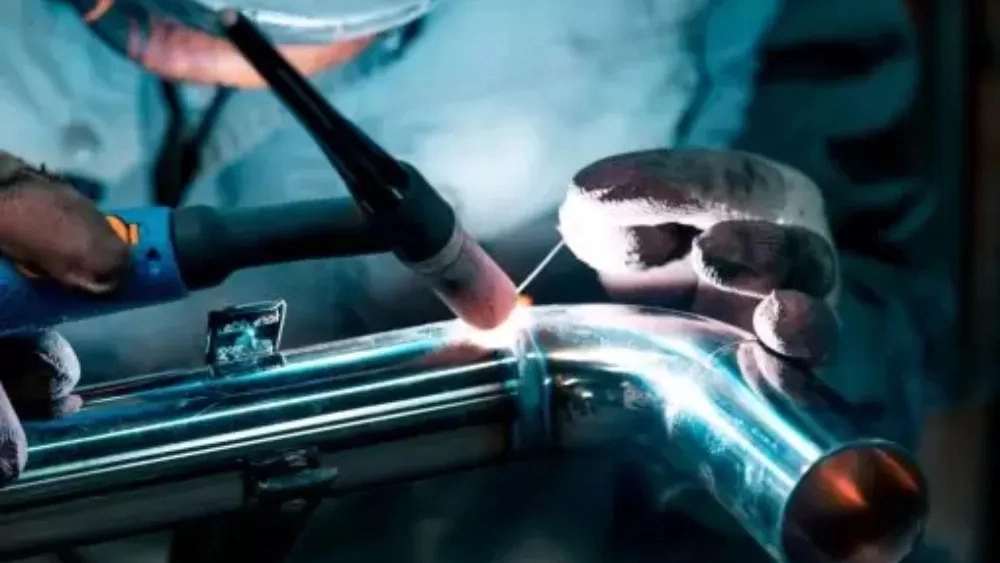
Welding with tungsten electrode with neutral gas protection (TIG - Gas Tungsten Arc Welding) is the most accurate type of welding in the world. It might be interesting for you to know that the difference between tungsten welding and arc welding has led to this welding method being used more in the aerospace and precision industries.
The distinguishing point of this type of welding with other weldings in this list is the presence of a tungsten piece between the electric arc and the intended welding location. This type of welding uses a tungsten electrode and no filler metal is required, meaning you can directly join two pieces of metal together. Shielding gas is required for this type of welding, and it protects the weld from external elements. There is no spatter and an extremely precise bond is obtained.
arc welding with metal electrode covered by protective gas (GMAW / Mig - Mag)
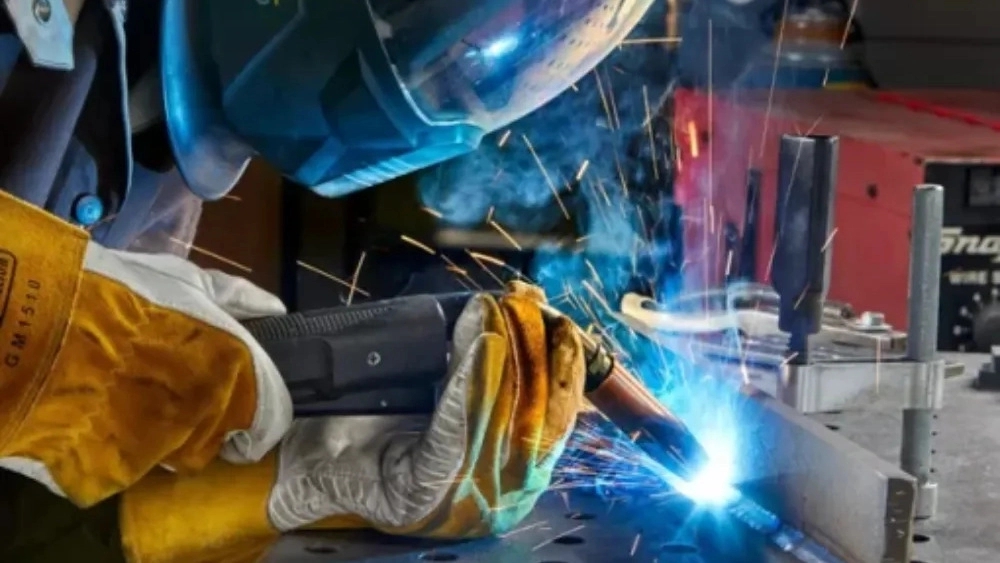
Arguably the most popular type of arc welding because it is so simple yet produces high quality welds. Welding with a metal electrode covered with protective gas (Metal Inert Gas - Gas Metal Arc Welding) creates an electric arc using a wire electrode. Meanwhile, protective gases are used to prevent the negative impact of environmental elements in the welding place. Traditionally, this type of welding is mostly used for aluminum welding, but with this method, all types of low-carbon and low-alloy steels, stainless steels, Copper zinc alloys and many other alloys can also be welded.
Plasma Arc Welding (PAW)
If we want to name a type of welding with a high similarity to tungsten welding, we should mention plasma arc welding. Non-consumable tungsten electrode is also used in the plasma method. This welding method also leads to the implementation of one of the most accurate forms of welding, but unlike tungsten welding, the main application of plasma welding is in environments such as making tools or making steel pipes. This is the only difference between plasma and tungsten welding types. Due to the high heat generated in this method, it is also used for cutting metals.
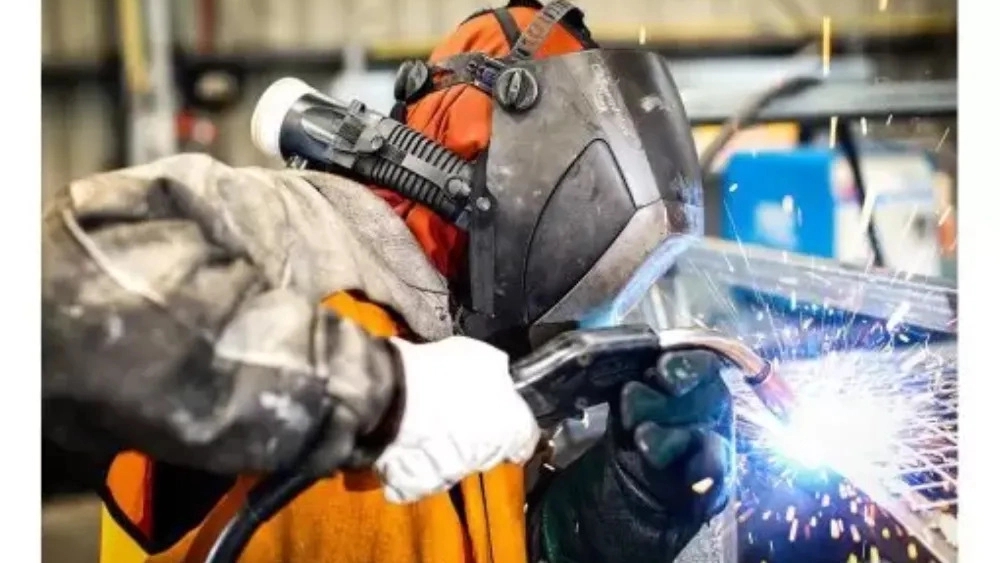
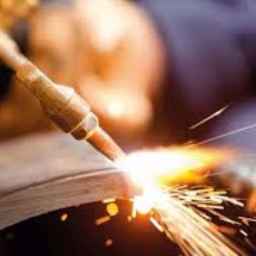
Welding of Oxi Gas or acetylene Welding (
The most important tool in this type of welding is a special torch that creates an extremely hot flame with the help of oxygen and acetylene. In this method, metal rods called filler rods are also used.
laser beam welding (LBW)
In laser beam welding, welders use a laser beam to create the necessary heat on the contact surface of two metals for welding. This method is mainly used in situations where there is a need to weld a huge part such as a steel pipe. This type of welding is done in different ways. The area affected by heat in this type of welding is very small and it can be implemented in places where many other methods are not applicable. Also, metals with low to high thicknesses can be welded in this way with excellent quality.
melting welding with electron beam (EBW)
One of the important points about the difference between plasma welding and electron beam welding is the ability to perform this type of (electronic) welding under vacuum conditions. In this method, unlike the previous method, instead of a laser, a beam with high-speed electrons is used. This causes the produced welds to have a high depth and a small heat-affected area.
Non -Zobe Welding Techniques
In various non-melting welding methods, instead of using high temperature to melt and connect two metals, very high pressure is used. In fact, by creating very high pressure and heat, the molecules that are placed in the high-density part of the metal move towards the low-density part of the metal. Among the most important types of non-melting welding are resistance welding, friction welding, explosive welding and ultrasonic welding.
Resistance Welding (RW-ERW)
Resistance welding (Electric Resistance Welding) is a type of non-melting welding, which itself has different subcategories such as point resistance welding or the same spot welding. In this welding method, both heat and high pressure are usually used to connect two metals together. The welding electrode in resistance welding is non-consumable, which means that the electrode in question is never melted and used to create a connection, but instead creates pressure and establishes an electric current in the welding core.
Forge Welding method
It is safe to say that this type of welding, which is called butt welding and is non-melting type, is one of the first welding methods in the world. As mentioned, this method started with the discovery and use of metals by humans since ancient times. In this welding method, they are connected by heating two pieces of metal (to the extent that they become almost molten and paste) and then pounding them on each other.
This method was used in the construction of railway lines in the past years, and today they use it to connect steel rebar butt (steel rebar price). This method has many advantages, including the very high strength of the weld, but on the other hand, it is not suitable for connecting large parts (for example, connecting large and industrial steel profiles) and it is very difficult to implement.
Welding Quality Control
Welding quality control helps us to obtain the necessary assurance of the quality of welding and the resulting connection. This process includes the quality control of various items from the work preparation stage, consumable materials and equipment, the execution method and even the welder's skill certificate.