
Relates to the beginning of planning stages for a construction project; By using this work, before the construction starts, positions and accurate calculations about the construction site can be measured, these measurements are done in different geographical coordinates for more accuracy.
Mapping process
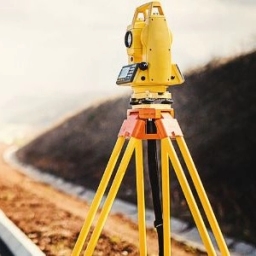
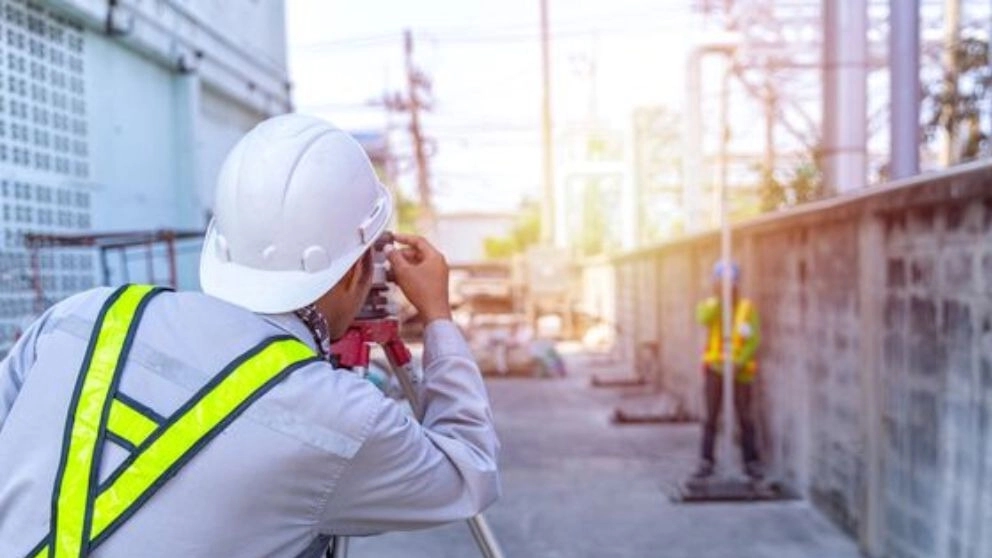
Mapping actions are carried out by a surveyor engineer, which is also called geodesy or geomatics; Mapping engineering is one of the trends in civil engineering that fully describes the application of mapping in civil engineering. Mapping operations are carried out in two phases; In the first phase, the surveying engineer collects the available data from the required tools such as GPS and theodolite, so that qualitative and quantitative statistics can be estimated in the second phase, which is the presentation of results by experts.
Mapping operations in Large scales are also used for this purpose, aerial photos and their processing are used.
The application of mapping in civil engineering is very wide, considering that the obtained maps are used in the construction space, and the concepts It covers a lot.
In building mapping, the characteristics of low areas of the earth's sphericity are considered zero, which is called level mapping; This type of mapping is also used in architecture, urban planning, archeology, property registration and discoveries.
Building mapping stage
At this stage, the surveying engineer uses tools such as a mapping camera, meter, level, zalen and index of specifications such as height above the surface of the open sea, angle, longitude and latitude, camera height and the distance of each measured point from the station. Mapping is collected.
At this stage of the application of mapping in civil engineering, the surveying engineer selects any point that has sufficient knowledge of the desired areas to collect information.
Application of mapping during running
1. Implementation of the site plan and placement of the foundation
2. Executive control during excavation and excavation operations
3. Re-control of the placement of the foundation
4. Placement and control of the drilling of piles and Continuous control
5. Continuous control of the level lines of bedding and excavation
6. Positioning of the axes of the structure
7. Controlling the flat position of the columns
8. Controlling the verticality and complexity of the columns
9. Controlling the line Leveling of poured concrete in the roofs
10. Implementation of building components which is done depending on the request of the employer and the type of project.
11. Implementation of ramps and other technical components
12. Installation control of parts that are vertical It is important.
13. Implementation of complex facades in terms of design or facades that are implemented with special materials.