

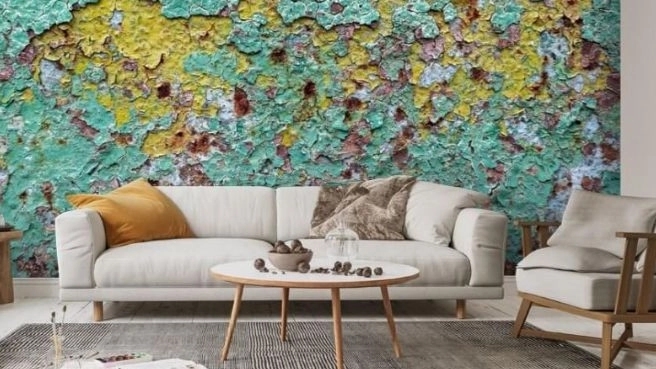
Patina means rust and oldness, and in the science of architecture, it is known as an art of aging. Patina is a style of painting that creates a colored, indented and aged state in the wall, ceiling or any part of the building. Currently, with the advancement of architectural science and the creation of up-to-date styles with new materials, advanced and modern effects have been added to the collection of patina colors that can create a special decorative appearance.
The benefits of patina on the wall
Wall
1. Patina work with sponge One of the easiest methods of patina work that everyone can do is patina work with a sponge. For this method of patina work, you must first paint your desired surface and then using a clean sponge dipped in paint, create your desired design on the surface with impact mode.
2. Patina work with ornamental sheet In this method, you must first clean the surface completely and cover it with acrylic paint. Then dilute the decorative sheet glue with water and apply it on the surface using a brush or sponge. Pay attention, the surface that is covered with the adhesive of decorative sheets should be kept away from pollution. Finally, place your desired ornamental sheet on these adhesives and massage the sheets with a clean cloth; so that no extra sheet remains on the surface.
3. Patina work with fabric In the method of patina work using fabric, you must first prepare the desired surface and paint it. Then you can create your desired design on the surface by using a few pieces of cloth dipped in color, with impact mode. This method requires more time and precision than the patina method using a sponge.
4. Patina work with color removal In this method of patination, like all methods, you must first clean and prepare the desired surface. After that, using a brush, apply the diluted paint on the desired surface such as the ceiling or wall. At this time and before the paint dries, you should remove the excess paint with a cloth and crumple it. In this method, the appearance of the surface takes on a wrinkled shape.
5. Patination using texture paste The paste used in patina is texture paste. This dough has high flexibility. Of course, patina work using paste should be done by an artist who has experience in this field; Because using the paste and creating attractive and creative designs and shapes using it in patina work is a bit difficult and requires high precision and skill. Also, compared to other building pastes, texture paste dries more slowly; For this reason, the artist can work more time on his design.
6. Patina using putty In the art of patination, oil putty is used. In the market, there are special putties for resin patination, which has increased its quality. Oil putties have a lower price than other available putties. Of course, it is also necessary to mention that in order to use patina oil putty, the surface in question must be completely primed and pitted. In addition, before plastering, the desired surface must be completely cleaned of dirt and dust.