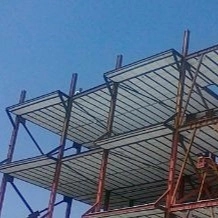

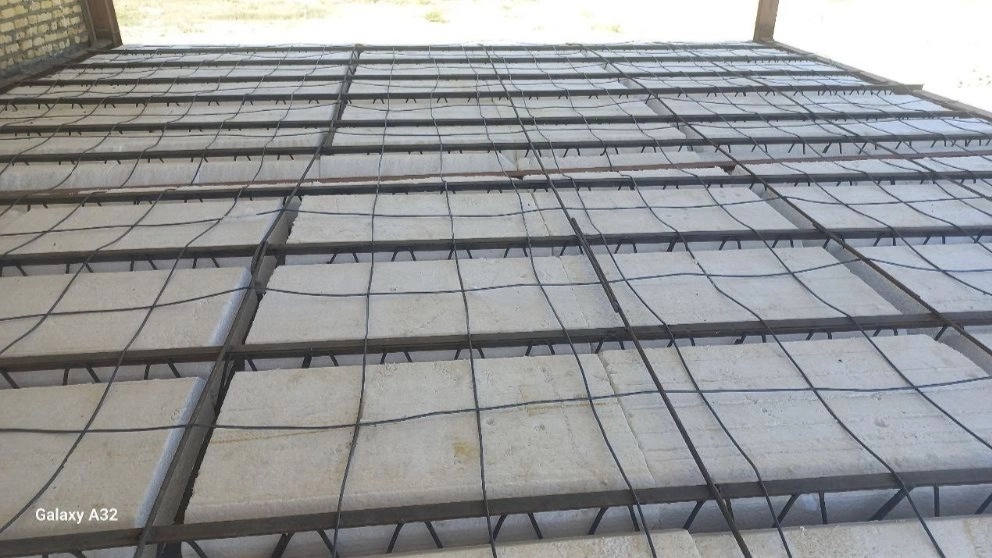
In general, block beam ceilings, whether chromite or concrete beams, if properly designed, calculated and implemented, have less vibration than in-situ concrete and composite ceilings due to the greater thickness of the roof and the use of blocks. But this is a general issue and it differs according to different conditions. For example, the vibration of composite roofs will be much less if during concrete pouring, piles are placed under all the secondary and main iron beams. The vibration of traditional beam and block roofs (concrete zigzag beams) is less than other roofs due to piling. Consider a roof with chromite beam and clay block, if you change the block to polystyrene, the sound transmission will decrease to a great extent, but the vibration of the roof will increase to some extent.
It is not bad to know that the relationships proposed in paragraph 10-1-9-3 of the 10th topic of the national building regulations for controlling the frequency of beams do not apply to chromite beams in any way, and experience has proven it in practice because the vibration of the roofs depends on the factors It depends many and complex. But if we want to make a general conclusion, it should be said that if the beams are designed and produced correctly and the necessary precision is applied in the implementation, the vibration of the chromite roofs up to the opening of about 8 meters is completely acceptable and there is no need to worry about this. It is necessary to mention here that in some buildings, a significant part of the vibration is due to the weakness and vibration of the skeleton and has nothing to do with the roofs. Sound transmission is also reasonable in beam and block ceilings, and it depends on other factors other than the type of roof, such as the material and thickness of the flooring and underlayment of the roofs, the presence or absence of a false ceiling, etc.