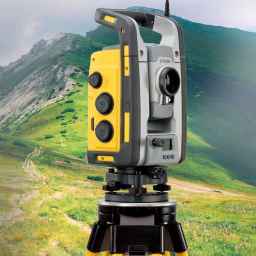

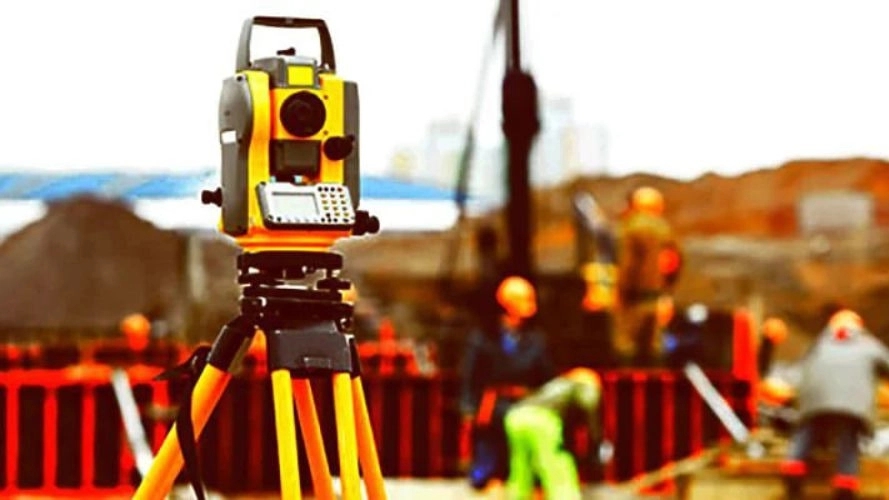
Normally, mapping cameras are used to provide angles and heights. Nivu mapping camera is used for alignment and theodolite camera for angle measurement. With the advancement in technology, these two types of cameras have been merged together and it is known as Total Station.
The use of mapping cameras
Many applications have been defined for mapping cameras, of which we will introduce a few of them in this article of the Engineer Collection. The preparation of maps of artificial and natural features such as the preparation of maps of valleys and mountains to create and estimate natural resources, mine exploration, preparation of geographic maps, etc. is an example of the use of mapping cameras.
Another example is the use of mapping cameras in obtaining the coordinates of the desired point. These cameras have the ability to share the coordinates of one point to other points with a navigation network. We can also get the global coordinates of other points by GPS by having or obtaining the global coordinates of the point. In other words, by assigning the coordinates and angles of the obtained point to other points by the navigation grid, we get its global coordinates.
Among the other applications of the mapping camera, we can mention its use in excavation operations. By using these cameras in excavation operations, the desired depth can be reached and excavation operations can be stopped. Also, excavation operations should be carried out in a specific area of the ground. that it is possible to obtain this area using a mapping camera.
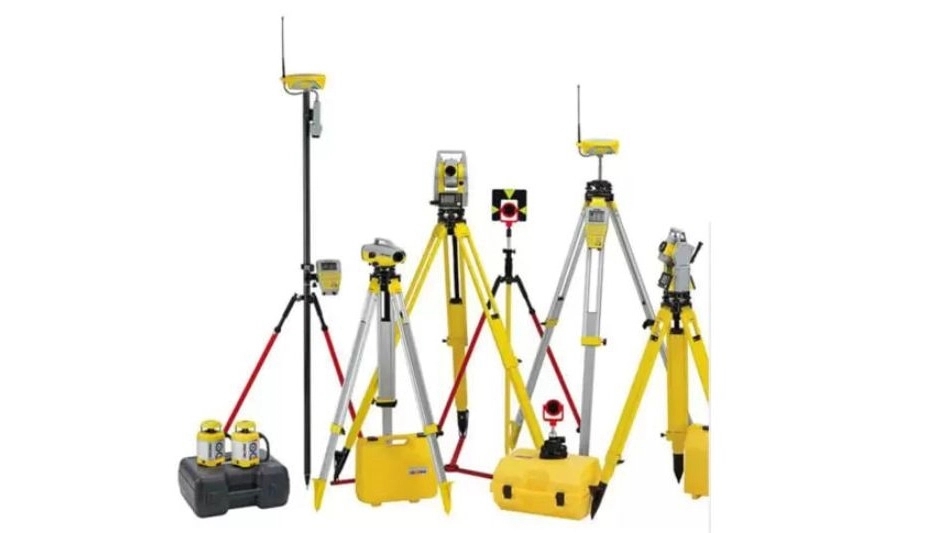
Introducing a variety of mapping cameras
Normally, mapping cameras are used to provide angles and heights. Nivu mapping camera is used for alignment and theodolite camera for angle measurement. With the advancement in technology, these two types of cameras have been merged together and it is known as Total Station. This type of camera is sold in the market in two types: digital and optical.
Nievo mapping camera, as mentioned, is used for alignment, and in other words, this camera is used to obtain the height difference between two desired points. In order to get the height difference of two points, you need access to the benchmark point (permanent point). which can be obtained using GPS. This camera consists of three stands and a camera level. Nivu camera also includes two objective lenses (with two threads called reticle) and an eyepiece lens.
The tripod of this camera is movable and includes two bean levels around it. A theodolite camera, as mentioned, is used to obtain angles. Using this camera, the coordinates of different points can be obtained. This camera has a tripod and level like Nivu camera. The theodolite camera includes an objective lens (with reticle wires perpendicular to each other) and an eyepiece. The tripod of this camera is fixed and sinks into the ground.
Also, bean levelers around tripods are used to align tripods horizontally. This camera is used in ground mapping. The total station camera is made from the combination of the two mentioned cameras. For this reason, it is used in measuring height, horizontal distance and angles. After that, we include the use of this camera in all types of mapping. Its initial type that was released to the market included optical cameras. which is more accurate than today's model.
For this reason, many mapping engineers use optical cameras in aerial mapping today. Total station digital camera is its modern type, which is easier to work with than the previous type. After working with digital cameras, they provide a series of output data to mapping engineers, which can be used to prepare maps manually with mapping software.