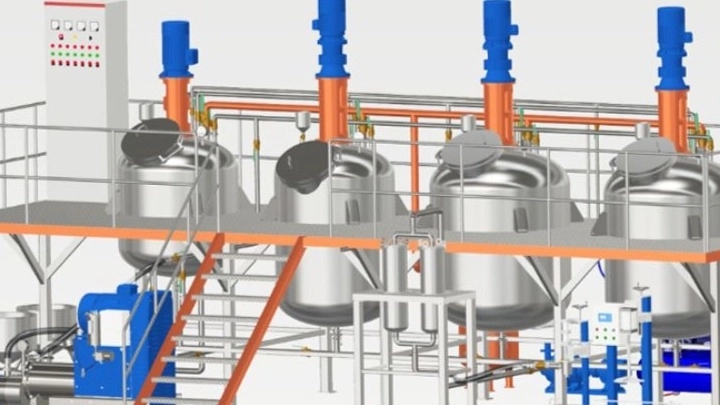
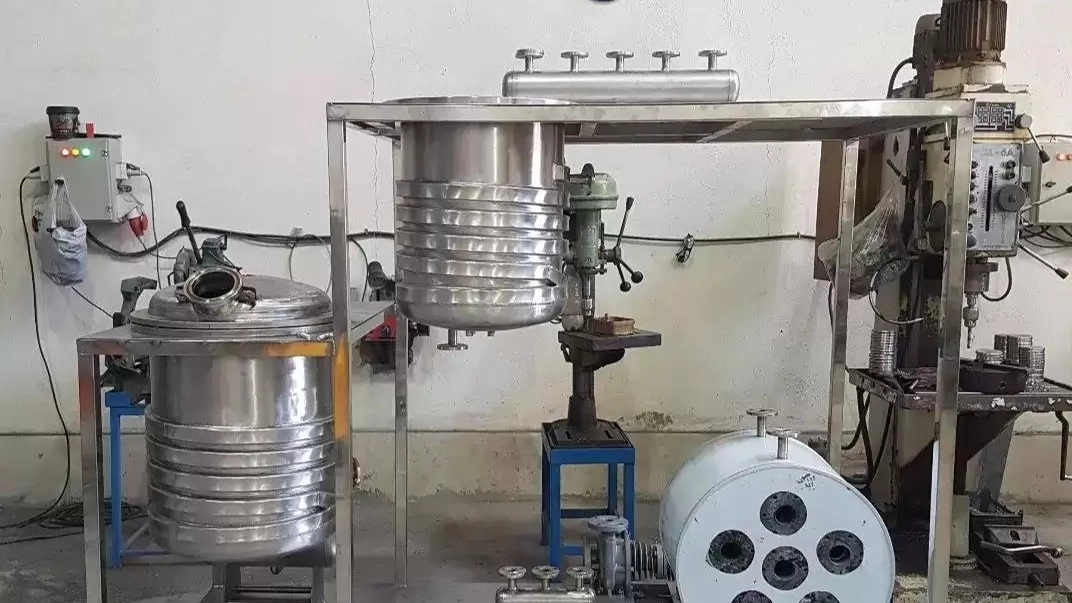
Resin is a viscous liquid that has a high viscosity and hardens under any conditions and will turn into a solid. These materials dissolve in organic solvents such as ether and alcohol, but do not dissolve in water. Resins are used in the industries of paint, decoration, adhesives, and the production of all kinds of polymers. Most resins that are artificially produced are produced with the help of a pressurized steel tank called a reactor, such as a polyester resin production reactor, a PVC resin production polymerization reactor, a polyethylene terephthalate production polymerization reactor, etc.
What is a resin reactor?
How does a resin reactor work?
The resin reactors are moved towards the inner wall by the main motor and the agitator inside the rotating vessel, the resins are flowed by the agitator blades and mixed with the additives, the heating jacket increases the temperature inside the vessel, during use. Control the cooling jacket for the inside temperature to reach the production temperature request, the condenser cools the evaporated vapors from the vessel into water and flows into the buffer tank and then collects back into the reactor, for some types of resins, such as Unsaturated polyester is produced. To dilute the ingredients, you need a mixing tank with twice the capacity of the reactor.