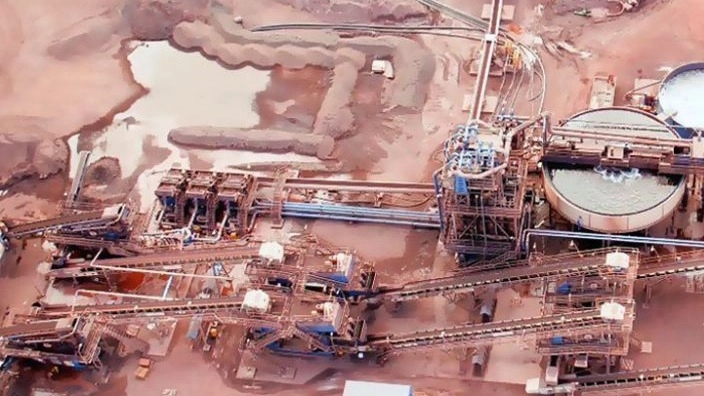
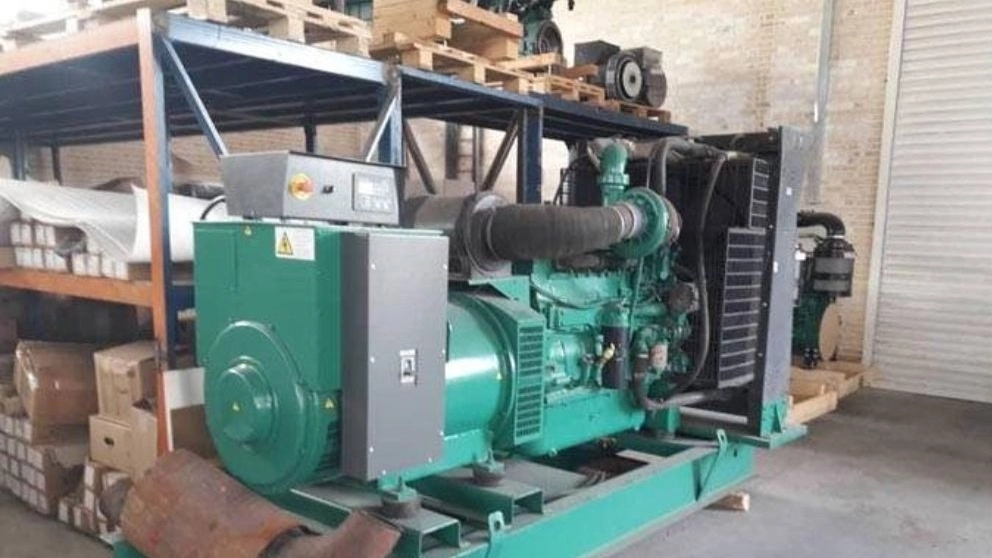
Mineral processing is the art of refining raw stones and mineral products in order to separate valuable minerals from waste or gangue rocks. It is the first process performed on most ores after mining in order to prepare more concentrated materials for extractive metallurgical processes. The primary operations are crushing and concentration, but other important operations in a modern mineral processing plant include sampling and analysis and dewatering.
Mineral Processing
Normal sampling and analysis of raw materials being processed is done in order to obtain the necessary information for economic evaluation of ore and concentrate for mineral processing. In addition, modern plants have fully automated control systems that perform in-stream analysis of materials during processing and make adjustments at each stage to produce the richest possible concentrate at the lowest operating cost.
sampling Sampling means taking a part of certain materials for analysis. This process is done by hand or machine. Manual sampling is usually expensive, slow, and inaccurate, so that it is usually only used where the material is unsuitable for mechanical sampling (eg, slimy ore) or where machinery is either unavailable or too expensive to install. Many different sampling devices are available today, including shovels, tube samplers, and automatic samplers. For these sampling machines to provide an accurate representation of the entire lot, the amount of a sample, the total number of samples, and the type of samples taken are of decisive importance. Chemical analysis and analysis Even before the 16th century, comprehensive schemes of assaying (measurement of value) of ores were known, using methods not materially different from those used in modern times. Although conventional methods of chemical analysis are used today to identify and estimate the amounts of elements in minerals and ores, these methods are slow and not accurate enough, especially at low concentrations. As a result, sophisticated analytical tools are used to achieve greater efficiency. In mineral processing spectroscopy, an electrical discharge is created between a pair of electrodes, one of which is made of the material being analyzed. The electric discharge vaporizes part of the sample and will excite the elements in the sample to emit characteristic spectra. Detecting and measuring the wavelength and intensity of emission spectra shows the identity and concentration of the elements in the sample. In X-ray fluorescence spectroscopy, a sample bombarded with X-rays emits fluorescent X-rays at wavelengths characteristic of its elements. The amount of X-ray emitted is related to the concentration of individual elements in the sample. The sensitivity and accuracy of this method is weak for elements with low atomic number (low protons in the nucleus such as boron and beryllium), but it is suitable for slags, ores, sinters and pellets.
Optical isolation This process is used to concentrate particles that have different colors (the best contrast is black and white). Colors that can be detected by the naked eye. In addition, electro-optical detectors collect data on the reaction of minerals when exposed to infrared, visible, and ultraviolet light. The same case, of course, using gamma radiation, is called radiometric separation. Gravitational separation Gravitational methods use the difference in mineral density as a thickening agent. In heavy media separation (also called sink and float separation), the medium used is a suspension of a finely ground heavy mineral (such as magnetite or arsenopyrite) or a technical mineral processing product (such as ferrosilicon) in water. Such a suspension can simulate a fluid with a higher density than water. When the milled ore is brought into suspension, the gangue particles, which have a lower density, tend to float and are removed as tailings, while the valuable mineral particles, which have a higher density, sink. Magnetite or ferro-silica can be separated and recycled from tailings by magnetic separation.
Float separation
Flotation is the most widely used method for concentrating fine-grained minerals. This material takes advantage of various physicochemical surface properties of minerals - especially their wettability, which can be a natural property or artificially altered by chemical reagents.
Magnetic separation Magnetic separation for mineral processing is based on different degrees of attraction applied to different minerals by magnetic fields. The success of this method requires that the feed particles be in a specific size range (0.1 to 1 mm). Strong magnetic minerals such as magnetite, franklinite and pyrrhotite can be removed from gangue minerals with low intensity magnetic separators with good results. High intensity devices can separate iron oxide rocks such as limonite and siderite, as well as manganese, titanium and tungsten iron ores and iron containing silicates. Electrostatic separation The electrostatic method separates particles with different electrical charges and, if possible, with different sizes. When particles with different polarities enter the electric field, they follow different trajectories and can be collected separately. Electrostatic separation is used in all plants that process heavy mineral sands containing zircon, rutile, and monazite. In addition, the cleaning of special iron ore and cassiterite concentrate, as well as the separation of cassiterite-shillite ore is carried out by electrostatic methods. Dehydration Concentrates and tailings produced by the methods mentioned above must be dewatered to make the materials portable. In addition, the used water can be recycled in the existing water circuits of the processing plant. Filtration Filtration in mineral processing is the separation of a suspension into a solid filter cake and a liquid filter by passing it through a permeable filter material. Important factors in this process are the properties of the suspension (eg, size distribution, concentration), the properties of the filter material (eg, the width and shape of the pores) and the forces applied to the suspension.