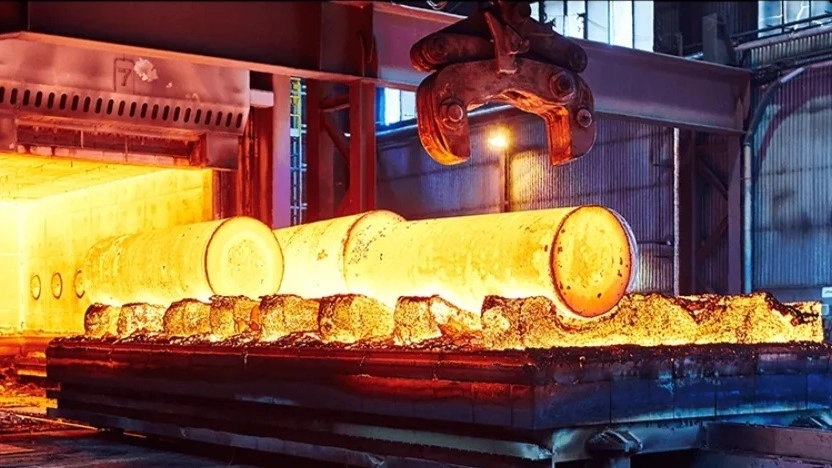
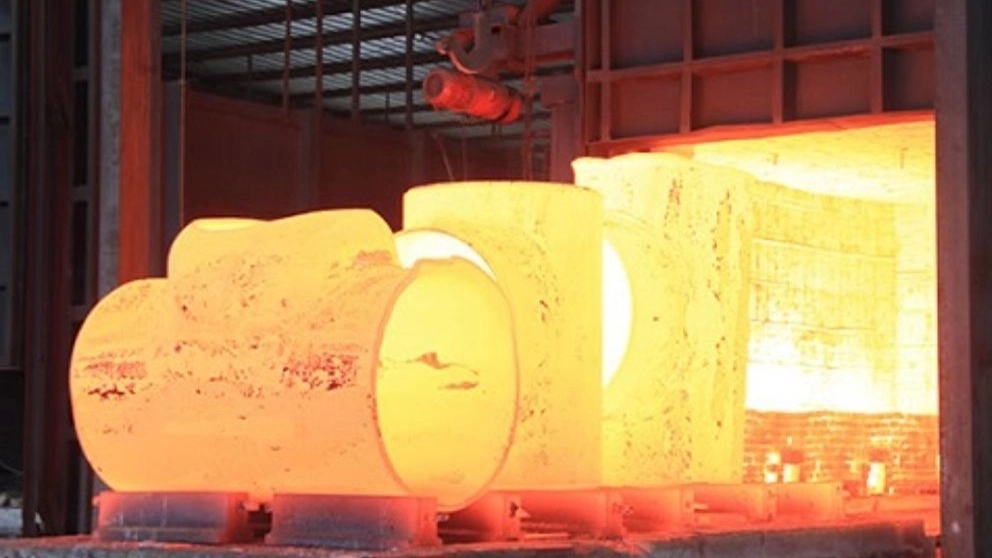
Heat treatment of steel is done in order that the physical and chemical properties of the steel piece reach the desired balance and the desired piece has the best possible performance for the intended application. This operation has different stages that we will introduce below: The operation of heating steel to a temperature higher than 723 degrees Celsius (suitable for steel and cast iron), which is divided into the following steps: 1. Annealing (rebaking) 2. Normalize 3. hardening or quenching 4. Stamping 5. Martamper
The operation of heating steel to a temperature lower than 723 degrees Celsius (suitable for steel alloys) is also divided into the following stages: 1. Annealing during operation 2. De-stressing 3. Sphericalization In general, annealing refers to any type of heat treatment of steel that leads to the formation of a structure other than martensite and with lower hardness and high flexibility. Also, in the normalization of the part, it is heated to the temperature of the austenite range and then it is cooled to the ambient temperature in contact with the free air.
In hardening or quenching, after being heated, the part is quickly cooled in a special liquid, usually water, oil, salt bath or other special solutions, in order to increase the hardness, depending on the desired properties. Another heat treatment of steel is austempering. This operation is used to reduce the stresses created during the steel hardening operation. Finally, steel martempering operations are also called non-continuous rapid cooling or quenching. During this type of heat treatment, the steel is heated to the austenitic temperature and in the next step, it is quickly cooled in the hot oil that has a temperature of 175 degrees Celsius.
Types of heat treatment methods
In general, one of the following 4 methods is used to perform heat treatment:
1. Surface carbonization
2. Complete annealing
3. Normalization
4. Temper quiche
Surface carbonization can be considered the most economical and simple method for heat treatment. In this method, carbon is used to increase the hardness of steel, and it is divided into three methods: solid carbonization, liquid carbonization, and gaseous carbonization.
What is the purpose of heat treatment? As mentioned in the definition of heat treatment, the main purpose of this work is to improve the physical properties without changing the shape and chemical nature of steel, metals, etc. Of course, removing the remaining stresses in the part, increasing the wear resistance, refining the grains, etc. are other goals that heat treatment is used to achieve.