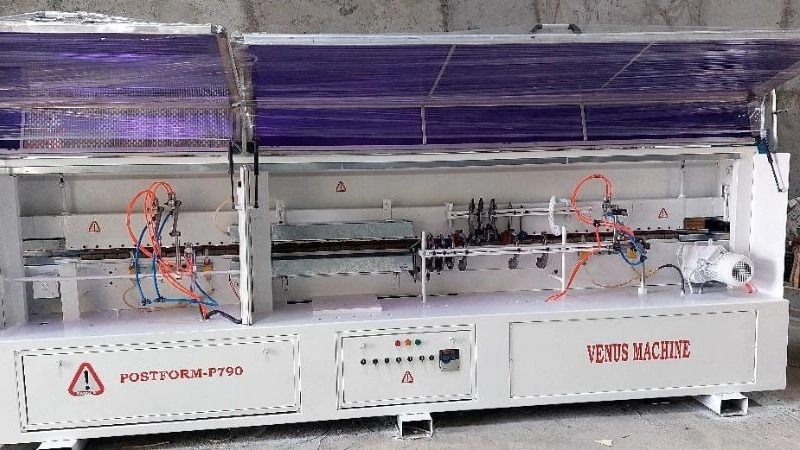
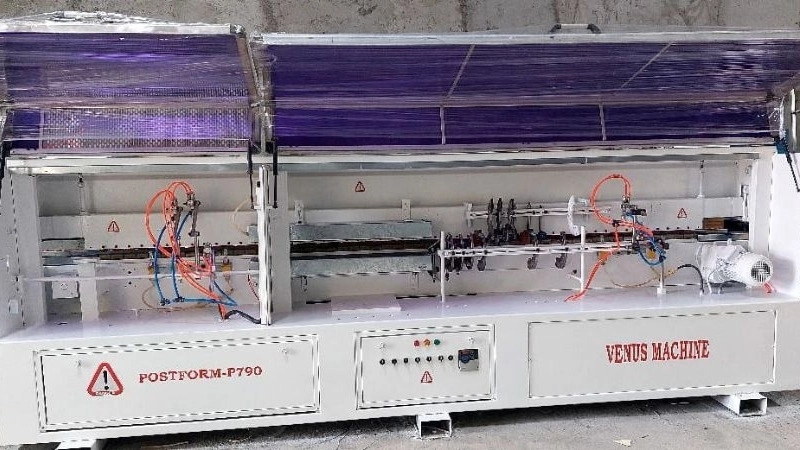
These boards are produced by the post-forming method and their cores are made of the highest quality MDF in the market. Their surfaces are made using the new formica method (HDF) with panels of modern post-forming equipment. Formica is a kind of cover by which different materials have features such as: 1. Resistance to stains (anti-stain) 2. Resistance to water penetration (waterproof door) 3. Heat resistant up to 180 degrees Celsius 4. Anti-scratch (due to the use of a thin layer of aluminum oxide on the top surface of Formica) and... is given.
Post Forming feature in the HPL sheet process
HPL covers of postforming type are attached to the surface of the MDF sheet by means of cold glue and under pressure and very high temperature. After that, when the sheets are completely glued to the surface, the edge should be softened and bent on the edge of the surface of the plate, and this is done with a measured heat of about 120 degrees. This action increases the flexibility of the HPL sheet. Resins are often composed of special materials such as melamine and phenolic compounds, which respond well to heat and moisture resistance.
How to operate
Due to having a large number of rollers as well as its long length, post forming causes bending of HPL and angled types of profile films. Due to having different stations, the post forming machine makes the process of coating the boards at different angles to be done correctly and prevent damage to the coatings. This device is an example of practical and useful machines in this industry. HPL coatings that are stretched on the surface of MDF without heating do not have the property of plasticity, and with the change of geometric shape, they break and crack. As shown in the pictures and videos on the site, the Turanlar post forming machine, model PF-T 280, easily forms the desired coatings with the help of rollers and heat and pulls them on the workpiece.