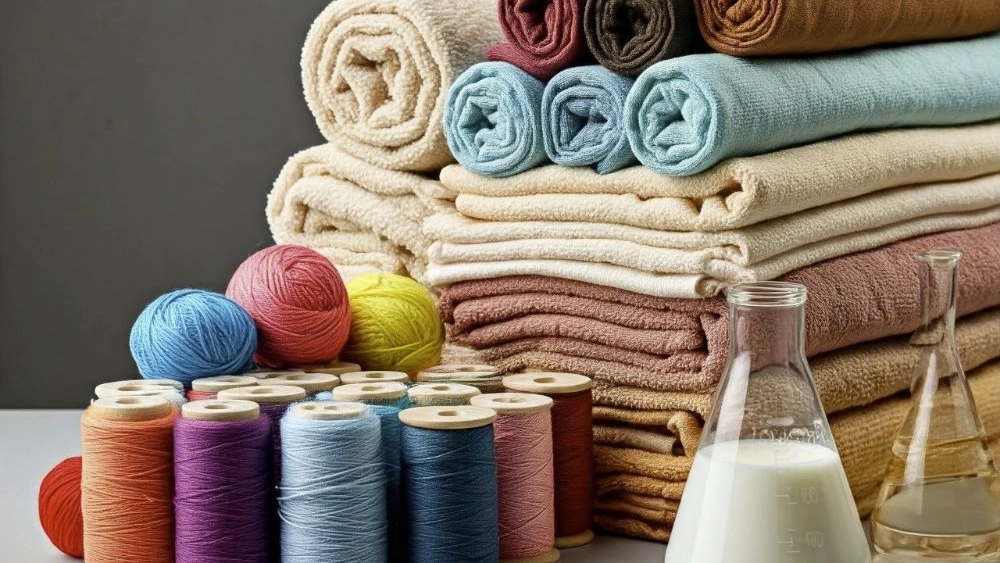


Definition of silicone softener
Silicone Softener is used in washing and fabric production cycle. The use of this material makes the fabric not dry after the washing process and increases its lifespan. In fabric production, to change its surface properties, silicone softener is used to slightly reduce the intermolecular tensile force of fabric tissues to increase the softness and softness of the fabric and its hand feel.
Types of silicone softeners
Micro silicone softener
Creating a very soft and silky underarm
Macro silicone softener
It has a deepening property
Silicone softener application
Silicone softener is used in textile, stone washing, dyeing and fabric finishing industries. This liquid is used to soften the fabric and increase its quality and life. It can be used for natural and synthetic textiles and their combinations, and creates an excellent effect of softness and slip on the surface of the fabric.
Softening the surface of all kinds of fabrics
Use in resin finishes
Increasing tensile strength and tear of fabric
They have lubricating properties
Silicone softener maintenance
Before use, the softener solution should be stirred well so that the sediments are combined with other parts. At below zero temperature, there is a possibility of freezing of the product, which should be brought to a normal state by heating the product to 20 degrees Celsius and regular stirring. Also, silicone softener loses its properties at a temperature above 40.
Macro silicone softeners are generally used in composite fibers such as polyester viscose, polyester cotton and nylon viscose. Micro silicone softener can also be used in fullard devices, which must be used carefully due to its high sensitivity.