
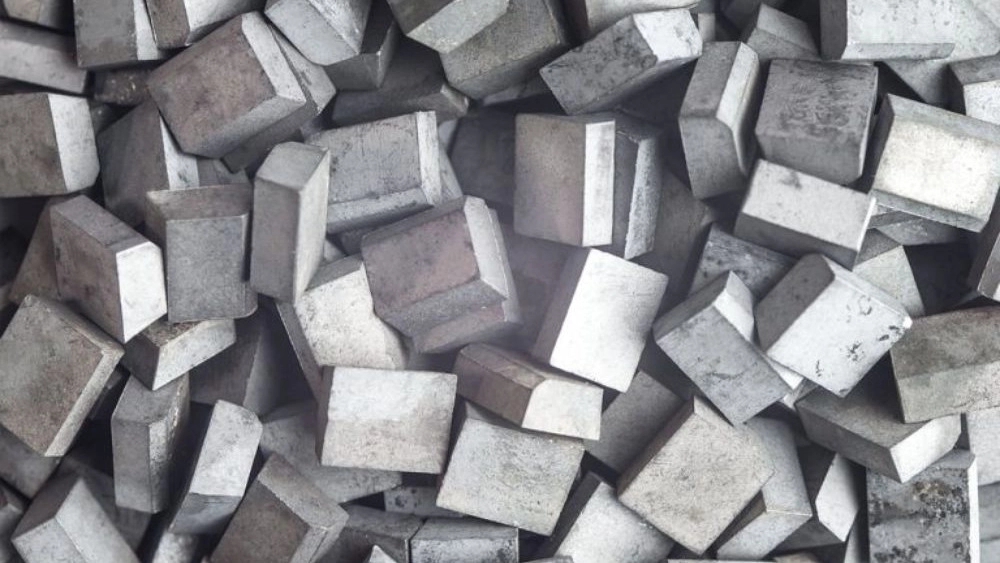
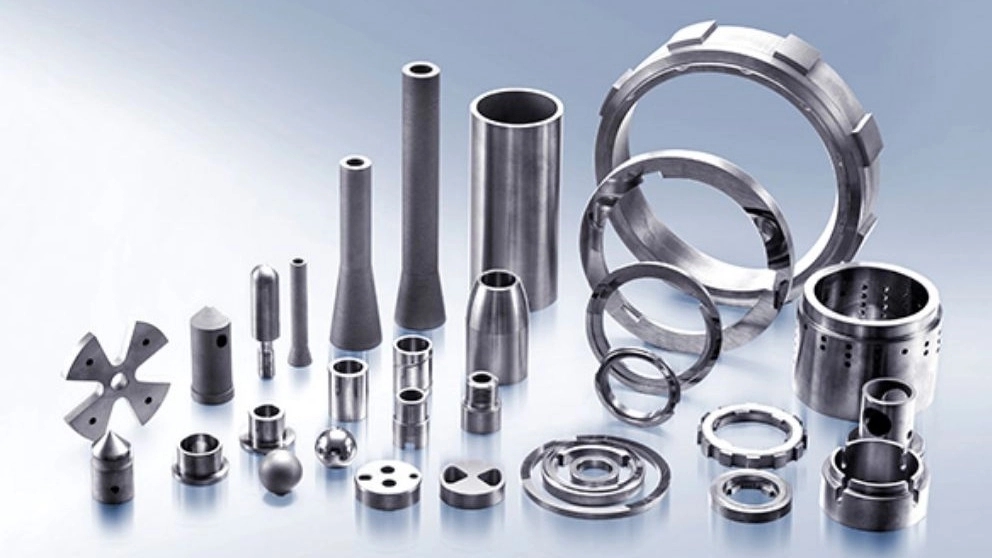
Tungsten carbide is a chemical compound that has an equal amount of carbon and tungsten atoms. This substance is in the form of a gray powder in its basic state, which will take different forms under pressure. Tungsten carbide is used in industrial machinery, abrasives, cutting tools and other tools. This chemical composition is about twice as hard and stronger than steel and is obtained from the reaction of tungsten metal with carbon.
The importance of tungsten element in steel steels:
Tungsten carbide in high-speed steels makes it not soften when the temper is touched and the carbides are very hard and wear-resistant. This resistance to ground tempering has caused it to have good strength at high temperature and toughness at a given hardness. This is an important factor because the ability to cut and change the shape of the cutting tool and the hot work mold depends on the hardness and strength at the working temperature of the surfaces.
The internal stresses created during the quenching of the steels of this element are released at high temperature. Without reducing the hardness, as a result, the piece can withstand internal stresses.
Tungsten present in the composition of steel increases the resistance to tempering and even at temperatures higher than the temperature of tempering, usually the drop in hardness will not be noticeable. By adding 5% cobalt to tungsten steel, a very high-speed steel is obtained, which can be used again at high plating temperatures. As a result, many tungsten carbides are dissolved and high hardness is obtained.
This element is used in hard material industries as tungsten carbide, which is one of the main components in sintered carbide cutting tools. Due to the difficulty of producing these carbides, sintered carbides are rarely produced in sections larger than 2 inches square. Carbide blades are either mechanically or brazed to medium carbon or cast iron tool steel and form the cutting tool. Tungsten carbide blades are used in cutting tools of lathes, drills and drills. Also, very hard tungsten carbide molds are used in wire stretching.
What are the benefits of using tungsten carbide?
Using this metal has certain advantages, which include:
- از یک استحکام بسیار بالا برخوردار بوده
- ارتعاش کمی را به همراه دارد.
- در برابر مواردی همچون سایش مقاومت بسیار بالایی را از خود نشان می دهد.
- از دیگر ویژگی های آن می توان به مقاومت بالا در برابر خوردگی نیز اشاره کرد.
All the benefits that we have mentioned to you, including the hardness of wear and corrosion resistance, are primarily dependent on the grain and also the volume fraction of tungsten carbide particles when used in HVOF thermal spray processes. HVOF Tungsten Carbide coatings have the ability to control the particle size and volume relative to Cobalt to accommodate the specifics of an application.

Types of Tungsten Carbide Cutting Tools
Carbide cutting tools, also known as cemented carbide cutting tools or tungsten carbide cutting tools, are leading products in CNC machining tools. In some countries, they make up more than 90% of turning tools and 55% of milling tools. Tungsten carbide cutting tools have the characteristics of high hardness, high strength, high wear resistance and high modulus of elasticity, as well as good impact toughness and corrosion resistance. According to the hardness of the workpiece, drills, inserts, finger mills and tungsten carbide industrial blades can be classified into different categories.
Insert Carbide
Carbide insert, also called CNC insert or indexable carbide insert, is the main product in the modern field of machining. This tool is mainly used in metal turning, milling, grooving and cutting, creating threads and other fields. Based on this, carbide inserts are classified according to their function into turning inserts, milling inserts, cutting inserts, and stepping inserts.
Carbon finger milling
The hardness of the workpiece is the most important factor for choosing finger mills. Carbide end mills are classified based on various factors. They are available in two, three, four and six blade types based on the number of cutting edges. In addition, finger mills are divided into head, nose, and radius types based on their appearance and type of application.
Drill carbide
According to the type of drilling, carbide drills can be classified into guide drills, bird drills, and twist drills. Based on the cooling method, twist drills can be internally cooled (with soapy water) or without soapy water. When the drilling depth exceeds 5 times the diameter of the drill, internal cooling can significantly improve the efficiency and useful life of the drill.
Industrial blade
Cemented carbides can be widely used to make industrial blades that require very sharp and wear-resistant edges due to their extremely hard properties. Saw milling blades, woodworking blades, metal cutting blades and soapy water blades are practical examples.