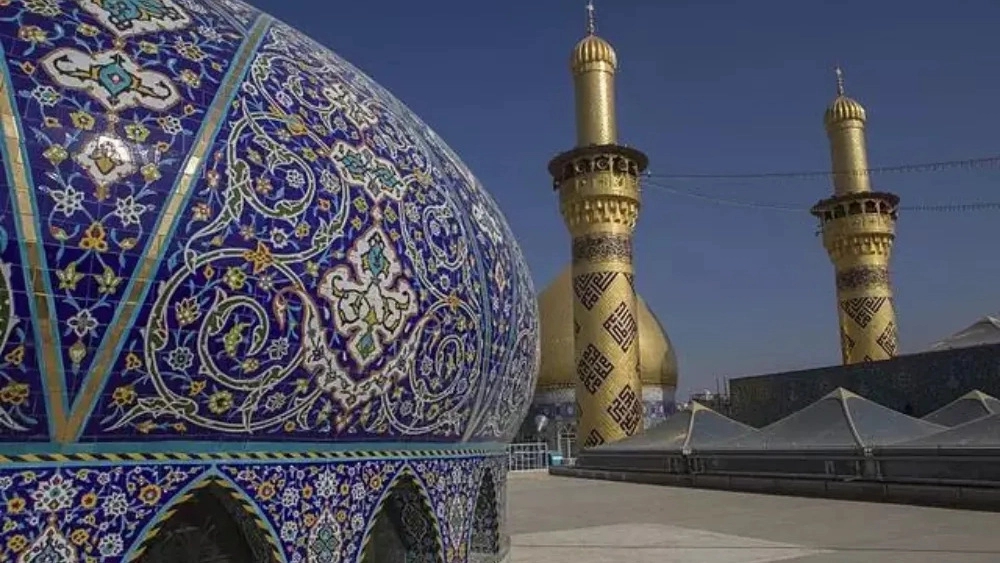
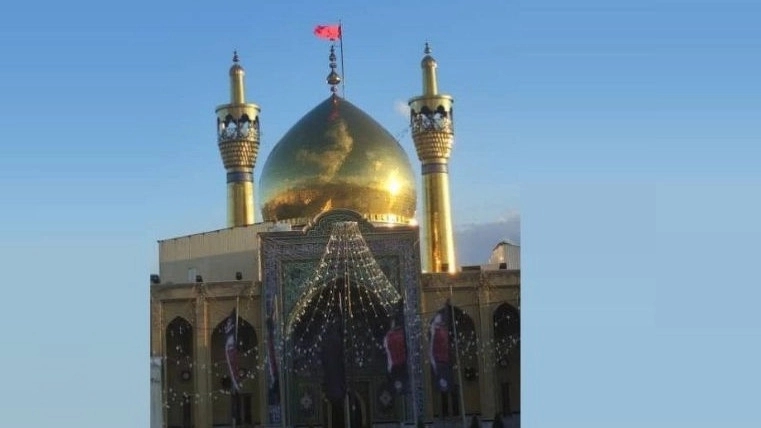
Their shape is sometimes taken from the square towers of Christian churches, which themselves are modeled after Roman and Greek buildings. The second model of towers is Sassanid towers in Iran. Towers with spiral staircases that can be seen in the mosque of Samarra and Ibn Tulun in Cairo. Grabar considers the function of Sasanian towers to be unknown. But in Iran, most writers have considered it as fire towers. Some have seen them as signs. Few of them may have a more unknown function. Grabar also mentions the production of cylindrical garlands in Iran, which according to him was made in Iran from the 11th century onwards.
History of Goldsmith
The oldest standing garland is in the Grand Mosque of Kairouan, Tunisia. The early mosques did not have garlands and the call to prayer was often performed from smaller tower structures. Hadiths indicate that the early Muslim community of Medina used to say the call to prayer from the roof of Muhammad's (PBUH) house, which doubled as a place for prayer.
Scientific findings bring the origin of the minarets to the Umayyad caliphate and explain that these garlands were similar to church minarets that were found in Syria at that time. The architecture of the first garlands was taken from the tower of the Syrian church. Other sources indicate that these towers in Syria originated from the ziggurats of Babylonian and Assyrian places of worship in Mesopotamia.
The first known garlands appear in the early 9th century under Abbasid rule and were not widely used until the 11th century. These early forms of garlands were initially placed in the middle of the wall in front of the Qiblah wall. These towers were built throughout the empire with a height to width ratio of 3:1.
The oldest rosary is the Jame Mosque in Kairouan in Tunisia and therefore the oldest rosary that is still standing. The construction of the Great Mosque of Qairvan dates back to the year 836. This mosque is built with three levels of decreasing width, which reaches 31.5 meters in length.
Garlands have different shapes according to their architectural function (generally round, square, spiral or octagonal). Minarets are made of whatever materials are readily available and often change from region to region. The number of mosque garlands is not fixed, basically each garland accompanies one garland, then the builder can make several more.
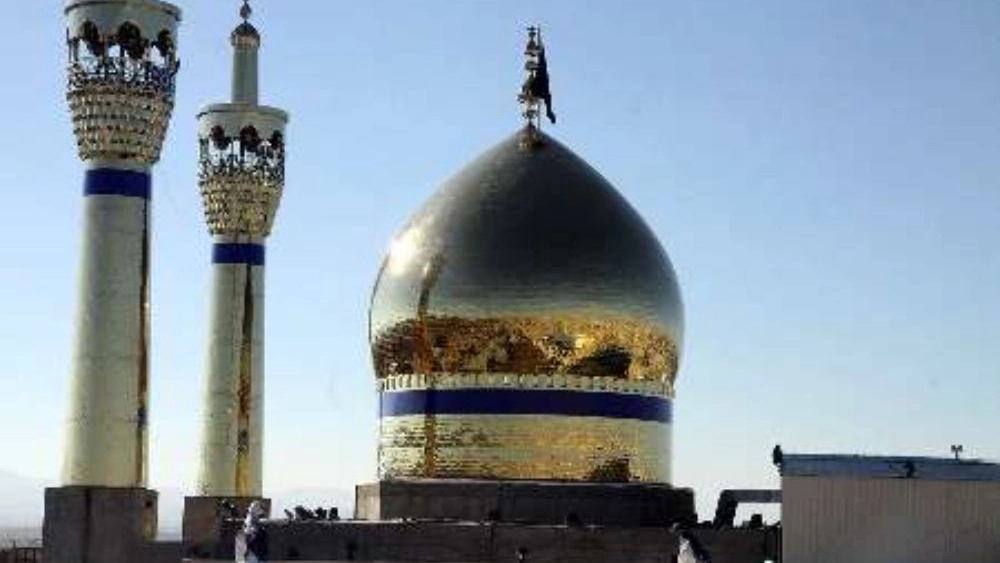
Gold in traditional Iranian architecture
Iranian garlands in the twelfth century often had cylindrical branches with square or octagonal bases that taper towards their capitals. These minarets became the most common style throughout the Islamic world. These forms were also highly decorated. The pair of minaret towers located at the entrance of the mosque originate from the architecture of Iranian mosques.
Goldsmith building materials (minaret)
Building materials for minarets in Isfahan, the construction of mosques and garlands in every city and country, both in terms of architectural techniques and decorations, and in terms of building materials and materials, are different due to time and place. In the early years of the arrival of Islam, clay was used to build the minaret, but in later periods, brick was one of the important elements of building architecture, which was used not only in the overall structure of the building, but also in superstructure decorations. In the foundation of some minarets, a mixture of sand, stone, lime and ash is used, and in the whole body, bricks with mortar and soil are used.
Elements of Gold Structure
In general, the garland consists of three parts: the base, the stem or the body, and the cap or crown of the minaret. Of course, sometimes it is divided into four parts: base, stem, cap, and top.
However, according to the authors, these divisions include four parts, the foundation, the base, the stem or the body, and the cap or the crown of the minar, because in the divisions made in the past, the part of the minar's foundation and foundation, which is one of the most important The constituent parts of the minaret are not mentioned.