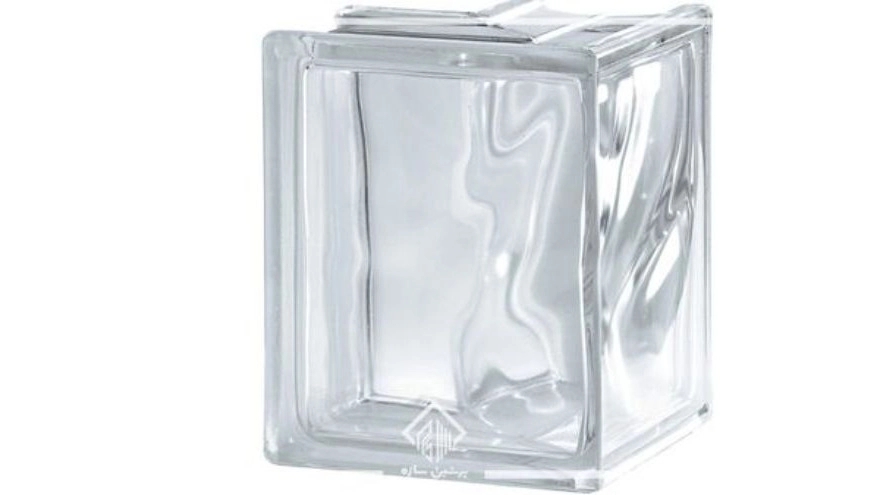


Glass block, which is also known as glass brick, is an architectural element made of glass, which is considered as a diverse material in terms of color, dimensions, texture and form of glass. These glass blocks prevent the direct passage of light, and with the simplified passage of light, they add a special beauty to the space in addition to the moderated lighting, and play a decorative role in the architectural structure of the houses.
The structure of glass blocks
As we will mention in the rest of this article, the hollow glass blocks that are produced for the walls are produced from a combination of four materials, recycled glass, sand, soda ash and limestone. These heated materials are combined and then poured into molds with different patterns and each mold forms a half block. The separate halves produced after the blocks have cooled are reheated and the two pieces are pressed together.
In this way, a vacuum is created in the space inside this product. Due to the fact that these blocks are hollow, they do not have the bearing capacity of bricks and are used in curtain walls. Walls made of this product create limitations in construction due to its framing. The glass blocks used in the floor are usually made as a solid piece or as a hollow glass block with thicker faces than the wall blocks. These blocks are usually either framed in a reinforced concrete grid or placed in a metal frame. The blocks made for the wall should not be used on the floor in any way because their load capacity is not suitable for use on the floor.
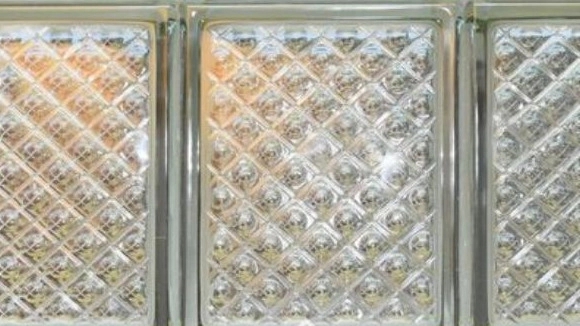
Features of Glass Blocks
It is interesting to know that the glass blocks available in the market are filled with argon gas inside the block and a layer of glass with low heat emission is placed in the middle of the block, which makes the block insulating. does On the other hand, the standard produced blocks that are designed for the wall have little fire resistance, and in this regard, it is possible to increase the fire resistance of this block by making a special type of block with thicker walls.
Another method of making glass blocks is to create a special and fire-resistant layer between the halves of the block during construction. Also, among other procedures in the direction of making glass blocks that some manufacturers have taken is the use of a type of glue when gluing the half of the block, which produces a block with a thickness of 190 mm and increases the amount of heat resistance; But in general, it should be acknowledged that the recently used method is the injection of argon gas inside the glass block, which significantly increases the product's resistance to fire. At the same time that the glass block transmits light, it has many characteristics of a strong brick wall, which justifies its use for such cases.
The benefits of glass brick
Bricks or glass blocks naturally have countless advantages due to their widely used characteristics and features. In this regard, the advantages of this type of material can be listed as follows:
• Usually, this type of brick is used in residential buildings, office spaces, restaurants, warehouses, art buildings, It is used culturally and religiously.
• If this type of building material is used, it is possible to separate the interior spaces while maintaining sufficient lighting.
• The thickness of these blocks is low compared to traditional brick walls (at least 15 cm) which leads to Increasing the useful space of the room.
• Glass blocks have high sound and thermal insulation properties.
• Glass blocks are lighter compared to traditional brick walls.
• Possibility to There is the use of different designs and colors in one or more walls, according to every kind of taste.
• There is simplicity and high speed of operation in installing and using glass bricks compared to traditional bricks; Because the various and numerous stages of traditional wall covering include bricklaying, plastering, whitewashing and painting, glass bricks only include bricklaying and in special cases plastering.
• In general, the cost of a glass wall is lower compared to a traditional wall.
• Cleaning of glass walls can be done simply with a damp cloth and is the least disturbing for the residents. While the traditional walls need to be painted at least every four years.
• It is possible to use glass bricks in all or parts of the facade of the building without restrictions.