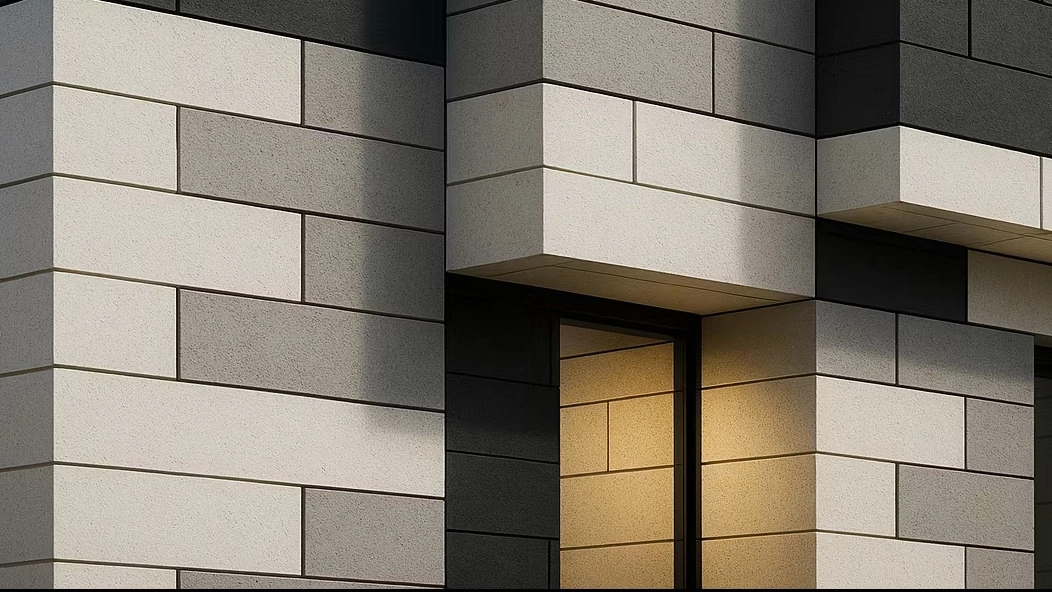



- Building facade: The main use of these bricks is in the exterior of the buildings, where in addition to beauty, there is a need for environmental factors such as direct sunlight, rain, snow and frost.
- Fires: Due to high thermal resistance, heat resistance, They are used.
- Flooring: in areas where there is a need for abrasion and impact, such as passageways and industrial spaces,
- interior decoration: to create decorative and specific spaces inside the building, such as Restaurants.
Why is Shamouti refractory brick in the facade of the building?
- Longevity and durability: resistance to erosion, frost and melting, as well as corrosive chemicals, make these bricks ideal for use in long -term views. The high melting point of the raw material (about 1700 ° C) is a testimony to this resistance.
- thermal resistance: These bricks are able to withstand high temperatures, which also resistant to severe temperature changes in seasons. For example, their low thermal expansion coefficient (approximately (5 \ Times 10^{-6})/° C) prevents the facade from cracking due to temperature fluctuations.
- Variety of color and texture: white, black and gray bricks create high harmony and combination. This diversity allows the creation of creative designs and according to the tastes of architects and employers. Different tissues (smooth, patterned, marie skin) also add visual aesthetics.
- Humidity resistance: low water absorption (usually less than 5%) makes these bricks resistant to water penetration and frostbite and prevent dandruff
- Increase the value of the property: Beautiful and durable views significantly increase the material and aesthetic value of the property.
The benefits of buying refractory bricks from Shamouti from Parsian Talachin
- Guaranteed Quality: Parsian Talachin uses high quality raw materials, including high -level refractory soil extracted from valid mines, using modern world technology and advanced brick equipment. Each stage of production, from the selection of raw materials to the final packaging, is under strict quality control to ensure that the end products have good physical and chemical properties. The compressive strength of the bricks is usually in the range (40 \ Text {MPA}) to (70 \ text {MPA}) and their water absorption is less than 5%.
- Unique color diversity: delivers white, black and gray bricks with different textures. This variety includes matte, glossy, as well as different surface payments that are suitable for a variety of architectural styles, from classic to modern.
- Competitive Price: direct and intermediary supply of factory to customers provides the best price. This approach eliminates the additional costs of intermediary and reduces the cost of the product for the end consumer.
- Specialized Consultation: Professional and experienced Parsian Talachin team of architectural experts and engineers, ready to provide specialized consulting on the type of brick project, color and color projects. This consultation helps customers make the best and most affordable choice.
- after -sales service: The commitment to customer satisfaction has led to the provision of desirable after -sales service and product warranty.
White Shamfluke Refractory; The symbol of purity and simplicity
- Modern view: In residential and commercial projects looking for a modern, minimalist and stylish style, white brick creates a special and spectacular look. This color interacts with natural light and makes the facade radiant throughout the day.
- Creating a bright space: white color reflects the light naturally, so its use in the facade can help brighten the surroundings around the building and enhance the sensation of lighting inside the building.
- (Such as metal, wood, glass) as well as natural elements such as plants, allowing beautiful contrasts and pleasant harmonies.
- Hide contamination: compared to darker colors, dust and surface contamination may be less recommended on white. May
- Symbolic: White color in many cultures symbolizes purity, simplicity and peace that also transmits these concepts to the architectural space.
Black Sham -Shardi Refractory; Bold and luxurious
- modern and eye -catching appearance: The black color in itself convey a sense of power, luxury and modernity. Using it in the facade can create a unique, personality building.
- Visual contrast: Black brick along with bright colors or other materials creates a strong and attractive visual contrast that can be the focal point of the facade. They guarantee the sun's UV rays. This means that black does not change or change over time and maintain its original appearance.
- Dirty Hide: Unlike white, black has a great ability to hide all kinds of spots, dust and surface contamination, which makes it easier to maintain and clean. More and make the architectural elements look more prominent.
- Application in modern and industrial architecture: Black bricks well with modern, industrial and even postmodern architectural styles and create a special and artistic atmosphere.
The brick of the al -Tusi Shamtifi; Balance between simplicity and fashion
Features and applications
- Neutral and coordination: The gray color because of its neutral nature, is unique to any other color. This feature allows designers to safely use it along with warm colors (such as brown, orange) or cold colors (such as blue, green) as well as various materials.
- Creating a relaxed and balanced atmosphere: gray color, stability and orderly. This color is suitable for projects seeking to create a relaxing atmosphere.
- Usable in a variety of styles: Tusi Brick is used both in modern and classic spaces. In modern views, it gives a minimalist and stylish look by creating smooth and clean lines. In classic views, it also adds to the facade by creating texture and depth.
- Cover surface contaminants: gray color, depending on the degree of darkness, can hide well in the stains and dust and facilitate the storage of the facade. This is that this leaves the designers' hand to choose the right color degree based on ambient light and personal taste.
The gray color is capable of harmony with any color because of its neutrality. Ideal for buildings that follow the simple but attractive design. This color is used in both modern and classic spaces.
The process of producing Shamouti's refractory brick in Parsian Talachin
Talachin Parsian, using the latest technology of the world, produces Shamotti refractory brick with accurate formulation and strict quality control. The main purpose in the production process is to achieve a product with maximum thermal, chemical and mechanical resistance.
Key steps of production process:
- Refractory soil: Refrigeration soil is the main raw material extracted from high quality mines. This soil should have a high purity and a suitable ratio of alumina (Al_2O_3) and silica (Sio_2).
- Shamotte: Shamut, the same refractory soil is cooked and added to the primary mixture. Shamut reduces contraction and cracking during drying and baking and increases the final thermal resistance of the brick. The ratio of dinner to primary soil usually varies from 30% to 70%.
- additives: other additives such as metal oxides for color adjustment, lubricant materials to improve the formation process, or water absorption reduced materials. The initials are mixed and completely homogeneous to the precise ratios. This step is crucial to ensuring the uniform distribution of material and chemical properties of the end product.
- Forming: The prepared mixture using hydraulic press or extruders is desired. High pressure in the press process causes particle compression and increases the initial strength of the brick. The standard dimensions of refractory bricks are usually (21 \ Times 10 \ Times 5) or (21.5 \ Times 10 \ Times 5.5 cm), but custom dimensions can also be produced.
- drying (Drying): pre -baking bricks (usually 100 degrees Celsius) (usually between 100 degrees Celsius). They take their extra moisture gradually. This step is essential to prevent thermal stress and cracking during the baking stage.
- Firing: This is the most vital part of the process. The bricks are cooked in tunnel or burial furnaces at very high temperatures (1400 to 1700 ° C). At this temperature, important chemical and physical reactions occur:
- residual water evaporation: transplanted moisture exits at temperatures above 200 ° C.
- decomposition of carbonates and organic matter: at about 900 ° C and 900 degrees Celsius, They burn.
- Ceramic phases formation: at higher temperatures, aluminocylicates have structural change and new ceramic phases are formed that provide strength, hardness and thermal resistance of brick. This process includes reactions such as the formation of the mumul (3al_2o_3 \ CDot 2Sio_2), which helps high thermal resistance.
- Color Stabilization: The metal oxides in the raw materials react and create the final color of the brick. (Cooling): After baking, the bricks are gradually and with precise temperature control to prevent thermal shock and cracking.
- Final quality control and packaging: bricks produced in size, color, texture, compressive strength, water absorption and other specifications. Then they are packaged and ready to be sent to customers.
Parsian Talachin, with the exact control of each of these steps, ensures that the final product has the necessary standards and to satisfy customer.
Important Tips on Buying a Refractory Brick
Buying a refractory brick is a decision that must be made carefully and details to get the best results. Here are the key points to consider when buying:
- Compressive Strength: Brick must be able to withstand high compressive loads. The compressive strength should be at least within the range (40 \ Text {MPA}), but for important views, higher values (such as 50 to 60 MPa) are preferred.
- Water absorption (Water Absorption): refractory brick should have lower water absorption (less than 5%). High water absorption causes moisture, frosting and thus reduces the useful life of brick and creates dandruff.
- Thermal Resistance: Although it is not necessary for the facade of the building, the resistance to the furnace temperature is not necessary, the resistance to seasonal temperature changes and the lack of cracking. Freeze and freezing: In areas with cold weather, brick resistance to frost cycles and melting is of great importance.
- Architectural style: Classic, minimalist, traditional) as well as surroundings.
- Light conditions: reflects white light and brightens the facade, while the black color absorbs the light and creates a deeper sense. Create a balance between the two.
- UV resistance: Make sure that the brick color is resistant to direct sunlight and does not become dye.
- Heritage and Credit: Buying from manufacturers such as Parsian Talachin and producing a long history of producing
- Permissions and Standards: Make sure that the product has the necessary certificates and in accordance with national and international standards.
- Price and Sales Conditions: Comparison of prices and sales conditions from several reputable manufacturers can help choose the best option. Note that lower price does not always mean better quality.
- Consulting and Support: A manufacturer who can provide specialized advice and be in the process of selecting and shopping with you.
With these tips, you can make a safe and satisfying purchase and create a beautiful and durable view of your building.
The Role of Shamouti Refractory Brick in Isfahan Architecture
Isfahan, the cradle of Iranian civilization and art, has long been known for its unique and unique architecture. Mosques, palaces, bridges and historic houses in Isfahan, testify to different architectural styles and unique skills of Iranian architects in different periods. In the meantime, brick has always been one of the most important and widely used materials in Isfahan architecture.
Brick in Traditional Architecture of Isfahan:
- Visual beauty: Brick in traditional Isfahan architecture has played a key role in creating visual aesthetics, Islamic, geometric and decorative designs, as well as texture and volume.
- Resistance and durability: Traditional bricks, often use of traditional bricks, They were.
The Role of Shamouti Refractory Brick in Contemporary Architecture of Isfahan:
- The combination of tradition and modernity: The use of Shamotti refractory brick in white, black and gray colors, in addition to preserving the originality and spirit of Isfahan's architecture, is the basis for a traditional and modern style. This combination allows the creation of views that are both rooted in history and responsive to the aesthetic and technical needs of contemporary era.
- Sustainable and Sustainable Beauty: Extraordinary Resistance of Shamotti Refractory Bricks to Cold Factors and Casting Factors, Guarantee
- Flexibility in Design: The diversity of color and texture of the Shamouti refractory brick allows Isfahan architects to use their creativity and implement innovative and eye -catching designs in new urban projects. Optimizing energy consumption in buildings and providing more comfort to residents.
Generally, Shamotti Refractory Brick, with its technical and aesthetic capabilities, has been able to create a bridge between the rich architecture of the past and the future creative styles in Isfahan.
Economic comparison of Shamotti refractory brick with other materials
When evaluating the cost of a building material, the initial purchase price is not only considered, but also the life expectancy, maintenance costs, its durability and impact on the current costs of the building (such as energy). In this comparison, Shamotti refractory bricks are very affordable in the long run despite the higher initial price than some other materials.
Comparison with ordinary bricks (clay or cement):
- Price Price: ordinary bricks are usually cheaper than refractory bricks. This price difference is mainly due to raw materials, baking process at very high temperatures and more accurate quality control in refractory brick production.
- Life: Shamouti refractory bricks due to high resistance to erosion, moisture, temperature changes and freezing. Conventional bricks may develop dandruff, cracking or crushed after a few years and need to be repaired or replaced.
- Maintenance Cost: Facade Frameflice Facade due to its durability and durability requires minimal maintenance. In contrast, the conventional brick view may require recurrent cleaning, re -painting or repair, which can cost extra costs.
- Energy Consumption: better thermal insulation properties of better dinner refractory bricks reduces energy loss in the building. This means reducing winter heating and cooling costs in summer, which will be significantly tangible over time.
- Fire Resistance: Shamotti refractory brick shows much higher resistance to fire that can increase building safety.
Comparison with other facade materials (such as stone, composite, cement):
- Natural stone: natural and durable natural stones, but very high weight, requires stronger infrastructure, high shipping and installation costs, as well as the possibility of discoloration in some stones (depending on the type and quality). The dinner refractory brick is usually less weighty than the stone and is easier to install.
- Composite materials: Composite materials such as ACP (Aluminum Composite Panel) have a modern and lightweight appearance, but may have less impact and environmental factors in the long run. Also, if they are damaged, they are more difficult and expensive.
- Cement and Roman view: cement or Roman views, although they have a classic and beautiful appearance, but are prone to cracking, scaling and moisture absorption and need continuous maintenance and repair.
Economic Conclusion:
Summary: A clever choice for a lasting view
Key points that distinguish this choice:
- Quality Assurance: Parsian Talachin offers products that meet the highest standards by relying on the technical knowledge of the day, high quality raw materials and precise manufacturing processes. The thermal, compressive, low water absorption and durability against atmospheric factors are the intrinsic features of these bricks.
- Lasting beauty: white, black and gray color diversity, along with different textures, allows creative, modern and classic views. This beauty will remain stable over time and resistance to erosion.
- Unique life: Damnotti refractory bricks dramatically extend the life of the building and minimize the need for frequent maintenance costs. Bricks help improve the well -being of residents and reduce energy consumption in the building.
- Value added: Beautiful, durable and modern views increase your property value and attractiveness in the market.
Taking all this, the refractory bricks of white, black and al -Tusi from the Persian Talachin are the best option for modern and traditional architectural projects, and is a clever choice to build a view that will last not only today, but also for future generations.