In today's materials market, there are two products that can be seen in almost all projects: construction plaster and construction limestone powder. If your goal is to implement clean carpentry, quality whitewashing, basic plastering, or even control the costs of buying materials, knowing the route of plaster production as well as the production and granulation of limestone powder will help you make a more accurate choice. In this article, we examine the stages of plaster production, quality control tips, applications, grade differences, and a safe buying guide, and finally, we introduce the process of obtaining materials from Parand Saral's building materials collection.
What is construction plaster and why is plaster production important?
Construction plaster is mainly obtained from gypsum stone with the chemical formula CaSO4⋅2H2OCaSO_4·2H_2OCaSO4⋅2H2O. After extraction, crushing, baking and grinding, gypsum turns into white and reactive powder. The importance of plaster production starts from here, that the smallest error in temperature, baking time, humidity of raw materials or grinding mill, directly affects the setting, resistance, color, and workability of plaster.
From an operational point of view, plaster that is not produced correctly can cause cracking, peeling, setting too quickly or too slowly, and increasing material deviation. Therefore, knowing the process of plaster production is not only for the factory owner; It is a serious advantage for the contractor, foreman and even for the employer.
Where does gypsum come from? Extraction and preparation stage
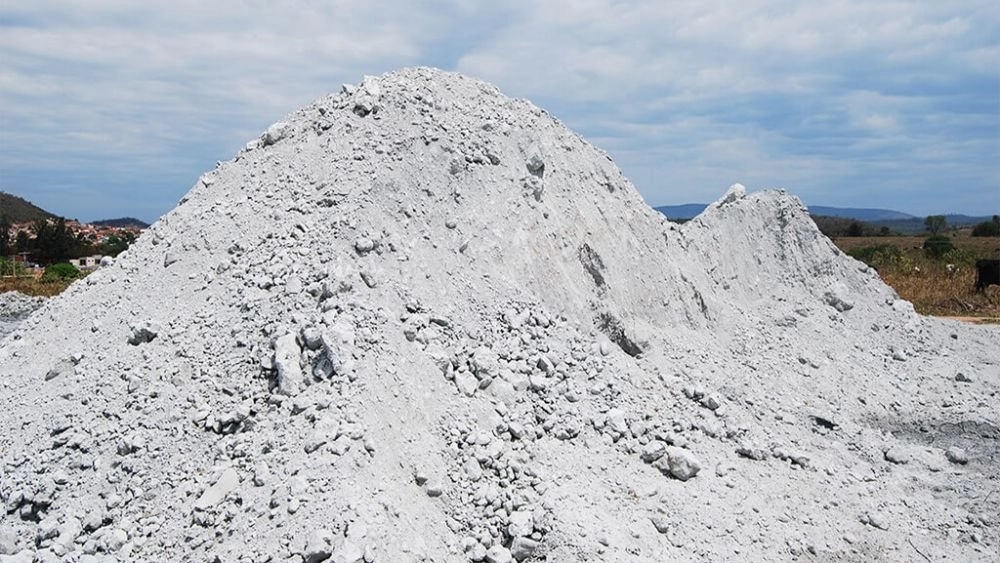
The first link in the gypsum production chain is the extraction of gypsum from the mine. The quality of gypsum stone depends on its purity, amount of impurities such as clay, silica, carbonates and also natural humidity. Then the extracted stone is transferred to the factory and enters the following steps:
Primary and secondary erosion
In plaster production, the stone is first turned into smaller pieces in a stone crusher to be prepared for grinding and baking. It is important to control the size of the grains, because the larger pieces are heated more slowly and the core of the stone may remain raw.
Serand and granulation
After crushing, the materials pass through a sieve to separate fine and coarse grains. This separation helps to make baking more uniform and to increase the quality of plaster production.
That is, dihydrate becomes hemihydrate. If the temperature and time are not controlled, the plaster may overcook and reach less reactive phases, which has a negative effect on setting. In different factories, baking methods are different, but the goal of all of them in plaster production is one thing: to produce uniform powder with controllable setting and proper whiteness.
Temperature and time control
- Temperature lower than required: incomplete baking, irregular setting
- Temperature higher than required: reduced workability and lower quality of joinery
For this reason, in plaster production continuous control of temperature and furnace output is very important.
Grinding, separation and packaging in gypsum production
After baking, it is the turn of grinding. In plaster production, the mill should be set so that:
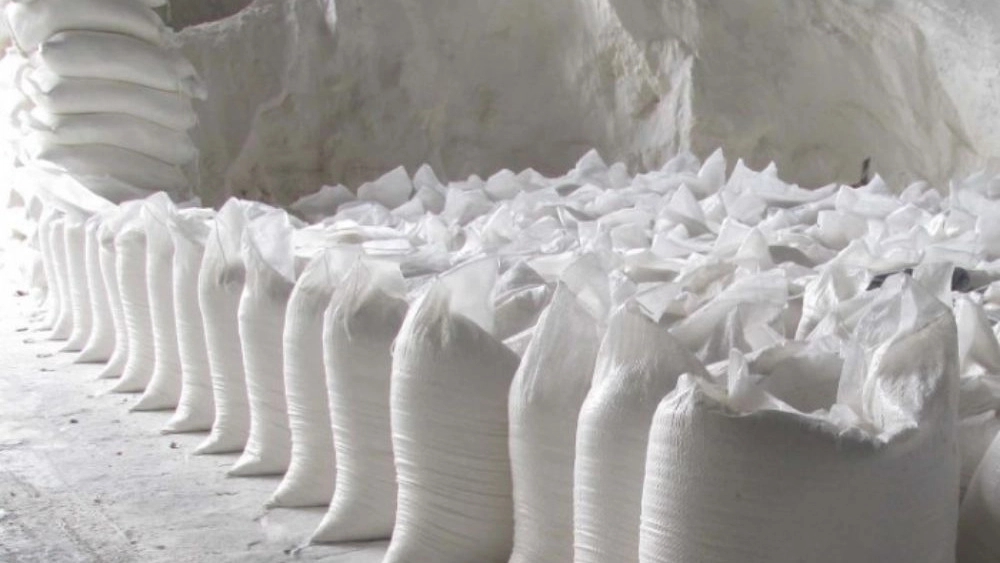
After grinding, gypsum passes through dust removal systems to improve product quality and meet environmental standards. Finally, standard packaging (resistant bags with printed specifications) is necessary to prevent moisture absorption, because gypsum is very sensitive to moisture and this sensitivity continues throughout the entire process of plaster production until storage.
Quality indicators of construction plaster that you should know when buying
To be sure of the result of plaster production, check these criteria:
- Initial and final capture time
Good plaster does not set so fast that it does not have a chance to perform, nor so late that it slows down the work.
- Whiteness and uniformity of color
Impurities and improper baking in plaster production can make the color cloudy.
- Smoothness and granularity
Controlled fineness results in a smoother surface and better putty work.
- Freshness of the product
Old plaster or exposed to moisture, even if it was excellent in the stage of plaster production, it gives a poor result in the workshop.
What is building limestone powder and how is it produced?
Building limestone powder is produced by crushing and grinding limestone with the dominant composition of CaCO3CaCO_3CaCO3. Contrary to plaster production, which has a curing stage and chemical phase change, in the production of limestone powder, the focus is usually on these items:
- Selection of stone with suitable whiteness and purity
- Stage grinding
- Grinding to desired mesh
- Separation of granulation (if needed)
- Packaging and humidity control
Limestone powder is mostly used in construction as a filler, workability improver, mortar texture adjustment, and cost reduction. The quality of stone powder depends on the whiteness, mesh, amount of soil and humidity.
Important applications of plaster and limestone powder in building
Applications of building plaster
- Plaster and soil and infrastructure
- Whitewashing of walls and ceilings
- Plastering and tooling
- Plastering and repair
In all these cases, the quality of plaster production determines how smooth, resistant and crack-free the final surface is.
Applications of building limestone powder
- Incorporation in mortar to improve workability
- Reduction of shrinkage in some compounds
- Use in traditional and combined putties
- Filler in some construction products
The difference between common plasters in the market from the point of view of plaster production
In the market, you usually encounter several general categories:
These differences are rooted in the type of stone, furnace settings, type of mill and control of the plaster production process. So if two brands have the same price but the performance is different, the answer should be searched in the details of plaster production.
Common mistakes in buying plaster and limestone powder
- Purchasing solely based on price and neglecting brand and freshness
- Keeping in a humid warehouse (decreased quality even if plaster production is excellent)
- Choosing the wrong mesh of limestone powder for the intended work
- Not matching the type of plaster with the project conditions (execution speed, ambient temperature, volume of work)
Safe buying guide for Parand Saral building materials
If you are active in Parand, Rabat Karim, Islamshahr, Shahryar and surrounding projects, the main advantage of buying from a reliable center is that both the right product for your work is suggested and the supply is done on time. Parand Saral construction materials can be a suitable option for buying construction plaster and construction limestone powder, because in providing high-use materials for projects, your most important needs are:
To get the best results in execution, it is suggested to state the type of use (undercoat, whitewash, putty, mixed mortar) and project conditions when ordering, so that the product selection can be more accurate. This work makes the output of plaster production formed in the factory show the same expected quality in the workshop.
Summary
Knowing the stages of plaster production from extraction to baking, grinding and packaging will help you choose the right plaster for the project and avoid problems such as improper setting, cracking and loss of surface quality. Besides that, building limestone powder can improve the workability of mortar and cost management by choosing the right mesh and purity. If stable supply and reliable purchase are important to you, purchasing these materials from Parand Saral construction materials can make the process of purchasing and implementing the project smoother.